
Health Risks of Blocked Drains: Why You Shouldn't Ignore a Slow Sink in 2026
- chenviro2
- 1 day ago
- 12 min read
You might think a slow sink is just a minor household nuisance, but what if that gurgling pipe is actually a ticking clock for your family's health? It is easy to ignore the faint smell of rotten eggs or a bath that takes ten minutes to empty, assuming it is a job for next weekend. However, the health risks of blocked drains go far beyond a simple plumbing inconvenience. When water stops moving, it becomes a breeding ground for bacteria and a gateway for pests to enter your living space.
We understand the worry that comes with lingering odours or the fear of sewage backing up into your kitchen. You want a home that is safe and hygienic, not one hidden behind damp patches and structural hazards. This guide explains the specific pathogens like E. coli and Salmonella lurking in your pipes and the dangers of inhaling sewer gases. You will discover actionable steps to mitigate these risks immediately whilst waiting for a specialist. By the end, you will have the clarity needed to protect your home and ensure your drainage system is functioning exactly as it should.
Table of Contents
The Biological Threat: Why Blocked Drains are a Health Hazard
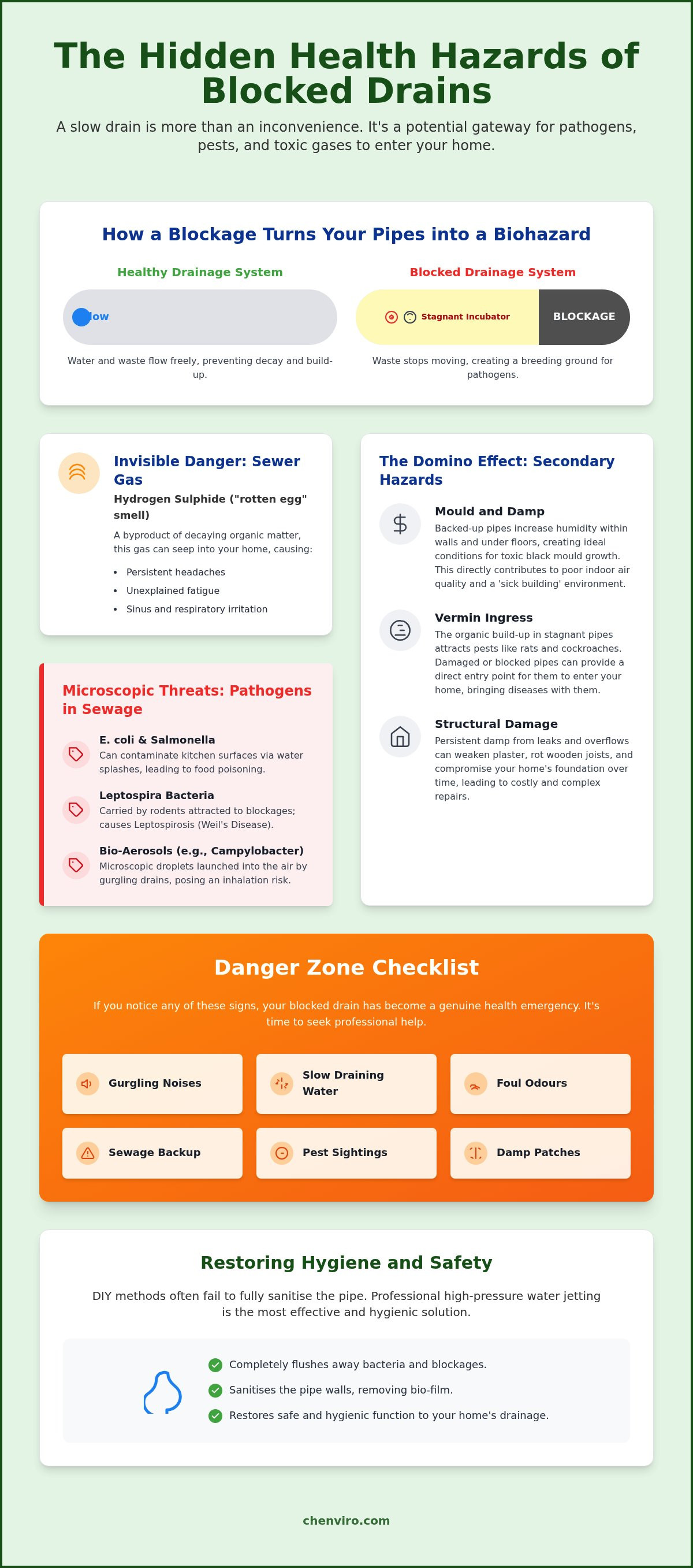
Your home's drainage is designed to be a self-cleaning loop. Gravity and consistent water flow ensure that waste moves out of your property before it has a chance to settle or decay. When a blockage occurs, this system fails. It stops being a conduit and transforms into a stagnant incubator for pathogens. Stagnant water in a pipe is never just water. It is a biological cocktail of food scraps, hair, skin cells, and household chemicals. Understanding what is sewage is vital here; it is a complex mix of greywater and blackwater that begins to decompose the moment it stops moving.
The health risks of blocked drains are often invisible during the early stages of a clog. As organic matter breaks down without oxygen, it produces various gases that are usually vented safely outside. However, a significant blockage can cause a pressure imbalance. This often forces these gases back through your U-bend. This water seal is your primary line of defence against the sewer network. If the seal is broken or bypassed by pressure, toxic vapours enter your kitchen or bathroom directly.
Beyond the physical threats, there is a significant psychological toll. Living in a home with persistent, foul odours creates a state of "drainage anxiety." You might find yourself embarrassed to host guests or constantly worried about a total sewage backup during a heavy downpour. This lingering stress is a valid part of the overall health impact. It turns a place of sanctuary into a source of constant concern.
Sewer Gas: The Invisible Danger of Hydrogen Sulphide
That distinct "rotten egg" smell coming from your sink is usually Hydrogen Sulphide. It is a byproduct of organic matter decomposing in an environment without fresh air. Low-level exposure amongst residents often leads to persistent headaches, unexplained fatigue, and sinus irritation. Hydrogen Sulphide is a heavier-than-air gas that can collect in basements or lower floor cupboards. Because it is denser than oxygen, it doesn't simply float away; it settles in the areas where your family spends time.
The 'Sick Building' Connection
Chronic drainage failure is a leading contributor to poor indoor air quality. When pipes back up, they increase the humidity levels inside walls and under floorboards. This creates a "sick building" environment where respiratory distress becomes more frequent. These conditions are known to aggravate asthma and trigger severe allergies in children and the elderly. To protect your property's long-term health, investing in professional drainage services Dublin homeowners rely on is a necessary step to ensure your environment remains hygienic.
Pathogens and Bacteria: Microscopic Dangers in Backed-Up Sewage
A blocked drain is far more than a plumbing delay; it is a reservoir for infectious diseases. When waste water stops flowing, bacteria like E. coli and Salmonella multiply rapidly in the nutrient-rich environment of your pipes. These are not just abstract threats. If your kitchen sink backs up, even slightly, contaminated water can splash onto worktops, utensils, and food preparation areas. This creates a direct route for infection, highlighting why the health risks of blocked drains should be taken seriously from the first sign of a slow flow. Bacteria multiply whilst the water remains stagnant, turning a simple clog into a significant hygiene hazard.
The health risks of blocked drains escalate significantly when rodents are involved. Rats are frequently attracted to the organic buildup in stagnant pipes. They carry Leptospira bacteria in their urine, which leads to Leptospirosis, also known as Weil's Disease. In residential systems where blockages have allowed vermin ingress, the risk of contracting this serious illness through contact with contaminated water is a genuine concern. If you suspect your drainage issues are linked to pests, a professional vermin control service integrated with your drainage solution is the safest course of action.
Many homeowners overlook the danger of bio-aerosols. When a toilet gurgles or a drain "bubbles" due to trapped air and waste, it launches microscopic droplets into the air. These droplets carry water-borne pathogens such as Helicobacter Pylori and Campylobacter, which can linger amongst the household air. You don't need to touch the water to be at risk. Simply breathing the air in a room with an active drainage failure can expose your respiratory system to these microscopic hazards.
Surface Contamination in Kitchens and Bathrooms
Bacteria are remarkably resilient. On damp ceramic or stainless steel surfaces, pathogens can survive for several days. A slow-draining sink often leaves a "biofilm" on the basin walls. This sticky layer of bacteria resists standard rinsing and requires targeted cleaning. After any minor backup, you must sanitise the entire area with a professional-grade disinfectant. Don't rely on a quick wipe; the invisible layer left behind is often where the highest concentration of bacteria resides.
Vulnerable Groups at Risk
While these pathogens affect everyone, certain groups face higher stakes. Children often touch surfaces and then their faces; this makes them primary targets for cross-contamination. The elderly and those with weakened immune systems have less resilience against the gastrointestinal distress caused by these bacteria. Household pets are also at risk. Dogs and cats may drink from or play near external drains that are overflowing, unknowingly bringing pathogens back into your living spaces. It is vital to note that immunocompromised individuals should avoid DIY unblocking attempts entirely to prevent accidental exposure to concentrated waste.
Secondary Hazards: Mould, Damp, and Vermin Ingress
Many homeowners view a slow drain as an isolated problem tucked safely within the pipe. In reality, a persistent blockage changes the physical environment of your home. When water cannot flow freely, internal pressure builds within the drainage system. Pipes are designed for temporary flow, not for holding standing water indefinitely. This constant weight often leads to "weeping" joints or hairline fractures in old clay pipes. These minor leaks release moisture into the structural fabric of your property, creating hidden damp patches that are often invisible until the health risks of blocked drains become obvious through physical symptoms.
Mould and Spore Inhalation Risks
The health risks of blocked drains are frequently amplified by the growth of Stachybotrys, commonly known as toxic black mould. This fungus thrives in the warm, humid voids behind kitchen cabinets and under bathroom floorboards where drainage leaks are present. Simply painting over a damp spot is a dangerous mistake; it masks the symptom whilst the biological hazard continues to release spores into your breathing air. Chronic coughing, persistent skin rashes, and severe respiratory irritation are common amongst residents in homes with unresolved drainage leaks. To stop the cycle, you must address the source through structural no-dig drain repair Dublin services, which seal leaks without the need for disruptive excavation.
Rodents and Vermin Control
In urban environments like Dublin, the drainage network acts as a primary highway for rodents. Rats are highly opportunistic and use damaged or blocked pipes as a "rat run" to enter residential properties. A blockage often provides a dry foothold or a point of resistance where a rat can gnaw through a weakened pipe joint. Once inside, they bring a new set of hygiene challenges, including Salmonellosis and the spread of parasites.
If you find yourself dealing with recurring clogs in older residential areas, it is rarely just a matter of grease or hair. These patterns often indicate a structural failure that requires a CCTV drain survey Dublin to identify potential entry points. Our approach at CH Enviro integrates professional vermin control with drainage solutions. We ensure that your home is not just clear of waste, but secure from pests that exploit compromised pipes. Addressing the blockage is only half the job; securing the entry point is what provides long-term peace of mind.
Identifying and Mitigating Risks in Your Property
Early detection is your best tool for managing the health risks of blocked drains. You don't have to wait for a total backup to know there is a problem. Listen for gurgling sounds after you pull the plug; this is often air being forced through trapped waste. Watch for "phantom" smells that come and go, particularly near floor drains or under the kitchen sink. Localised dampness on walls or floorboards near a waste pipe exit is another clear indicator that pressure is forcing water through a compromised joint. Identifying these signs early prevents a minor blockage from escalating into a full biological hazard.
Rural properties in Ireland face unique challenges, especially during periods of high rainfall. Saturated ground can prevent drainage fields from functioning correctly. This leads to stagnant waste backing up into the home. If you rely on a private system, you must stay ahead of maintenance to avoid surface water contamination. Understanding the requirements for septic tank cleaning Ireland homeowners must follow is essential for both legal compliance and family safety. A failing septic system doesn't just smell; it can leach pathogens into the surrounding soil and groundwater.
The Danger Signs Checklist
Use this simple three step process to determine if your drainage issue has reached a critical level. First, check if multiple fixtures are affected. If the toilet gurgles when you run the kitchen tap, you likely have a main sewer line blockage. Second, inspect the external gully or manhole near your property boundary. Any sign of surcharging or standing water indicates a total system failure. Third, monitor for fresh rodent droppings or gnaw marks near external waste pipes. If any of these signs are present, you should request a professional drain inspection immediately to prevent further contamination.
Immediate Steps to Protect Your Family
While you wait for a specialist, you can take practical steps to reduce exposure. Open windows to ventilate the property. This lowers the concentration of sewer gases like Hydrogen Sulphide in your living areas. Use physical, non-toxic barriers to keep children and pets away from affected sinks or bathrooms. Stop using any fixtures that show signs of backup to prevent further overflow. Avoid using "over the counter" chemical drain cleaners. These products are often ineffective against deep clogs and can react with existing waste to create toxic fumes that irritate the lungs and eyes. Focus on containment and ventilation until a professional can sanitise the system properly.
Professional Resolution: Restoring Hygiene and Safety
At CH Enviro, we don't just poke a hole through a clog. We view every job as an environmental restoration. While traditional rods can sometimes create a temporary path for water, they often leave behind the sticky biofilm and organic waste where pathogens thrive. High-pressure water jetting is a far more hygienic alternative. It scours the internal walls of the pipe, removing the grease and waste that traditional methods miss. This thorough cleaning significantly reduces the health risks of blocked drains by eliminating the breeding grounds for bacteria and preventing immediate re-occurrence.
Our approach is built on transparency and efficiency. We move beyond the immediate blockage to ensure your entire drainage system is safe for your family or employees. Clearing the pipe is only the first step; ensuring the structural integrity of the system is what provides long-term protection against contaminated water and sewer gas leaks.
Diagnostic Accuracy with CCTV Surveys
To truly mitigate the health risks of blocked drains, we must find the underlying cause. Using advanced CCTV technology, we inspect the structural integrity of your pipes without any disruptive digging. This allows us to identify recurring hazards like root ingress or collapsed sections that may be leaking raw sewage into your property's foundations. For commercial clients, this provides essential documented proof for facility maintenance Dublin records or insurance claims. We provide a clear explanation of the issue, ensuring you aren't just treating symptoms but solving a structural health hazard.
Safe and Effective Sanitisation
Once the flow is restored, the work isn't finished. Any area affected by a backup requires professional-grade sanitisation to neutralise lingering pathogens. Standard household cleaners often fail to penetrate the microscopic fissures in flooring or grout where bacteria hide. We use industry-specific disinfectants designed to kill E. coli and Salmonella on contact. This ensures your kitchen or bathroom is safe for immediate use once we leave the site.
Our "straight-talking" approach means we tell you exactly what is wrong and how to fix it permanently. We prioritise your family's safety by combining technical skill with a commitment to environmental hygiene. Don't risk exposure to contaminated waste or toxic gases by attempting a complex unblocking yourself. Contact CH Enviro today for emergency drain unblocking and sanitisation to restore your home to a healthy, functional state.
Secure Your Home’s Health and Hygiene
Ignoring a slow sink is a gamble with your family's wellbeing. As we have explored, the health risks of blocked drains range from airborne pathogens and toxic mould to the hidden entry of vermin into your living spaces. A gurgling pipe is a clear signal that your home's primary defence against waste is failing. Relying on temporary DIY fixes often leaves the underlying biological threat untouched, allowing bacteria to multiply whilst structural damage worsens behind your walls.
CH Enviro provides the professional resolution you need to restore total peace of mind. Our team offers a 24/7 emergency response across Dublin, combining high-pressure sanitisation with expert vermin control. We use advanced CCTV surveys to find the root cause of failures and employ no-dig repair technology to fix pipes without disrupting your property. Don't wait for a minor blockage to become a medical emergency. Book a professional drain unblocking and sanitisation service today and ensure your home remains a safe, hygienic environment for everyone inside.
Frequently Asked Questions
Can sewer gas from a blocked drain make me sick?
Yes, sewer gas can definitely make you sick. The primary concern is Hydrogen Sulphide, which is produced as organic waste decomposes in your pipes. Inhaling this gas, even at low levels, leads to nausea, dizziness, and respiratory distress. If you can smell "rotten eggs" in your living areas, the gas is already present. Ventilate the room immediately and seek professional assistance to clear the blockage and stop the leak.
How quickly can bacteria grow in a blocked drain?
Bacteria multiply with incredible speed in stagnant water. In a nutrient-rich environment like a blocked kitchen sink, certain pathogens can double their population every twenty minutes. Within just a few hours, a minor clog becomes a significant biological hazard. This rapid growth is why we advise against leaving standing water in sinks or baths, as the risk of cross-contamination to your surfaces increases every hour the blockage remains.
Is it safe to sleep in a house with a sewage smell?
We don't recommend sleeping in a room where a sewage smell is present. The odour indicates that sewer gases are entering your breathing air, which can lead to persistent headaches and poor sleep quality. Prolonged exposure increases the overall health risks of blocked drains, particularly for children or those with respiratory conditions. It is safer to ventilate the property and have the issue resolved before spending the night in the affected area.
What are the first symptoms of exposure to sewer gas?
The first signs of exposure are usually physical and immediate. Residents often report sharp headaches, sinus irritation, and a feeling of nausea or lightheadedness. Because Hydrogen Sulphide is heavier than air, it can collect in lower levels of the home, affecting people whilst they are sitting or sleeping. If these symptoms disappear when you leave the property but return when you go back inside, your drainage system is the likely cause.
Can a blocked drain attract rats into my kitchen?
Yes, rats are frequently attracted to the organic buildup found in blocked pipes. They use the drainage network as a primary highway to navigate urban areas like Dublin. A blockage often provides a dry foothold or a point of resistance where a rat can gnaw through a weakened joint. This gives them direct access to your kitchen cupboards and food preparation areas, bringing additional disease risks into your home.
What is the best way to sanitise a bathroom after a sewage backup?
Effective sanitisation requires more than a quick wipe with a sponge. You must first remove all standing water and solid debris whilst wearing protective gloves and a mask. Use a professional-grade disinfectant or a strong bleach solution to scrub every surface, including grout and tile joints where bacteria hide. Don't forget to sanitise any items that were splashed, as pathogens can survive on damp surfaces for several days.
Are the chemicals in drain unblockers more dangerous than the blockage itself?
They can be very hazardous to both your health and your plumbing. These products are highly corrosive and release toxic fumes that can cause chemical burns to your throat and lungs. They often fail to clear deep clogs and instead sit in the pipe, eating away at the joints. This leads to leaks behind walls, which significantly increases the long-term health risks of blocked drains through mould and damp growth.
How do I know if my blocked drain is a health emergency?
It becomes a health emergency the moment waste water begins surcharging into your living spaces or if multiple residents experience unexplained headaches and nausea. If you see raw sewage backing up into your bath or kitchen sink, the risk of infection is immediate. You should also check your external manholes; if they are overflowing, the system has failed completely and requires an urgent professional response to protect your property.


Comments