
Preventing Fatbergs in Restaurant Drains Through Kitchen Habits
A fatberg doesn’t need one dramatic spill to form. Preventing fatbergs in restaurant drains starts with keeping fats, oils and grease out of sinks and collecting used grease in designated containers. Even small amounts can build up over time, combining in sewers with food particles, wet wipes and sanitary products.
It’s easy to assume hot water or washing-up liquid has carried grease away for good. In fact, hot water can move it further through pipes, where it cools and solidifies. Soap and degreasers can also emulsify grease temporarily before it builds up again. Small, consistent kitchen habits matter.
This article explains what fatbergs are, how everyday kitchen waste contributes to blockages and which warning signs staff should watch for. You’ll also find practical steps for handling used oil and food waste, training staff in drain-safe routines, and keeping grease traps working as part of a sensible prevention plan.
Table of Contents
Common sources of fats, oils and grease in commercial kitchens
Myth: only large quantities of cooking oil cause fatberg problems. In practice, small amounts from frying pans, roasting trays, grills and plates can accumulate when repeatedly washed into a sink. Scrape food scraps into a bin first, then collect leftover cooking oil and fats in designated containers. This simple routine is central to preventing fatbergs in restaurant drains.
Soap and degreasers don’t make grease disappear. They can emulsify it temporarily, helping it travel through pipework before the products break down and the grease cools and solidifies. Hot water can also move grease further along the drain rather than remove it. Wipe greasy cookware with disposable paper before washing, and never rely on detergent or hot water as a disposal method.
For restaurants in Ireland, the practical rule is to keep fats, oils and grease out of sinks, collect used grease separately and maintain grease-control equipment. A fatberg can obstruct wastewater flow and lead to backflow, flooding or environmental contamination. Don’t assume every incident results in a fixed fine or sewer charge; the consequences depend on the circumstances.
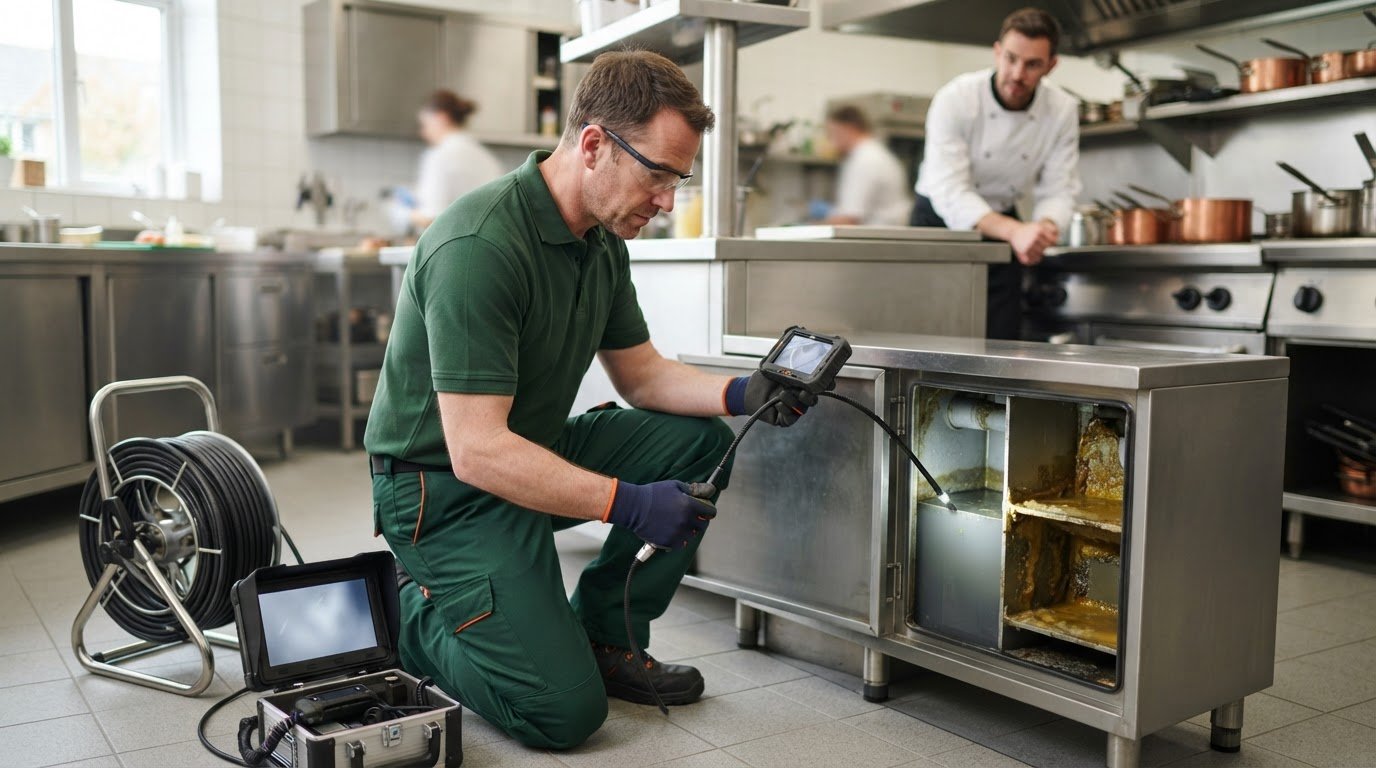
A grease trap or interceptor separates grease and solids from wastewater before it enters the drainage system. Poor maintenance can allow a trap to overflow. Check its contents regularly: empty it when grease plus solids reach 25% of the liquid depth. Grease traps should be cleaned every 3-4 months for optimal performance; restaurants with high FOG output may need servicing every 1-3 months.
Biological dosing can supplement a grease trap by helping break down grease in the drainage system. It isn’t a substitute for collecting waste oil or cleaning the trap. Use it alongside a clear disposal routine, not as permission to pour grease down the sink. Keep a simple record of trap checks, cleaning and any dosing so staff can follow the same procedure across shifts.
Fatbergs and other waste materials in sewer systems
Myth: a fatberg is simply a mass of cooking fat. In reality, fats, oils and grease can bind with wet wipes, food particles and sanitary products inside sewer systems. As wastewater carries these materials through pipes, deposits can collect around joints, bends and existing rough patches. A wipe labelled flushable may still add to a blockage if it catches on grease or other debris.
As an obstruction grows, it restricts the space available for wastewater to flow. Water can then back up towards connected premises, creating unpleasant and disruptive conditions in kitchens. In an Irish restaurant, keep non-toilet waste out of toilets and sinks. Put clearly labelled bins near staff facilities and wash-up areas, so wipes, food scraps and sanitary products have a suitable place.
The key point for restaurants is that ordinary disposal choices can combine downstream. Grease entering a pipe can cool and stick to its surface; solids and discarded items may then catch on that deposit. Repeated discharge adds material over time. A fatberg can interfere with wastewater flow and contribute to backflow, flooding and environmental contamination.
Separate waste before it reaches the drainage system. Scrape plates into food-waste bins, collect used cooking oil in a designated container, and make suitable waste bins available near toilets. Keep wipes, paper towels and sanitary products out of sinks and toilets. These steps reduce the material entering drains, even during a busy service.
Use an end-of-shift check: confirm bins are accessible, remove food debris from sink strainers, and note any slow drainage or wastewater backing up. A blockage may involve grease, wipes or other debris, so don’t assume a single cause. Consistent disposal habits reduce waste entering the sewer and help maintain drainage flow from the kitchen.
Recognising signs of drain build-up
Myth: a drain gives no warning until it blocks completely. In a restaurant, changes at sinks, floor gullies and dishwashers can reveal build-up early. Look for patterns across several service periods, not just one busy wash-up. A recurring change deserves attention even if water still drains.
During kitchen close-down, check the fixtures staff use most often:
Slower drainage: water lingers in a sink or takes longer to clear after washing.
Gurgling sounds: pipes make repeated noises as water empties from a sink or dishwasher.
Unpleasant smells: odours return near a drain after routine cleaning.
Pooling water: wastewater remains around a floor gully or rises back through it.
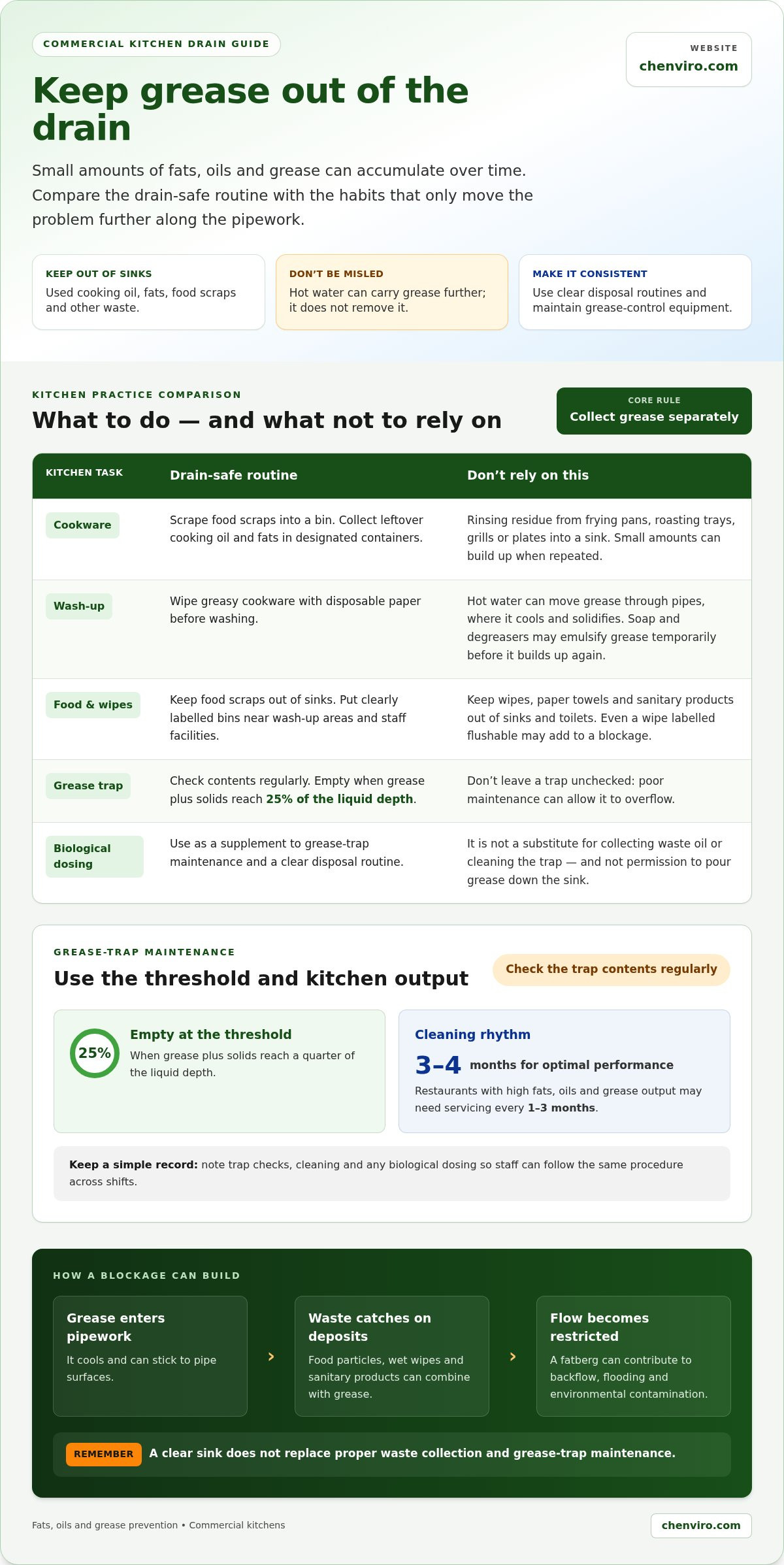
One symptom alone doesn’t identify the cause. A greasy sink strainer, a blocked pipe and a full or poorly maintained grease trap can produce different problems. Compare affected fixtures: if several drains slow at once, record which ones and when. If one sink is affected, note its use and recent cleaning instead. These details help distinguish a local issue from a wider drainage problem.
Check the grease trap as part of the same routine. Look for visible overflow, persistent odours around the unit, or grease and solids approaching the 25% liquid-depth threshold. Record the observation and date, then arrange cleaning when the threshold is reached. Don’t treat a temporarily clear sink as proof that a trap is functioning properly.
Keep a simple drain log by the kitchen close-down sheet. Staff can record the fixture, symptom, shift and whether the problem returned after cleaning. Escalate repeated slow drainage, backflow or pooling promptly, and reduce discharge into the affected drain while the issue is addressed. Don’t mask recurring odours with fragrance or pour extra hot water into a slow drain; neither action removes an obstruction. A clear record gives the person investigating the problem useful examples, rather than a general report that “the drains seem off”.
Staff training and kitchen procedures
Myth: drain-safe habits are obvious to every kitchen worker. A new starter may rinse a greasy pan or scrape food into a sink unless procedures make expectations clear. Give staff clear guidance on grease disposal and what can go down a drain. Repeat the instructions during induction and display them beside sinks and wash-up stations.
In an Irish restaurant, cool used cooking oil before placing it in a clearly labelled, lidded container. Keep the container away from sinks and floor drains, and use the business’s established waste collection arrangements for disposal. Never pour used oil, pan grease or cooking fat into a sink, toilet or gully.
Make the prohibited items clear during training:
Cooking oil, fat from roasting trays and greasy pan residue.
Food scraps, coffee grounds and sauces containing grease.
Wet wipes, sanitary products and paper towels.
Cleaning cloths or debris cleared from sink strainers.
Train staff to scrape plates, pans and trays into a food-waste bin before washing. Fit sink strainers where appropriate, then empty them into the bin rather than rinsing captured scraps down the drain. Check strainers during busy preparation and clear them again at close-down. A strainer catches solids, but it doesn’t capture dissolved grease or replace a grease trap.
Turn the routine into a simple shift handover: confirm oil is in its designated container, sink strainers are clear, and no waste has been tipped into a floor gully. Ask staff to report recurring slow drainage or unusual smells, then record the affected fixture and shift. This gives managers a practical way to spot repeated disposal problems and address them with the team.
If a drain remains blocked despite sound kitchen procedures, get help with a persistent drain blockage.
CH Enviro: Drain Unblocking Service
When kitchen drains remain blocked despite good disposal habits, CH Enviro’s Drain Unblocking Service can help address the blockage. Recurring blockages, wastewater backing up or persistent slow drainage need attention, rather than another rinse with hot water.
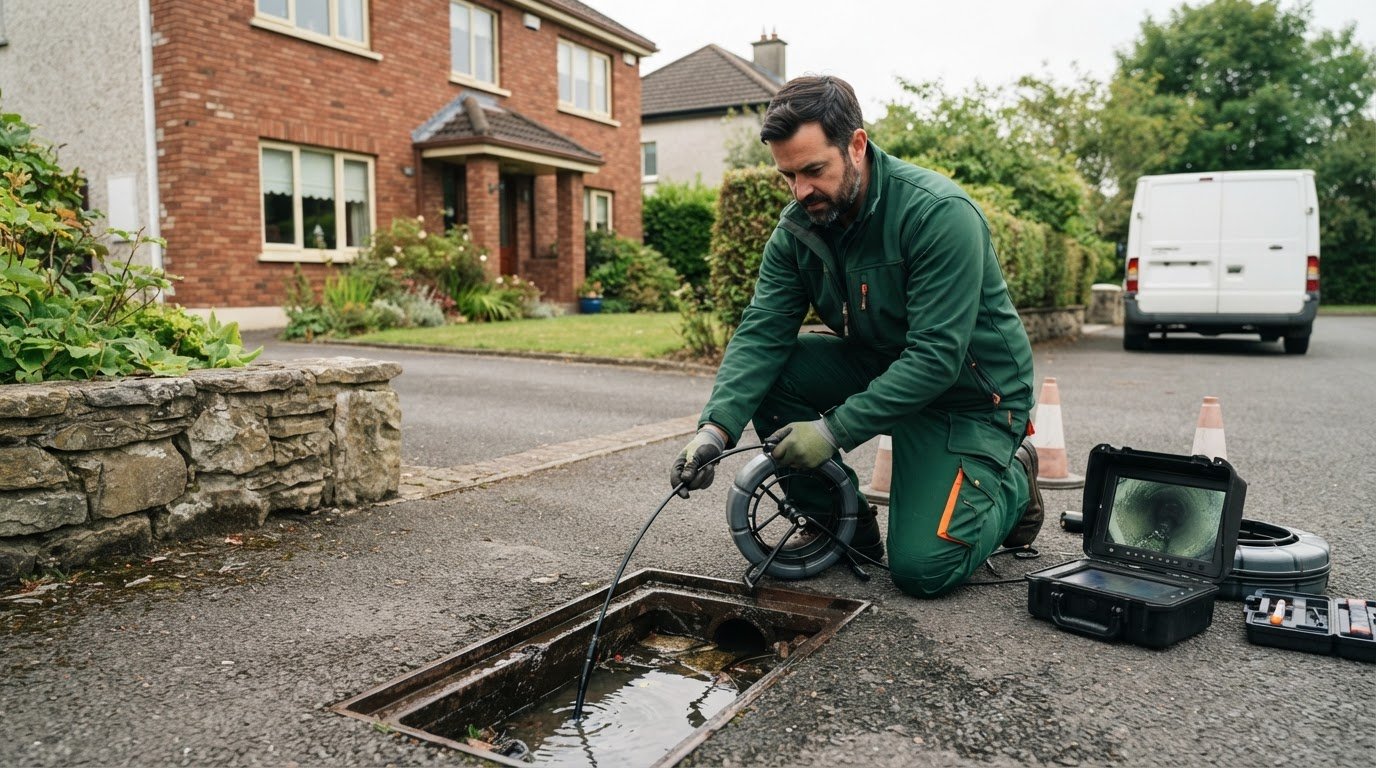
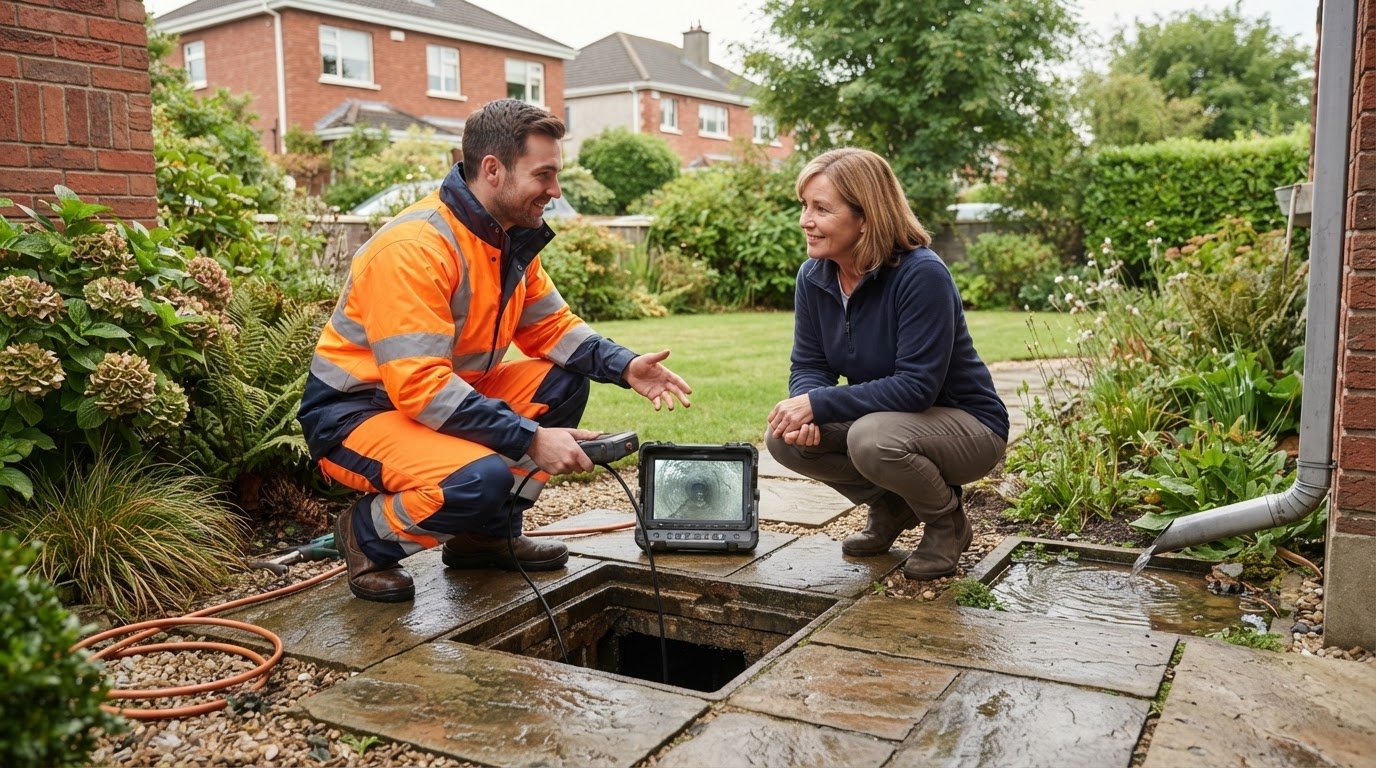
Where the cause isn’t clear, a CCTV Survey can help examine the drainage system and locate the problem. If the survey identifies damage, CH Enviro’s No-Dig Technology Repairs can address it without excavation. Grease Trap Maintenance can support routine grease management alongside staff procedures.
Keep a note of affected fixtures and recurring symptoms to explain the issue clearly. Contact CH Enviro to discuss a restaurant drain problem.
Make drain care part of the next shift
A durable approach to preventing fatbergs in restaurant drains depends on habits that hold up during busy services, staff changes and menu updates. Give one person responsibility for reviewing kitchen procedures, then use shift handovers to keep oil disposal and drain checks consistent. If a recurring issue appears, record what staff observed and where it happened. That gives the next step a clear starting point.
For a persistent blockage, CH Enviro provides a Drain Unblocking Service. A CCTV Survey can help investigate an unclear drainage problem, while No-Dig Technology Repairs are available when a repair is needed. The right route depends on the issue identified.
Bring recurring symptoms to CH Enviro rather than letting disruption become part of the kitchen routine. Contact CH Enviro about restaurant drains to discuss the next step. With clear staff routines and the right support when needed, your team can keep its attention on serving customers.
Frequently Asked Questions
What Are Fatbergs, and Why Do They Form?
Fatbergs are sewer obstructions formed as fats, oils and grease collect with other discarded waste. Their build-up happens as material cools, sticks to pipe surfaces and catches items such as wipes or food particles. Each deposit can create a rough surface that traps more debris as wastewater passes. The obstruction can therefore grow over time, even without one large grease discharge.
What Are Fatbergs and Why Should Restaurants Care?
Fatbergs concern restaurants because sewer restrictions can affect kitchen drainage and business operations. A blockage may cause wastewater to back up into a sink or floor gully, making normal cleaning difficult. Routine food preparation and washing-up can also contribute waste to the sewer. Staff procedures and grease-trap upkeep help limit what leaves the premises through wastewater pipes.
What Is a Fatberg and How Do You Prevent One?
A fatberg is accumulated grease mixed with other waste in sewer pipes. Prevent one by making disposal routines clear at every workstation, including temporary or outdoor preparation areas. Place a suitable waste container near frying and roasting stations, and make the closing shift responsible for checking it. Review the routine when the menu changes, especially if new dishes involve more frying or oil.
What causes fatbergs in restaurant drains?
Common contributors include oil left in frying equipment, fat from roasting trays, greasy sauces and scraps left on plates. These can enter drainage during washing-up, especially if staff rinse pans directly into sinks. Cleaning products may disperse grease temporarily without removing it from the drainage system. Wipes and other unsuitable items can also catch on grease farther along sewer pipes.
How to clean restaurant grease traps and interceptors properly?
Follow the equipment manufacturer’s instructions and the site’s cleaning procedure. Remove collected grease and solids, then scrape residue from the trap’s internal surfaces into a suitable waste container. Clean removable parts, check for damage or displaced components, and refit them correctly before restoring normal use. Keep a record of the cleaning date and any unusual build-up, leaks or odours observed.
How often should a restaurant grease trap be emptied and serviced?
Empty a trap when grease plus solids reach 25% of the liquid depth. Cleaning every 3-4 months supports optimal performance, but restaurants with high fats, oils and grease output may need servicing every 1-3 months. Kitchen output, trap condition and the volume of solids all affect the schedule. Check levels routinely rather than relying only on a calendar reminder.
Comments