
Slow Draining Sink: How to Fix It (2026 Guide)
- chenviro2
- 3 days ago
- 11 min read
That puddle of standing water in your basin isn't just a minor annoyance; it's a warning that your entire drainage system is struggling to breathe. When you're faced with a slow draining sink what to do becomes a priority before the situation escalates into a full-blown blockage or a messy overflow. It's frustrating when a simple task like washing your hands turns into a waiting game, especially when accompanied by persistent gurgling or foul smells. We understand that you want a resolution that actually lasts rather than a temporary fix that fails a week later.
In this 2026 guide, you'll discover exactly why your sink is draining slowly and how to resolve it using a mix of DIY methods and professional expertise. We'll walk you through the most common root causes, from simple hair clogs to deeper structural issues within your pipes. You'll learn when a plunger is enough and when it's time to call in the specialists at CH Enviro for a CCTV drain survey or professional unblocking. Our goal is to move you from a standing pool of water to a clear, fast-draining sink whilst ensuring you have the knowledge to prevent the problem from returning.
Table of Contents
Understanding Why Your Sink Is Draining Slowly
A slow draining sink is a physical symptom of a restricted waste pipe. Over time, everyday waste accumulates until the passage for water becomes too narrow for efficient flow. If water remains in the basin for minutes after you have finished, the obstruction is likely close to the surface or within the U-bend. When you are considering a slow draining sink what to do, the first step is identifying exactly where the blockage lives and what caused it. Understanding the mechanics of your plumbing helps you choose the right solution before the problem becomes an emergency.
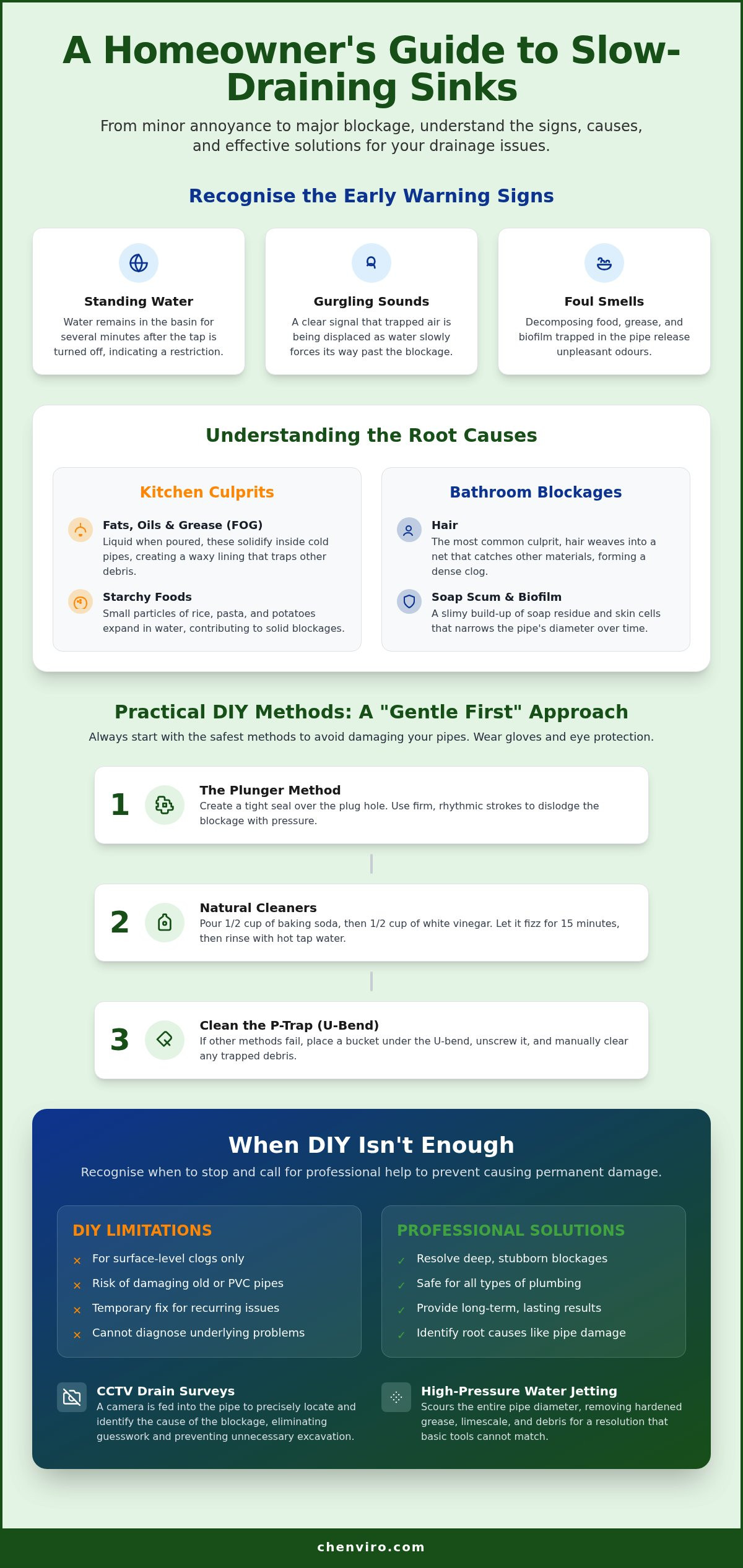
You might notice a distinct gurgling sound as the water eventually subsides. This noise occurs because air is trapped behind the restriction. As the water forces its way through the narrow gap, it must displace this air, which then bubbles up through the standing water. This isn't just an annoying sound; it is a clear diagnostic signal that your pipes are gasping for air. Ignoring this early warning often leads to a complete blockage that requires professional intervention.
The Kitchen Culprits: Fats, Oils, and Grease
In the kitchen, the primary enemy is FOG (fats, oils, and grease). Whilst these substances may be liquid when they leave your frying pan, they quickly cool and solidify once they hit the cold interior of your pipework. This creates a waxy lining that traps other debris. Starchy foods like rice and pasta exacerbate the issue by expanding when they sit in the water trap. To combat this, the "Think Before You Pour" campaign encourages householders to scrape plates into the bin rather than rinsing them into the drainage system. This simple habit change can prevent the majority of kitchen-based drainage failures.
Bathroom Blockages: Hair and Biofilm
Bathroom basins face a different set of challenges. Hair is the most common offender, weaving itself into a dense net inside the pipe. This net then catches soap scum and skin cells, forming a dark, slimy substance known as biofilm. This sludge gradually reduces the diameter of the pipe until drainage slows to a crawl. In areas like Dublin, hard water adds another layer of difficulty. Limescale deposits can form amongst the organic debris, creating a hardened mass that is often difficult to shift with standard chemical drain cleaners. These hardened clogs usually require mechanical removal to restore full flow.
Practical DIY Methods to Clear a Slow Draining Sink
When you're deciding on a slow draining sink what to do, always start with the most conservative approach. Aggressive techniques or harsh chemical cleaners can corrode older metal pipes and harm the environment. We recommend a "gentle first" policy to protect your plumbing fixtures. Before you begin, always wear rubber gloves and eye protection whilst attempting to clear a blockage manually. Stagnant water often harbours bacteria and hidden sharp debris that can cause infection or injury if you aren't careful.
The Plunger and Natural Solutions
Mechanical pressure is frequently the safest way to shift a stubborn clog without resorting to corrosive liquids. Follow these steps to maximise your chances of success:
Step 1: Create a tight seal with a cup plunger over the plug hole. Ensure there is enough standing water to cover the bell of the plunger; if the sink is dry, add an inch of water to help create suction.
Step 2: Use firm, rhythmic strokes to dislodge the blockage through pressure. The goal is to move the obstruction back and forth until it breaks apart and flows away.
Step 3: For organic buildup, try a natural reaction. Pour half a cup of baking soda followed by half a cup of white vinegar down the drain. Let it fizz for fifteen minutes before rinsing with hot tap water.
These tips for unclogging a kitchen sink provide a solid foundation for home maintenance. Avoid using boiling water if you have PVC pipes or porcelain basins, as the extreme temperature can melt seals or cause the basin to crack. Hot tap water is usually sufficient for rinsing away loosened debris.
Cleaning the P-Trap (U-Bend)
If the plunger fails to restore the flow, the obstruction is likely sitting in the trap. Locate the P-trap, which is the curved section of pipework directly under your sink. Place a bucket underneath to catch stagnant water and foul-smelling sludge before unscrewing the slip nuts by hand or with a wrench. The P-trap serves as the primary barrier for sewer gases, using a water seal to keep your home smelling fresh. Once the pipe is removed, check for hair nets or solidified grease and clear them manually before reassembling the unit.
Don't overdo the DIY. If the water doesn't move after three attempts, you've reached the limit of what can be safely achieved at home. Continuing could push the blockage deeper into the system or damage the pipe threads. If you're struggling with a persistent issue, our drain unblocking service provides a professional, no-nonsense resolution that protects your property from further damage.
When the Issue Is Deeper: External Drains and Septic Tanks
If you have tried the plunger and the U-bend is clear but the water still lingers, you're likely dealing with a systemic issue. When you're researching a slow draining sink what to do, it's vital to look beyond the basin. If multiple fixtures across your home are sluggish, it indicates a restriction in the main sewer line rather than an isolated pipe. External factors often play a role here. In Dublin and surrounding counties, heavy seasonal rainfall can overwhelm local drainage systems, causing back-pressure that prevents your household waste from exiting efficiently. In more serious cases, a slow sink is the first warning sign of a collapsed pipe or a structural failure caused by ground movement or age.
Septic Tank Maintenance for Homeowners
For rural properties in Meath, Kildare, or Wicklow, a slow sink is frequently the primary indicator that your septic tank has reached capacity. When the tank is full, effluent has nowhere to go. This creates a bottleneck that forces water to back up into the house's internal pipework. Ignoring these signs is risky. A full system can lead to groundwater contamination or a total system failure that requires expensive repairs. We recommend checking our guide on septic tank cleaning in Ireland to ensure your system remains compliant with the 2026 General Binding Rules. Regular maintenance is far more cost-effective than dealing with an overflow during a storm.
External Blockages and Tree Roots
Another common culprit for deep-seated drainage issues is tree root ingress. Fine root hairs can enter pipe joints in search of moisture, especially during dry spells. Once inside, they grow rapidly into thick, woody masses that trap grease and paper. This creates a solid barrier that no amount of supermarket chemical cleaner or plunging will ever shift. These chemicals often just pool on top of the root mass, potentially damaging your pipes without solving the problem. If you suspect an outside issue, our drain unblocking service Dublin uses specialised equipment to clear these external obstructions properly. Recognising that the problem is outside your four walls is the first step toward a permanent fix.
Professional Solutions: CCTV Surveys and High-Pressure Jetting
When standard household tools fail, a different level of intervention is required to protect your property. A traditional plumber's snake often only creates a small hole in a stubborn blockage, which quickly closes back up once the tool is removed. Professional drainage specialists use high-pressure water jetting (HPWJ) to scour the pipe walls completely. This process uses water at extreme pressure to strip away years of accumulated grease, biofilm, and debris. It doesn't just move the clog; it returns the pipe to its full original diameter. This is the definitive answer for a slow draining sink what to do when household methods have been exhausted and you need a permanent fix.
The Value of a CCTV Drain Survey
One of the biggest frustrations for homeowners is paying for a service without seeing the actual cause of the problem. CCTV technology removes the mystery by offering a "no-guesswork" diagnostic. We insert a high-definition, waterproof camera into your pipework to get a live view of the interior. On the monitor, you will see exactly what is causing the restriction, whether it is a structural defect, a thick layer of fat, or fine root hairs. This CCTV drain surveys in Dublin guide explains how this visual evidence is essential for making informed decisions. It ensures you aren't paying for unnecessary work and provides a clear roadmap for the most efficient resolution.
No-Dig Repair Options
If the survey reveals a crack or a collapsed section, you might worry about the cost and mess of digging up your floors or garden. Modern drainage technology allows us to fix these structural issues from the inside. We use no-dig drain repair in Dublin to reline pipes without any excavation. This involves inserting a resin-impregnated liner into the existing pipe, which then hardens to create a "pipe within a pipe". It is a mess-free, cost-effective alternative to traditional trenching. Most structural repairs can now be completed in a single day, ensuring your sink drains perfectly for years to come without the need for heavy machinery.
Choosing professional technology means choosing a permanent resolution over a temporary patch. If you've reached the limit of DIY and need a definitive fix that protects your home's infrastructure, our Drain Unblocking Service combines precision diagnostics with industrial power to clear your pipes for good.
How CH Enviro Resolves Persistent Drainage Issues
CH Enviro provides a direct, no-nonsense response to drainage emergencies. We don't believe in temporary patches or guesswork. When you are stuck wondering about a slow draining sink what to do, our team delivers a definitive resolution that protects your home. We operate across Dublin, Meath, Louth, Kildare, Wicklow, and Wexford, bringing industrial-grade equipment to domestic problems. Our experts are straight-shooters who value honesty and efficiency. We provide transparent reporting and fair pricing for all domestic drainage work, ensuring you understand the fix and the cost before any work begins.
Comprehensive Facility and Home Care
Our integrated approach to drainage services in Dublin ensures that every part of your waste system is functional. We have the capacity to handle everything from a single sluggish kitchen sink to complex pump station maintenance. We don't just clear the immediate blockage; we focus on long-term prevention. This might involve identifying structural weaknesses through a survey or suggesting better waste habits to prevent fat and oil buildup. By looking at the entire system, we ensure that a small restriction today doesn't become a flooded property tomorrow.
Contacting the Experts
If your DIY attempts haven't restored the flow after a few tries, it's time to stop. Forcing a blockage with home tools can lead to a full backup, which is far more destructive and expensive to clean. Our team is completely unfazed by even the toughest blockages or the most neglected septic tanks. We've seen every possible scenario and remain calm whilst delivering a fast resolution. Take immediate action to protect your property by booking a professional inspection. We'll diagnose the root cause, explain the solution clearly, and get your home running smoothly again without any fuss or hidden costs.
Restore Your Home’s Drainage Efficiency
Dealing with a sluggish basin is more than a minor chore; it's a sign that your pipework needs attention before a complete blockage occurs. By now, you should have a clearer understanding of slow draining sink what to do, whether that involves a simple plunger or identifying a deeper issue within your septic tank or external sewer line. Remember that whilst home remedies can shift surface debris, they cannot address structural defects or years of accumulated grease. Professional diagnostics ensure you aren't just treating the symptoms but fixing the root cause for good.
CH Enviro provides a calm, expert response to drainage crises across Dublin and the wider Leinster area. We specialise in precise CCTV diagnostics, no-dig repairs, and comprehensive septic tank and grease trap maintenance. If your DIY efforts haven't restored full flow, don't risk damaging your plumbing further. Contact CH Enviro for professional drain unblocking today. Our straight-talking team is ready to clear your pipes and give you back a functional, worry-free home.
Frequently Asked Questions
Why is my sink still draining slowly after I used a plunger?
If a plunger doesn't restore the flow, the blockage is likely too deep or too solid for suction to shift. Plungers are effective for soft obstructions near the plug hole, but they won't clear hardened grease, tree roots, or structural collapses further down the line. When you're stuck wondering about a slow draining sink what to do next, a professional inspection is required to locate the specific restriction.
Is it safe to use boiling water to unblock a slow kitchen sink?
No, we don't recommend using boiling water as it can damage your plumbing. Whilst it might melt some grease, the extreme temperature can also melt the rubber seals in PVC pipework or cause porcelain basins to crack from thermal shock. It's much safer to use hot tap water or natural solutions like baking soda and vinegar to avoid causing expensive permanent damage to your fixtures.
How much does it cost to have a drain professionally unblocked in Dublin?
The cost of professional unblocking depends on the severity and location of the clog. Factors such as the equipment needed, like high-pressure jetting or CCTV cameras, will influence the final price. We believe in transparency and fairness, so we provide clear quotes before work begins. Getting a specialist in early often prevents the much higher costs associated with a full sewage backup or property flood.
Can a slow draining sink be caused by a problem in the street?
Yes, your internal plumbing issues can sometimes be caused by a blockage in the public sewer main. If you notice that your neighbours are also experiencing slow drainage or if external manholes on the road are overflowing, the responsibility likely lies with the local water authority. If the issue is only within your property boundaries, it remains a private drainage matter.
Will a slow sink eventually lead to a burst pipe?
A slow sink won't usually cause a pipe to burst in the traditional sense, but it does lead to significant pressure and stagnant water. This weight can cause pipe joints to fail or leak over time. The primary risk is a total backup, where the water has nowhere to go and overflows into your home, causing immediate and costly damage to your floors and cupboards.
How do I know if my slow sink is caused by tree roots?
Tree root ingress is almost impossible to confirm without a CCTV survey. Common signs include persistent slow drainage across multiple fixtures and gurgling sounds from your pipes, especially if you have large trees near your external drain lines. Roots are attracted to the moisture in your pipes and can quickly grow into dense masses that completely trap household waste.
What is the best way to prevent grease buildup in my kitchen pipes?
The most effective prevention is to never pour fats, oils, or grease down the drain. Scrape all plates into the bin and wipe greasy pans with a paper towel before washing them in the sink. When considering a slow draining sink what to do for preventative care, regular flushing with hot soapy water helps keep minor residues from solidifying on the pipe walls.
Can a blocked plumbing vent cause my sink to drain slowly?
Yes, your drainage system needs air to move water efficiently through the pipes. If the vent pipe on your roof is blocked by a bird's nest or fallen leaves, it creates a vacuum that slows down the flow and causes distinct gurgling noises. If your U-bend and external drains are clear but the sink is still sluggish, a vent issue is a very likely culprit.


Comments