
Bad Smell from Drains Outside House in Dublin: Causes & Solutions (2026)
Is that sharp, sulphurous odour lingering near your front door just a temporary nuisance, or is it a warning sign of a structural failure hidden beneath your driveway? Dealing with a bad smell from drains outside house Dublin properties is more than just an inconvenience; it's a source of genuine anxiety. You might worry about the embarrassment when guests arrive or fear that a collapsed pipe is about to turn your garden into a costly construction site. It's also common to feel uncertain about whether the repair is your responsibility or if Uisce Éireann should be notified.
We know you want a resolution that's fast, transparent, and, ideally, non-invasive. You shouldn't have to guess what's happening underground or brace for unnecessary excavation. This guide will help you identify the specific causes of external drainage odours, from simple blockages to more complex pipe defects. You'll discover how professional Dublin drainage expertise can pinpoint the root cause using CCTV technology and resolve it permanently. We'll explore how modern no-dig repairs can fix damaged pipes without ruining your landscaping, giving you total peace of mind and a fresh-smelling home once again.
Table of Contents
Identifying the Source: Why Your Outside Drains Smell
Finding the source of a foul scent is the first step toward a permanent fix. If you notice a bad smell from drains outside house Dublin properties, your first instinct might be to panic about a collapsed pipe or a massive excavation bill. In reality, most odours are diagnostic signals rather than catastrophes. A bad smell is rarely the end of the world; it is simply a sign that the system is breathing where it shouldn't be. Most people assume the worst, but a simple blockage or a dried-out trap is far more likely than a total structural collapse. Before you call for help, determine if the scent is coming from a specific gully on your driveway or if it's drifting from the public footpath. If the smell is strongest near the street, it might be a municipal issue for Uisce Éireann. However, if it's concentrated near your own walls or vent pipes, the cause is usually closer to home.
Common Odour Profiles and What They Mean
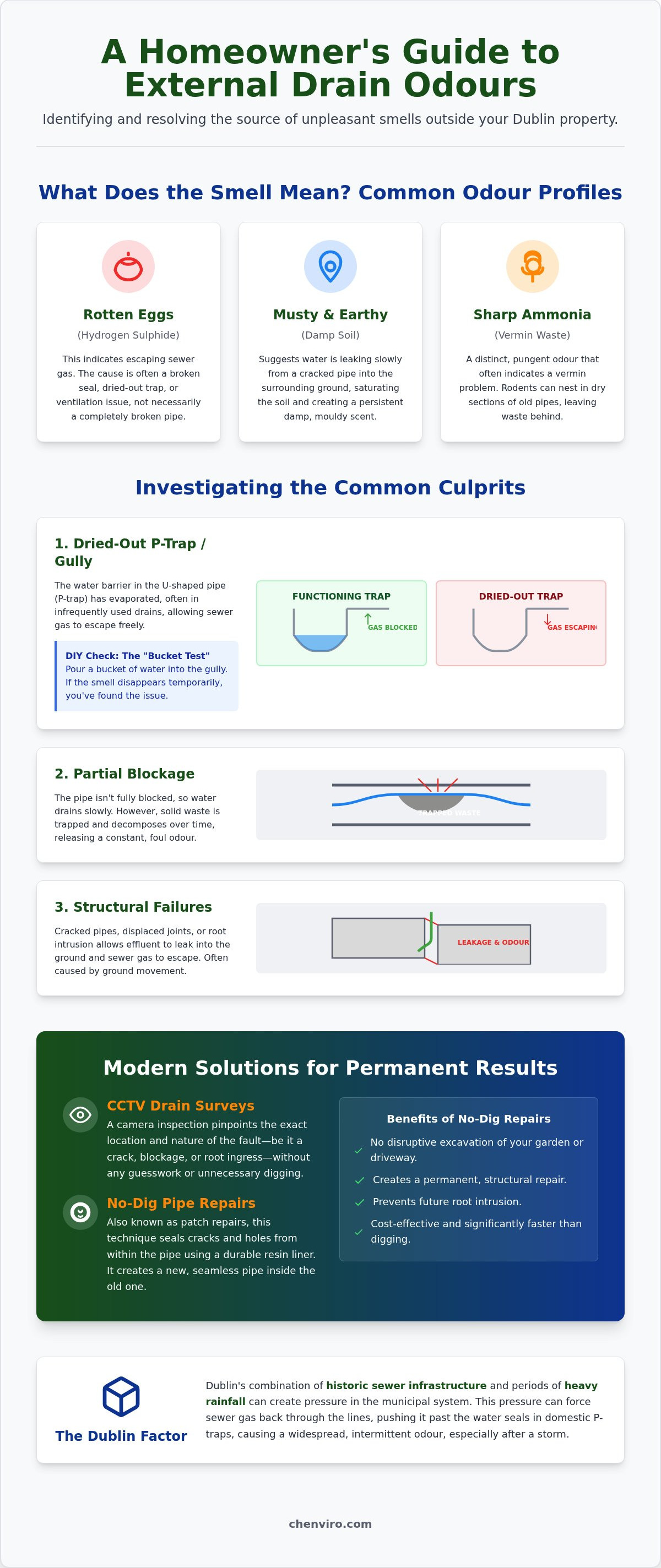
Different scents point to different failures. A smell of rotten eggs is the most common complaint. This is caused by Sewer gas, which contains hydrogen sulphide. It usually means the air that should stay inside the pipes is escaping through a broken seal or a vent. It doesn't necessarily mean the pipe is broken; it might just be a lack of ventilation or a trapped air pocket.
Musty or earthy smells are different. These often suggest that water is leaking slowly into the ground rather than flowing through the pipe. This saturates the soil and creates a damp, mouldy scent that lingers even in dry weather. Finally, if you notice a sharp, ammonia-like odour, it often indicates a vermin problem. Rats can nest in dry sections of old clay pipes, leaving behind waste that creates a distinct, pungent smell that is hard to ignore.
The Role of the P-Trap and Gully
Your external gullies use a P-trap, which is a simple U-shaped pipe that holds a small pool of water. This water acts as a physical barrier. It stops gases from the main sewer line from rising up into your garden. If this water seal fails, the smell returns immediately. If you're struggling with a bad smell from drains outside house Dublin homes, checking these traps is the best place to start.
During rare Dublin dry spells, the water in these traps can evaporate. This is common in guest annexes or gullies that don't receive regular runoff from gutters or sinks. Without that water barrier, there's nothing to stop the stench. Similarly, a buildup of leaves, silt, and decaying organic matter can sit in the trap itself. Even if the pipes are clear, this rotting debris creates its own local odour that mimics a sewer problem. Cleaning the gully often solves the issue without needing professional repair.
Common Culprits Behind Foul External Odours
A persistent bad smell from drains outside house Dublin properties usually indicates a specific mechanical or biological failure. It's rarely a mystery once you look at the evidence. One of the most frequent causes is a partial blockage. Unlike a full blockage that causes an immediate backup, a partial obstruction allows greywater and sewage to trickle past. However, it traps heavier solid waste. This waste sits in the pipe and decays, creating a constant, low-level stench that seems to come and go with the wind. If your drains seem to be flowing but the smell remains, this is often the reason.
Infrequently used areas also play a role. Guest annexes or external gullies that don't receive regular water flow are prone to dried-out traps. When the water barrier evaporates, the airtight seal is broken. This allows sewer gas to vent directly into the air around your home. It's a simple issue, but it can make your outdoor space feel unusable. In other cases, the problem is structural. Cracked pipes allow effluent to seep into the sub-base of your driveway or garden. This saturates the soil, creating a musty odour that persists even after the pipes have been cleaned.
Structural Failures and Cracked Pipes
Ground movement is a significant factor for many homeowners, especially in areas like North Dublin where soil conditions can vary. Even a minor shift can cause pipe offsets or "lips" where sections of the drain no longer meet perfectly. These gaps are an open invitation for tree roots. Roots seek out the nutrient-rich moisture inside your drains and can quickly break the airtight seal. Once the seal is gone, the smell follows. We often find that a full excavation isn't necessary. Modern patch repairs can seal these cracks internally, providing a permanent fix without the need to dig up your property.
Vermin and Rodent Infestations
Rats are attracted to the warmth and consistent food supply found in sewer systems. Once they find a way in, they create "rat runs" and nests that can obstruct the flow of waste. This activity often damages the pipework further, allowing gases to escape into the surrounding earth. Dealing with the smell often requires more than just a flush of the pipes; it requires addressing the biological cause. There are real health risks linked to sewer gas exposure, including the inhalation of hydrogen sulphide. If you suspect an infestation, integrating vermin control services into your drainage plan is the only way to ensure the odour doesn't return. If you are worried about recurring issues, you might want to consult a specialist to see if a non-invasive survey is the right next step.
The Dublin Factor: Older Pipes and Heavy Rainfall
Dublin's historic charm comes with a complex underground legacy. Many older neighbourhoods still rely on Victorian or Georgian infrastructure that was never designed for the modern volume of waste or the intensity of 2026 weather patterns. If you notice a bad smell from drains outside house Dublin homes in older districts, it's often due to the city's reliance on combined sewers. Unlike modern developments that separate rainwater from sewage, these older systems mix everything in a single pipe. When these pipes are pushed to their limit by population growth or weather, the resulting odours are a frequent byproduct.
Geography also plays a significant role. Coastal locations such as Howth, Clontarf, and Dun Laoghaire face additional pressure from sea-level influences. During high tides, the main sewer discharge points can become "tide-locked." This creates a temporary surcharge where air and sewage are pushed back toward domestic connections. Similarly, because Dublin houses are often closely packed, drainage lines are frequently shared. A blockage in a neighbour's gully can cause air to be displaced through your own system, meaning the stench you're experiencing might actually be caused by a problem three doors down.
Combined Sewer Systems in Dublin City
In a combined sewer system, the same pipe carries both surface runoff and raw sewage. During periods of high humidity or rapid atmospheric pressure changes, the gases within these large pipes can expand and rise. This is why you might notice a stronger scent just before a storm. Identifying responsibility is crucial for Dublin homeowners. Generally, you're responsible for the pipes within your property boundary. Once the pipe reaches the public footpath or joins a main sewer, it usually falls under the remit of Uisce Éireann. If the smell is consistent across the entire street, it is likely a municipal issue rather than a private fault.
The Impact of Heavy Rain on Trap Seals
Heavy Irish downpours do more than just wash away debris; they can actually "siphon" the water out of your traps. As a massive volume of water rushes through the main line, it creates a vacuum effect. This vacuum can suck the water seal right out of your external gullies. Once that water barrier is gone, there is nothing to stop sewer gas from rising directly into your garden. Fortunately, the fix is simple. You can "reset" your traps after a major storm by pouring a bucket of clean water into every external gully to ensure the seal is restored. If the smell persists after doing this, a structural issue or a deep-seated blockage is likely the cause.
DIY Checks vs Professional Odour Investigation
Before you commit to a major repair, it's vital to distinguish between a simple maintenance issue and a structural failure. Many instances of a bad smell from drains outside house Dublin properties can be diagnosed with a few basic checks. The first and most effective is the "bucket test." If the odour is coming from a specific gully, pour several litres of clean water into it. If the smell vanishes, the trap had simply dried out, breaking the airtight seal. You should also perform a visual inspection by safely lifting your manhole cover. Look for "fatbergs"—congealed masses of fat and wet wipes—or standing water that indicates a downstream blockage. If the water is flowing freely but the scent persists, the problem is likely hidden from the naked eye.
There is a limit to what you should attempt yourself. We strongly advise against using high-pressure garden hoses to clear blockages in older Dublin homes. Many of these properties use clay pipes with mortar joints. A concentrated blast of water can easily erode these joints or cause a hairline crack to become a full collapse. If your initial checks don't resolve the issue, the safest route is a CCTV drain survey in Dublin. This provides high-definition footage of the internal pipework, identifying cracks or root ingress that a manual inspection would miss.
What You Can Safely Check Today
Start with the basics. Check your manhole for missing bungs or perished rubber seals. A missing plastic bung in the interceptor trap is a common cause of sewer gas escaping directly into the garden. You can also look for "dead spots" or, conversely, areas where the grass is suspiciously lush and green. This often indicates a slow leak where sewage is fertilising the soil from beneath. Finally, clear any surface debris, such as rotting leaves or silt, from your gully grids. Sometimes the smell isn't the sewer at all, but rather decaying organic matter trapped just below the surface.
The Professional Diagnostic Toolkit
When DIY methods fail, professionals use specialised technology to locate the breach. Smoke testing is a highly effective, non-invasive method where non-toxic smoke is pumped into the sealed drainage system. If smoke emerges from a crack in your driveway or a gap in the soil, we've found your leak. We also utilise dye testing, where fluorescent, biodegradable dyes are flushed through the system. This allows us to track exactly where water is escaping, which is especially useful in coastal areas with high water tables. If you're tired of the guesswork, you can arrange a professional odour investigation to get a definitive answer and a fixed-price solution.
How CH Enviro Resolves Recurring Drain Smells
Dealing with a persistent bad smell from drains outside house Dublin properties requires a shift from temporary fixes to professional resolution. CH Enviro takes a systematic, evidence-based approach to every call-out. We begin with a rapid drain unblocking service in Dublin to clear any immediate obstructions. This process uses high-pressure water jetting to strip away the decaying organic matter that acts as a fuel source for foul odours. If our initial investigation reveals rodent activity, we install stainless steel rat flaps and vermin barriers. These one-way valves allow waste to exit but prevent rats from entering your system to create nests or blockages that trap waste.
Our "straight-shooter" philosophy means we don't believe in guesswork or "over-selling" a solution. If a pipe is clear but still smells, we use our diagnostic tools to find out exactly why. We provide transparent, upfront pricing and never recommend unnecessary work. We understand that drainage issues are stressful, so we focus on providing a calm, authoritative service that gets the job done right the first time. Our team has seen every possible scenario in the Dublin area and remains unfazed by even the most complex odour complaints.
No-Dig Solutions for Dublin Properties
For many homeowners, the anxiety of a bad smell from drains outside house Dublin is compounded by the fear of having a driveway or patio dug up. We utilise no-dig drain repair to solve structural defects without the mess. This process, known as patch lining, involves inserting a resin-impregnated sleeve into the pipe. Once positioned over the crack or leak, the sleeve is inflated and cured until it hardens. This creates a new, seamless pipe within the old structure, effectively sealing off any points where sewer gas could escape. It is the favourite method for Dublin properties because it preserves your landscaping whilst providing a permanent, structural fix. Modern trenchless repairs are designed for longevity and can easily withstand the pressure of heavy Dublin rainfall and ground movement.
Preventative Maintenance Contracts
Recurring odours often stem from a slow buildup of "sludge", which is a thick combination of fats, oils, and silt that coats the internal walls of the pipe. Over time, this material decomposes and releases gas, even if the drain isn't fully blocked. Regular cleaning prevents this material from reaching a critical level. This is especially vital for commercial properties and restaurants in Dublin that must adhere to strict hygiene standards. A scheduled maintenance plan ensures your grease traps and external gullies remain clear and odour-free throughout the year. We find the source, fix the fault, and clear the air.
Restore Fresh Air to Your Dublin Home
You don't have to live with the embarrassment or worry of a persistent drainage odour. Whether the cause is a dried-out trap after a storm or a structural breach caused by Dublin's ageing pipework, the solution is often simpler and less invasive than you expect. By performing basic DIY checks like the bucket test, you can rule out minor issues today. However, if the scent persists, it's a diagnostic signal that requires professional attention to prevent further damage or potential health risks.
CH Enviro provides a definitive resolution to every bad smell from drains outside house Dublin residents encounter. As no-dig repair specialists, we focus on fixing the root cause without destroying your driveway or garden. Our fully insured and local expert team is available with an emergency 24/7 response across Dublin to ensure your home remains safe and clean. You deserve a transparent service that values honesty and efficiency above all else.
Contact CH Enviro now for a professional drain odour investigation in Dublin and take the first step toward clearing the air for good.
Frequently Asked Questions
Why does my outside drain smell like rotten eggs?
A "rotten egg" scent is typically caused by hydrogen sulphide, which is a primary component of sewer gas. This occurs when organic waste decomposes in a stagnant section of the pipe or when the water seal in your gully has evaporated. If this airtight barrier is broken, gases from the main sewer line escape directly into your garden. Regular flushing or professional unblocking can resolve the underlying buildup of decaying matter.
Is the council responsible for a smelly drain outside my house?
Responsibility depends on the location of the fault. Homeowners in Dublin are usually responsible for all drainage pipes located within their property boundary. If the smell originates from a pipe under the public footpath or a shared main sewer, Uisce Éireann is typically the responsible body. If multiple neighbours report a bad smell from drains outside house Dublin locations, it is likely a municipal issue rather than a private fault.
Can heavy rain cause my outside drains to smell?
Heavy rainfall can create a vacuum effect that siphons the water out of your external traps. Once this water barrier is gone, sewer gases rise freely into the air. Additionally, Dublin’s older combined sewer systems can become overwhelmed during intense storms, forcing air and odours back up through domestic connections. Pouring a bucket of clean water into every external gully after a storm is an effective way to reset the seal.
Will I have to dig up my garden to fix a smelly drain?
Excavation is rarely the first resort for modern drainage experts. Most structural defects, such as cracks or root ingress, can be resolved using no-dig drain repair techniques. This involves inserting a resin liner into the existing pipe to seal leaks from the inside. It is a non-invasive, durable solution that fixes the cause of the odour without the need to dig up driveways, patios, or landscaped garden areas.
Can rats in the drains cause a bad smell?
Yes, vermin activity is a common source of pungent, ammonia-like odours. Rats often enter the system through broken pipes or dry sections of older clay drains. Their waste and nesting materials can obstruct the flow, leading to the accumulation of decaying matter. Professional vermin control, combined with the installation of stainless steel rat flaps, prevents rodents from returning and ensures the smell is permanently eliminated from your property.
How much does a CCTV drain survey cost in Dublin?
The cost of a CCTV drain survey in Dublin varies depending on the size of the property and the complexity of the pipework. Whilst industry rates fluctuate, most professional providers offer fixed-price diagnostic surveys to ensure transparency. This service provides high-definition footage of your drains, allowing you to see the exact cause of any recurring odours before committing to any repair work or long-term maintenance contracts.
Is the smell from my drains dangerous to my health?
Persistent exposure to sewer gas can pose health risks. Sewer gas contains components like hydrogen sulphide and ammonia, which can cause headaches, dizziness, or nausea in high concentrations. Whilst the open-air nature of outside drains reduces the risk of gas buildup, a constant bad smell from drains outside house Dublin properties should be addressed quickly. This ensures your outdoor environment remains hygienic and safe for your family and visitors.
Why does the drain smell only at certain times of the day?
Fluctuating odours are often linked to usage patterns or changes in atmospheric pressure. You might notice the smell more in the evenings when household water usage peaks, pushing air through the system. Alternatively, changes in temperature or barometric pressure can cause gases to expand and escape through weakened seals. Identifying these patterns helps professionals pinpoint whether the issue is a ventilation fault or a capacity problem within the pipes.


Comments