
Expert Pump Station Repair in Ireland: Restoring Flow and Preventing Failure
- chenviro2
- 2 hours ago
- 12 min read
Imagine waking up to the piercing sound of a high-level alarm whilst heavy rain lashes against your windows. You know that if your system fails to move wastewater now, you are facing a costly and unsanitary mess on your property. When you need urgent pump station repair Ireland, you don't have time for vague promises or unreliable contractors. You need a straight-talking expert who can restore flow before the situation escalates into a full-scale environmental crisis.
It is completely normal to feel overwhelmed by the technical complexity of your drainage system and the strict Irish environmental regulations. You want a solution that is transparent, fair, and effective. This article provides a clear roadmap to identify early warning signs, understand repair requirements, and ensure your system meets the latest Uisce Éireann standards. We will look at common failure points, the benefits of modern no-dig technology, and how a simple maintenance strategy prevents the fear of raw sewage flooding from becoming a reality. By the end, you will know exactly how to protect your property and your budget from the risks of pump failure.
Table of Contents
Understanding Pump Station Mechanics and Common Failures in Ireland
Pumping stations act as the heart of your property's drainage network. In Ireland, where gravity doesn't always favour our landscape, these systems are essential for moving waste and surface water to higher ground or public sewers. A typical setup relies on three core components working in harmony: submersible pumps, float switches, and a control panel. If any of these fail, the system stops. Recognising the difference between a mechanical pump jam and an electrical control failure is the first step in effective pump station repair Ireland. It's a technical job that requires a clear, methodical approach to diagnostics.
Foul Water vs. Stormwater Systems
Foul water stations handle everything from toilets and sinks. These often feature macerator pumps designed to grind up solids. The biggest challenge here is the introduction of items that shouldn't be flushed. On the other hand, stormwater systems are built for speed. They must manage massive volumes of runoff during the heavy rainfall common in Leinster. Problems arise when these systems are cross-contaminated. If stormwater floods a foul station, the pumps work double time. This leads to rapid motor burnout and system degradation. Each system has unique requirements, and treating them as identical is a recipe for a breakdown.
Why Irish Pump Stations Fail Prematurely
"Fatbergs" are a primary culprit for foul pump failure. These hardened masses of grease, oils, and "flushable" wipes wrap around the impellers, causing the motor to seize. In stormwater sumps, the enemy is often silt and grit. Heavy Irish rain washes debris into the tank, where it settles and acts like sandpaper on the pump's internal seals. It's a common sight for our teams in Dublin and Kildare. Don't overlook the electrical side, either. Our damp climate is notoriously hard on control panels. Moisture ingress and electrical surges can fry sensitive relays, leaving your pumps dormant even when the tank is full. We often find that a "failed" pump is actually just a victim of a corroded wire or a tripped switch in the control box.
Understanding these mechanics helps you spot trouble before it becomes a flood. A pump station isn't just a tank in the ground; it's a precision-engineered tool. When you understand how the float switches trigger the motor and how the control panel monitors health, you can communicate more effectively with your repair partner during a pump station repair Ireland call-out. This knowledge saves time and prevents you from being sold parts you don't actually need.
Identifying the Warning Signs: When to Call for Pump Station Repair
Catching a fault before your garden or basement floods is the difference between a routine fix and a full-scale emergency. Most property owners only pick up the phone for pump station repair Ireland once the alarm is screaming, but your system usually provides subtle clues long before total failure. Recognising these red flags saves you from high emergency call-out costs and the nightmare of raw sewage backups. It starts with paying attention to how your system sounds, smells, and even how much electricity it consumes.
The High-Level Alarm: Your First Line of Defence
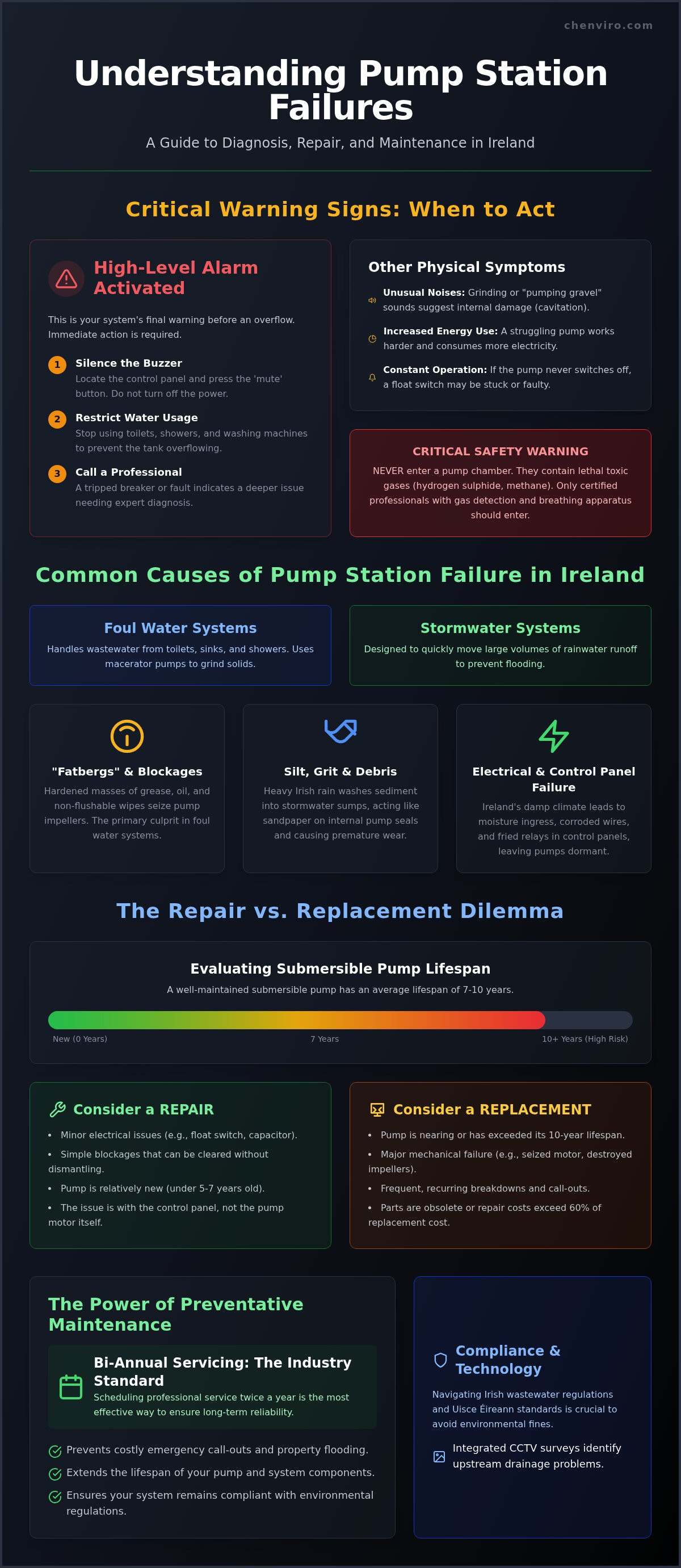
The high-level alarm is your system's way of telling you that the water level has risen past the normal operating point. This usually happens because a pump has tripped its breaker or a float switch is tangled. If you hear this alarm, follow this 3-step protocol immediately:
Silence the buzzer: Locate the control panel and press the mute button, but do not turn off the power.
Restrict water usage: Stop using toilets, showers, and washing machines to prevent the tank from overflowing.
Call a professional: A tripped breaker often indicates a deeper mechanical struggle that needs expert diagnostics.
Warning: Never attempt to open the manhole cover or enter a pump chamber yourself. These environments contain lethal concentrations of hydrogen sulphide and methane gas. Professional technicians use specialised gas detection equipment and breathing apparatus to work safely in these spaces.
Physical Symptoms of Pump Fatigue
Unusual noises are a common indicator of internal damage. If your pump sounds like it is "pumping gravel" or marbles in a blender, it is likely experiencing cavitation. This occurs when air bubbles collapse inside the pump, pitting the metal impellers and eventually destroying the unit. You should also watch for persistent foul odours near the station, which suggest that waste is sitting stagnant rather than being moved efficiently. If you notice your electricity bills spiking without a change in your daily habits, your pumps might be running constantly due to a faulty switch or a partial blockage.
Slow-draining sinks or toilets are often the first sign that your pump station is struggling to clear the line. Whilst this can be a simple blockage, it often points to a systemic failure. We recommend using CCTV drain surveys to see exactly what is happening inside the pipes before they reach the pump. This integrated approach ensures the repair addresses the root cause rather than just the symptom. If you suspect your system is underperforming, a quick professional inspection can prevent a minor fault from becoming a total system collapse.
Monitoring these signs ensures your pump station repair Ireland is proactive. A well-maintained system doesn't just work; it works quietly and efficiently in the background, exactly as it should. Don't wait for the alarm to tell you there is a crisis when the physical symptoms are already visible.
The Repair vs. Replacement Dilemma: Evaluating Your Systems Longevity
Deciding whether to patch up an old pump or invest in a new unit is a common challenge for property managers. In Irish commercial settings, a high-quality submersible pump typically has a reliable lifespan of 7 to 10 years. Pushing a unit beyond this decade-mark often becomes a case of false economy. You might save on capital expenditure today, but you'll likely pay for it in frequent emergency call-outs and inflated electricity bills tomorrow. At CH Enviro, we focus on providing straight-talking advice for pump station repair Ireland. Our goal is to ensure you only spend money where it actually adds value to your infrastructure, rather than upselling hardware you don't need.
When Repair is the Smart Choice
Repair is often the most sensible route when the core motor remains healthy. Many system failures stem from peripheral components that are relatively simple to replace. Swapping out a faulty float switch, changing a worn capacitor, or clearing a stubborn blockage can restore full service at a fraction of the cost of a new unit. Control panel repairs are another area where targeted maintenance extends the system's life. We find that a professional "pump out and clean" often resolves performance issues by removing the grit and grease that cause mechanical strain. These smaller interventions keep your system running efficiently without the disruption of a full overhaul.
Signs That Replacement is Inevitable
Replacement becomes the only viable option when the core mechanics are compromised. Motor burn-outs, persistent seal failures, or obsolete control components that are no longer manufactured are clear signals that your system has reached its limit. We frequently encounter "zombie" pumps: units that sound like they are working but move no liquid because the internal impellers are completely eroded. Modern, energy-efficient pumps are a tactical investment. They often pay for themselves through significantly lower running costs and improved reliability. This type of modernisation is a vital part of proactive facility maintenance in Dublin, as it reduces the risk of environmental non-compliance whilst protecting your property's long-term value.
A reliable pump station repair Ireland partner will always give you a clear breakdown of these options. We look at the age of the unit, the frequency of recent faults, and the potential energy savings of a newer model. If a repair is just a temporary "plaster" on a terminal problem, we will tell you straight. Our reputation is built on honesty and ensuring your wastewater continues to flow without constant, costly interruptions.
Preventative Maintenance: Organising a Service Schedule for Irish Weather
Irish weather is the ultimate stress test for any drainage system. With rainfall intensity increasing, your pumps are working harder and more frequently than ever before. This is why bi-annual servicing has become the industry standard for commercial properties across Leinster. Waiting for a component to fail before seeking pump station repair Ireland is a high-risk strategy. It usually leads to emergency call-outs during the worst possible weather conditions when service teams are at their busiest. A proactive schedule ensures your system is ready for the next winter storm rather than being defeated by it.
Sump cleaning is the most overlooked part of a maintenance routine. Over time, heavy solids and grease settle at the bottom of the chamber. This reduces the available volume and forces the pumps to cycle more often, leading to premature motor wear. If your system feeds into a larger treatment process, regular maintenance here is closely linked to septic tank cleaning in Ireland. Keeping the sump clear prevents sludge from being pushed into secondary treatment stages, where it can cause significantly more expensive damage to the soakaway or percolation area.
The 10-Point Pump Service Checklist
A professional service is more than just a quick visual check. It involves a technical assessment to identify wear before it leads to a total breakdown. Our technicians focus on amp readings to check motor health and insulation resistance testing to identify potential electrical leaks before they trip your breakers. We also inspect the oil condition in the motor chamber and perform a thorough cleaning of float switches to prevent them from "sticking" in the on or off position. Maintaining a detailed service record is vital for insurance claims and EPA audits, proving that you have taken all reasonable steps to prevent system failure.
Environmental Compliance and the EPA
The legal landscape for wastewater in Ireland is strict. Businesses have a non-negotiable obligation to prevent "uncontrolled releases" of sewage into the environment. Recent reports indicate that in 2025, 59% of licensed wastewater treatment plants in Ireland failed to consistently meet environmental standards. This has led to increased scrutiny and more frequent inspections from regulators. Regular maintenance prevents groundwater contamination and protects you from the heavy fines associated with environmental non-compliance. We ensure all drainage services in Dublin and the surrounding counties meet these local standards and EPA requirements.
Don't leave your property's safety to chance during the next heavy downpour. You can organise a professional maintenance visit today to ensure your pump station remains compliant and fully operational throughout the year.
Professional Pump Station Solutions with CH Enviro
CH Enviro stands as the leading specialist for pump station repair Ireland, serving commercial and residential clients across the Leinster region. We operate with a clear, no-nonsense philosophy: we identify the fault, explain the solution, and restore service as quickly as possible. There is no room for decorative marketing language when your property is at risk of flooding. You need a straight-shooter who understands the urgency of a critical facility failure and has the technical skill to resolve it without delay. Our 24/7 emergency availability ensures that even during a weekend storm, you have access to a reliable expert who remains unfazed by complex drainage challenges.
Our Service Areas: Dublin, Meath, and Beyond
Our reach extends throughout the East Coast and Midlands, covering a wide range of counties including:
Dublin and the greater metropolitan area
Meath and Louth
Kildare and Wicklow
Wexford
This regional presence is more than just a list of locations; it represents a deep understanding of local soil conditions and drainage infrastructure. We know how the heavy clay in parts of Meath or the coastal conditions in Wexford impact pump longevity. This local knowledge allows us to provide more accurate diagnostics and more durable repairs. We are committed to a rapid response for every client, ensuring that local businesses and homes don't have to wait days for a resolution whilst their wastewater system is out of action.
The CH Enviro Advantage: Beyond the Pump
What sets CH Enviro apart is our holistic view of your property’s health. We don't just look at the pump in isolation. Our team investigates the entire system to ensure that an upstream blockage or a structural pipe failure isn't the real cause of your trouble. By integrating CCTV diagnostics with advanced technology like no-dig drain repairs, we can rehabilitate your infrastructure with minimal disruption to your daily operations. When you choose us for pump station repair Ireland, you are getting more than a technician; you are getting a partner dedicated to your property's compliance and safety.
This integrated approach provides the peace of mind that comes from having a single, dependable contractor for all your environmental and drainage needs. Whether you are dealing with a persistent alarm or looking to organise a preventative maintenance contract, we are here to help. You can contact CH Enviro for professional pump station repair and maintenance to secure your property against future failures. We provide fixed outcomes and clear communication, ensuring your wastewater continues to flow exactly as it should.
Take Control of Your Wastewater Infrastructure
Managing a pump station doesn't have to be a source of constant stress. By recognising early warning signs and moving from a reactive mindset to a preventative maintenance schedule, you protect your property from the high costs of emergency failures. We have explored how bi-annual servicing and a clear understanding of your system's lifespan keep your drainage running efficiently whilst meeting all Irish environmental standards. It's about being proactive rather than waiting for a crisis to occur during a storm.
When you need reliable pump station repair Ireland, you need a partner who prioritises transparency and fast results. CH Enviro has been serving Dublin and Leinster for over a decade, providing fully insured and EPA-compliant solutions. Whether you require 24/7 emergency support or a routine system health check, our team delivers the straight-talking advice and technical expertise you deserve. Book an expert pump station inspection with CH Enviro today to secure your property. Don't wait for the next heavy downpour to test your system; get the peace of mind that comes from a professionally maintained pump station.
Frequently Asked Questions
How much does a pump station repair cost in Ireland?
The cost of a repair depends entirely on whether you are facing a minor component failure or a full pump replacement. A simple float switch adjustment or capacitor change is relatively inexpensive; however, a burnt-out motor requires a more significant investment. Whilst we provide clear diagnostics before starting work, the most effective way to manage your budget is through preventative maintenance. This avoids the premium rates associated with emergency call-outs and the heavy clean-up costs following a flood.
My pump station alarm is buzzing; what is the first thing I should do?
You should silence the alarm at the control panel and immediately stop using all water-based appliances in your building. A buzzing alarm usually indicates a high-level fault, meaning the tank is at risk of overflowing because the pumps aren't moving the waste. Do not attempt to open the manhole or enter the chamber yourself due to the risk of toxic gases. Contact a professional to perform a diagnostic check on the pumps and float switches right away.
Can I repair a submersible pump myself?
No, you should not attempt to repair a submersible pump yourself because of the extreme safety risks involved. Pump chambers are confined spaces that often contain lethal gases like hydrogen sulphide and methane. Additionally, working with high-voltage electricity in a wet environment requires specialist training and equipment. DIY repairs can also void your equipment warranties and lead to environmental non-compliance if the system is not restored to the correct operational standards.
How often should a commercial pump station be serviced in Dublin?
Commercial properties in Dublin should schedule a professional service at least every six months. This bi-annual frequency is the industry standard for ensuring that pump station repair Ireland needs are kept to a minimum. High-traffic buildings or sites with significant stormwater runoff put extra strain on the mechanics. Regular servicing identifies worn components like seals and bearings before they cause a total system shutdown during heavy rain or peak usage periods.
What causes a foul smell coming from my pump chamber?
Foul odours are typically caused by stagnant sewage that isn't being moved efficiently or a buildup of sludge and grease in the sump. If a pump is failing or a float switch is set incorrectly, waste sits in the chamber for too long and begins to decay. A professional pump-out and high-pressure clean of the chamber usually resolves the issue. This process removes the organic matter that causes smells and prevents them from entering your property.
Does CH Enviro offer 24/7 emergency pump repairs in Kildare and Meath?
Yes, we provide 24/7 emergency response for critical pump failures across Kildare, Meath, and the wider Leinster area. We understand that a pump failure can happen at any hour and requires immediate attention to prevent property damage. Our teams carry the necessary equipment to diagnose and fix most common foul and stormwater issues on the first visit, providing expert pump station repair Ireland services when they are needed most.
How long does it take to replace a failed sewage pump?
A standard pump replacement usually takes between two to four hours, provided the site is accessible and a replacement unit is available. The process involves isolating the power, lifting the failed unit out of the chamber, and installing the new pump onto the guide rails. If the control panel or internal pipework also requires modification, the job may take longer. Our goal is always to restore service on the same day to minimise disruption.
Is a pump station failure covered by my building insurance?
Coverage depends on your specific policy, but most insurers exclude failures caused by a lack of maintenance or general wear and tear. However, damage resulting from sudden electrical surges or accidental blockages might be covered under certain circumstances. Keeping a documented history of regular professional servicing is vital if you need to make a claim. Insurers are more likely to approve claims when you can prove the system was maintained according to industry standards.


Comments