
Grease Trap Cleaning Cost in Meath: 2026 Price Guide and Compliance
- chenviro2
- Jul 22
- 12 min read
What if the lowest quote you receive for grease trap maintenance is actually the most expensive mistake your business makes this year? In a busy commercial kitchen, a sudden blockage doesn't just cause a mess; it stops your service entirely. When you are facing a crisis, the cost of emergency grease trap cleaning Meath might seem like your biggest concern, but the hidden price of non-compliance with Uisce Éireann regulations can be far higher. You already know that foul odours and slow drains are signs of trouble that you cannot afford to ignore if you want to keep your customers happy and your kitchen running.
We understand that you want fixed maintenance costs without the shock of hidden fees or the fear of heavy fines. This 2026 price guide will show you exactly what to expect when budgeting for grease trap services in County Meath, from routine pump-outs to the mandatory €380 trade effluent licence fee. We will explore the factors that influence your cleaning costs and preview the new national trade effluent charges set to take effect in October 2026, giving you the clarity needed to keep your kitchen odour-free and fully compliant.
Table of Contents
Understanding Grease Trap Maintenance in County Meath
For any commercial kitchen in Navan, Ashbourne, or Trim, the grease trap is the unsung hero of the plumbing system. It acts as a vital interceptor that separates food waste from wastewater before it enters the main drainage network. If you aren't sure exactly what a grease trap is, it is a plumbing device designed to catch Fats, Oils, and Grease (FOG) whilst allowing filtered water to pass through. In County Meath, managing this waste isn't just a recommendation; it's a legal obligation. Under the Trade Effluent Licence system managed by Uisce Éireann, every food business must prove they are capturing and disposing of grease responsibly.
The environmental stakes are high for our local community. Failure to maintain these units can lead to FOG entering the sensitive Boyne catchment area, causing significant damage to local biodiversity and water quality. When grease escapes your kitchen, it cools and hardens in the public sewers, creating "fatbergs" that lead to massive blockages and foul-smelling overflows. Most businesses in Meath rely on either passive grease traps, which use gravity to separate waste, or automatic grease recovery units that mechanically remove oil. Regardless of the system you have, neglecting it will eventually lead to a crisis that requires emergency grease trap cleaning Meath to keep your doors open.
How Grease Interceptors Work in Commercial Kitchens
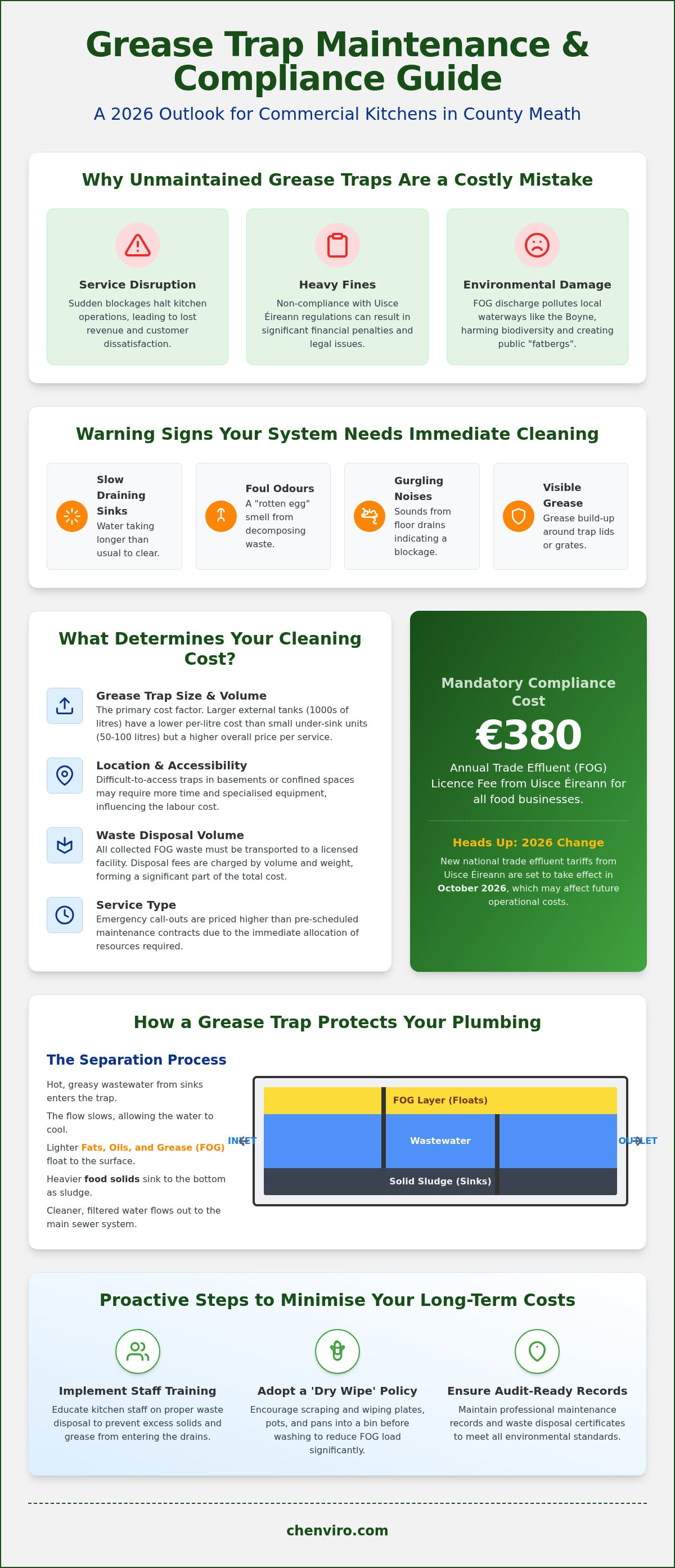
The science behind grease separation relies on temperature and time. As hot, greasy water from your pot wash enters the trap, the flow slows down and the water begins to cool. Because grease is lighter than water, it naturally floats to the surface, whilst heavier food particles sink to the bottom. Internal baffles act as walls to ensure the water stays in the tank long enough for this separation to occur. It's a common mistake to think that staff skimming the top layer is enough. Skimming doesn't touch the heavy sludge at the bottom of the tank. Only a professional pump-out ensures the entire unit is clear and functioning at 100% capacity.
Signs Your Meath Business Needs Immediate Cleaning
You don't need to wait for a scheduled inspection to know your system is failing. Your kitchen will give you clear warning signs when a blockage is imminent. If you notice sinks draining slowly or hear gurgling noises coming from the floor drains, the trap is likely full. The most offensive sign is a "rotten egg" smell in your dining area, caused by sulphuric acid build-up as organic matter decomposes. If you see grease visible around the trap lid or drainage grates, you are already at risk of a backup. In these moments, calling for emergency grease trap cleaning Meath is the only way to prevent an unplanned kitchen closure or a failed council audit.
What Determines the Grease Trap Cleaning Cost in Meath?
Calculating the exact cost for grease trap maintenance isn't a one-size-fits-all process. Several variables dictate the final invoice, and understanding these can help you avoid unexpected expenses. The primary factors include the physical size of the unit, how easy it is to access, and the current rates for legal waste disposal at licensed facilities. While a small café might only produce a few litres of waste per week, a large hotel or food processing plant in Navan requires a much more robust response.
One-off call-outs for emergency grease trap cleaning Meath typically carry a higher price point than scheduled maintenance. This is due to the immediate resource allocation required to prevent kitchen downtime. Beyond the labour, the cost of disposing of Fats, Oils, and Grease (FOG) is a significant part of the bill. All waste must be transported to specialised treatment centres, and these facilities charge according to the volume and weight of the material. Staying on top of FOG licence compliance ensures you have the necessary documentation to prove this waste was handled correctly, avoiding potential fines that far outweigh the cleaning cost.
The Impact of Grease Trap Size on Pricing
The volume of your trap is the most direct influence on price. Small under-sink units, often between 50 and 100 litres, are quick to service but require frequent attention. In contrast, large external interceptors can hold thousands of litres and require a dedicated vacuum tanker. It's a common industry standard that larger traps often have lower per-litre cleaning costs because the fixed costs of the site visit are spread over a greater volume of waste. Ensuring you have the right size unit for your output is the first step in managing your long-term budget.
Location and Accessibility Challenges in Meath Towns
Meath is home to many historic buildings, particularly in towns like Trim or Kells. These older structures often present unique challenges for service teams. If a trap is buried in a basement or tucked behind heavy kitchen equipment, it requires more labour and specialised pumping gear. Outdoor traps located in car parks or service yards are the ideal scenario, as they allow for quick, non-disruptive servicing without dragging hoses through your dining area. If you're unsure where your unit stands, a quick assessment of your grease trap cleaning & maintenance needs can clarify any potential accessibility surcharges.
Meath County Council Compliance: The Real Cost of FOG Licences
In County Meath, the local authority takes Fats, Oils, and Grease (FOG) management very seriously. Every commercial kitchen, from small cafes in Dunshaughlin to large industrial canteens in Navan, is legally required to operate under a valid Discharge Licence. This document isn't a mere suggestion; it's a mandatory requirement that dictates how much grease your business is permitted to release into the public sewer system. Failure to hold this licence or adhere to its conditions puts your business at immediate risk of heavy fines, prosecution, or even a total closure order.
The FOG programme is designed to prevent the formation of fatbergs that cripple our local infrastructure. To stay on the right side of the law, you must maintain a comprehensive Cleaning Log. This log should document every service, the volume of waste removed, and the final disposal destination. If you find yourself facing an unannounced inspection with a failing unit, emergency grease trap cleaning Meath is your only line of defence to demonstrate you are taking corrective action. Inspectors don't just look for a clean trap; they look for a consistent history of responsible waste management.
Preparing for a Meath County Council Inspection
A common mistake is thinking a clean-looking trap is enough to pass an audit. Inspectors will scrutinise your records to ensure your waste was collected by a permitted waste haulier. They will check the physical integrity of your interceptor, looking for cracks, faulty seals, or signs of bypassing. Many Meath businesses fail their audits simply because they cannot produce the required disposal certificates. Keeping a tidy file of these documents is just as important as the physical cleaning of the tank itself.
Hidden Costs of Neglecting Your Grease Interceptor
The financial impact of a poorly maintained trap goes far beyond council fines. When FOG escapes your kitchen, it creates blockages in the wider network. Uisce Éireann (Irish Water) can, and often does, pass the cost of clearing these downstream blockages back to the responsible business through sewer surcharges. Over time, solidified grease also produces sulphuric acid, which causes permanent structural damage to your internal plumbing. If a neglected trap overflows, you won't just be paying for a standard pump-out; you'll be facing the significant price of professional drain unblocking to clear the backup. Dealing with emergency grease trap cleaning Meath proactively is always cheaper than repairing a collapsed drainage system.
How to Minimise Your Grease Trap Maintenance Costs
Managing a commercial kitchen budget in Meath doesn't have to be a guessing game. While the physical size of your interceptor dictates your baseline costs, your daily kitchen habits determine how often you need to pay for a pump-out. The most effective way to lower your expenses is to reduce the amount of waste that actually reaches the trap. Implementing a strict "Dry Wipe" policy is the easiest win for any head chef. By scraping plates and cookware into the bin before they reach the sink, you prevent food solids from filling the tank prematurely. This simple change can extend the time between service visits by weeks, saving you significant money over the year.
Staff training is your second line of defence. Every person in your kitchen must understand that the sink is not a bin. When staff are rushed, they often resort to using boiling water or harsh degreasers to flush away oily residue. This is a costly mistake. Boiling water only melts the grease temporarily; it eventually cools and resets further down your pipes, leading to structural blockages. While emergency grease trap cleaning Meath is always available when things go wrong, preventing these "self-inflicted" crises is far better for your bottom line. Scheduling your routine maintenance during off-peak hours also ensures that your service doesn't disrupt paying customers during a busy lunch or dinner shift.
Best Practices for Kitchen Staff
Practical tools make compliance easier for your team. Install high-quality sink strainers to catch organic waste before it enters the drainage system. Ensure you have dedicated, clearly labelled recycling bins for used cooking oil. Never pour oil down the drain, as it bypasses the separation process and leads to instant clogs. Avoid using chemical "quick fixes" that claim to dissolve grease; these often damage the internal components of your trap and can lead to a failed environmental audit. Clear, simple instructions posted at every wash station help keep these habits consistent.
The Value of Preventative Maintenance Contracts
Reactive maintenance is almost always more expensive than a planned approach. By investing in a preventative maintenance contract, you move from unpredictable crisis management to a fixed, manageable budget. Regular servicing significantly reduces the likelihood of recurring blocked drains that can shut down your entire operation. Most importantly, a contract ensures your FOG licence remains in good standing automatically. We provide the documentation you need for Uisce Éireann inspections before they even ask for it. To secure your kitchen and avoid the stress of a sudden overflow, you can book your grease trap cleaning & maintenance today.
Professional Grease Trap Services with CH Enviro
At CH Enviro, we don't believe in overcomplicating things. We provide a straight-talking, professional service that is specifically tailored to the Meath hospitality sector. Whether you're running a busy restaurant in Navan or a hotel in Ashbourne, you need a partner who understands the local drainage network and the specific demands of Uisce Éireann inspectors. We handle the messy work so you can focus on your business, ensuring your kitchen stays operational and your reputation remains intact. Our team doesn't just pump out waste; we provide the peace of mind that comes from knowing your facility is in safe hands.
Our commitment to transparency means the price we quote is the price you pay. There are no hidden fees for disposal or surprise surcharges for site visits. Because we offer a full suite of environmental maintenance, we can often integrate your grease trap care with other essential tasks like septic tank cleaning. This joined-up approach saves you time and ensures every part of your wastewater system is managed by the same team of experts. When you're facing a crisis, our response for emergency grease trap cleaning Meath is fast, efficient, and designed to get your kitchen back to full capacity without delay.
Why Meath Businesses Trust CH Enviro
We've built our reputation on being reliable local experts who know Meath's infrastructure inside out. We use modern, high-suction equipment designed for efficient, odour-controlled pumping. This is vital for businesses where the trap is located near dining areas or in confined town-centre spaces. After every service, we provide detailed waste transfer notes. These documents are your "gold standard" for FOG audits, proving that your waste was disposed of at a licensed facility. We don't just clear the blockage; we provide the paper trail that keeps the council satisfied and your licence secure.
Get a Personalised Quote for Your Facility
Every kitchen has different needs based on its menu, volume, and equipment. We provide fair, direct pricing by assessing your specific facility requirements rather than offering a generic estimate. Our team can visit your site in Navan, Ashbourne, or any surrounding town to determine the ideal service frequency for your output. Taking a proactive approach is the best way to protect your infrastructure and your bottom line. We invite you to secure your business and ensure long-term compliance by setting up a facility maintenance plan. Don't wait for a backup to happen; contact our team today for a straightforward assessment and a reliable solution for emergency grease trap cleaning Meath.
Secure Your Kitchen's Future in County Meath
Navigating FOG compliance in 2026 doesn't have to be a source of stress for your business. You've seen how trap size, accessibility, and proactive kitchen habits directly influence your bottom line. By prioritising regular servicing and keeping your documentation audit-ready, you protect your kitchen from heavy fines and the risk of closure. Dealing with a sudden backup is always more costly than a planned visit, but when the unexpected happens, we are ready to respond.
As a Waste Collection Permit Holder and specialists in Meath FOG compliance, CH Enviro provides the reliable support you need to stay legal. We offer emergency 24/7 drainage support to ensure your service never stops. Whether you need a routine pump-out or emergency grease trap cleaning Meath, we deliver results without the fluff. Don't wait for a slow drain to turn into a total shutdown. Secure your business today with a partner who values honesty and efficiency as much as you do.
Request a Straight-Talking Grease Trap Quote from CH Enviro
Frequently Asked Questions
How often is grease trap cleaning required by Meath County Council?
Your cleaning frequency is dictated by the specific conditions of your FOG licence and your kitchen's volume. Most food businesses in Navan or Ashbourne must pump out their traps every one to three months. A general rule is to schedule a service whenever the trap reaches 25% of its total capacity to ensure the unit remains effective and compliant with Uisce Éireann standards.
Can I clean my own commercial grease trap to save on costs?
We don't recommend this for commercial establishments because you cannot legally dispose of the waste yourself. Every food business must provide a valid disposal certificate from a permitted waste haulier during an inspection. Attempting a DIY clean often leads to spills, foul odours, and failed audits, which eventually results in a more expensive call-out for emergency grease trap cleaning Meath to fix the mess.
What happens to the grease waste after it is collected from my Meath business?
All collected Fats, Oils, and Grease (FOG) are transported to a licensed environmental treatment facility. Once there, the waste is processed to separate water from organic matter. The remaining grease is often recycled into renewable energy sources like biofuel or processed into compost. This ensures that your kitchen waste is handled sustainably and kept out of the Irish water system.
Does a grease trap prevent all drain blockages in a restaurant?
No, a grease trap is designed specifically to capture fats and oils, not solid debris or non-organic items. Whilst it significantly reduces the risk of fatbergs, blockages can still occur if staff flush wipes, plastic, or large food scraps down the sink. Regular maintenance of the trap is essential, but it must be combined with good kitchen habits to protect your entire drainage network from failure.
How much does a FOG discharge licence cost in Meath for 2026?
The standard application fee for a trade effluent licence is €380, which is a once-off payment made to Uisce Éireann. This fee covers the administrative cost of processing your application to discharge into the public sewer. Keep in mind that new national trade effluent charges are scheduled to take effect on October 1, 2026, which may introduce a harmonised tariff structure for ongoing discharge costs across Ireland.
What is the difference between a grease trap and a grease interceptor?
The main difference is the size and the location of the unit. Grease traps are typically smaller units, often found under sinks or inside the kitchen, designed for lower flow rates. Grease interceptors are much larger tanks located outside or underground, built to handle high volumes of wastewater from large hotels or food production facilities. Both require professional pumping to remain functional.
Are there specific enzymes or chemicals I should use in my trap?
You should avoid using enzymes or chemicals that claim to dissolve grease. These products often just emulsify the fat, allowing it to pass through the trap and into the main sewer pipes where it eventually hardens and causes blockages. This can lead to surcharges from the water utility. Stick to physical removal through professional cleaning to ensure you stay compliant with your discharge licence conditions.
How long does a professional grease trap cleaning take?
A standard professional cleaning usually takes between 45 and 90 minutes. The exact duration depends on the size of the unit and how easily our team can access it. If we are performing emergency grease trap cleaning Meath due to a total blockage, the process may take slightly longer to ensure all hardened grease is fully cleared from the connecting pipework. We work efficiently to minimise any disruption to your kitchen service.


Comments