
Professional Wastewater Treatment Service in Ireland: A Guide to Compliance and Maintenance
- chenviro2
- Jun 25
- 12 min read
Updated: Jul 4
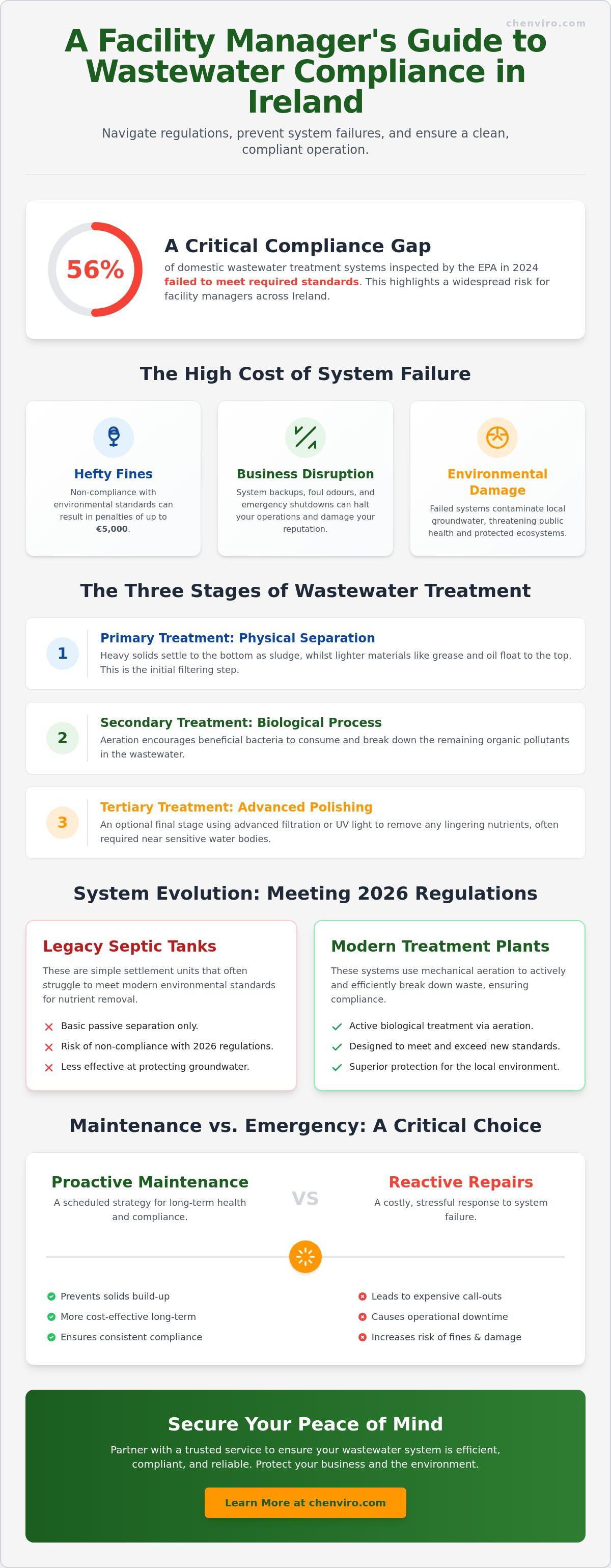
Did you know that 56% of domestic wastewater treatment systems inspected by the EPA in 2024 failed to meet the required standards? If you're managing a facility, you likely feel the weight of these statistics. Between confusing jargon about primary versus secondary treatment and the constant worry of a system backup causing foul odours, it's easy to feel overwhelmed. You want a system that just works without the threat of a €5,000 fine hanging over your head for non-compliance.
Securing a professional wastewater treatment service Ireland can trust is the first step toward peace of mind. This guide shows you how to keep your infrastructure efficient whilst ensuring you meet the latest 2026 environmental regulations. We'll break down the maintenance essentials, explain how to navigate the new national register requirements, and help you find a reliable partner for both routine care and emergency repairs. By the end, you'll have a clear path to a clean, compliant, and odour-free operation.
Table of Contents
Understanding Wastewater Treatment Service in Ireland
In Ireland, wastewater treatment isn't just a technical requirement; it's a legal and environmental necessity for any facility not connected to the national sewer network. Whether you run a rural hotel, a local pub, or a private housing development, you're likely operating an onsite system. This means the responsibility for processing every litre of waste produced falls directly on you. With nearly half a million domestic systems across the country, the scale of private waste management is vast.
Protecting our groundwater is the primary goal of any effective system. Because a large portion of the Irish population relies on private wells for drinking water, any failure in your treatment process can have immediate, local consequences. Professional Wastewater treatment is about more than just a tank in the ground. It's a managed process designed to keep the environment safe and your facility compliant with strict EPA standards. It's the difference between a ticking time bomb and a sustainable infrastructure.
Distinguishing between public mains and private onsite treatment is vital for business owners. If your business is on the "grid," Uisce Éireann manages the infrastructure. However, for those in rural or unsewered areas, you're effectively your own utility provider. A professional wastewater treatment service Ireland ensures that your system doesn't just store waste, but actively cleans it before it ever reaches the soil. Without a reliable partner, you risk system failures that lead to backups, environmental damage, and heavy fines.
The Core Purpose of Professional Treatment
Treating waste properly serves three main functions. First, it removes harmful pollutants and pathogens so treated water can be safely released. Second, it protects public health by preventing the contamination of surface water and local streams. Finally, it helps you remain a "good neighbour." A well-managed wastewater treatment service Ireland controls foul odours and noise, ensuring your business operations don't disrupt the local community or attract complaints from nearby residents.
Treatment Stages: From Primary to Tertiary
Understanding how your system works helps you spot problems before they become crises. The process generally moves through three distinct phases:
Primary treatment: This is the initial physical separation. Heavy solids settle to the bottom of the tank as sludge, whilst lighter materials like oils and grease float to the top.
Secondary treatment: This involves biological processes. Aeration or specialised filters encourage "good" bacteria to break down the remaining organic matter in the liquid.
Tertiary treatment: This is an optional, advanced stage. It uses extra filtration or UV light to remove any lingering nutrients or microbes. This is often required if your facility is located near sensitive environmental zones or protected water bodies.
The Essential Components of a Wastewater System
A reliable wastewater system is more than just a concrete box hidden underground. It's a complex network of mechanical and biological stages that must work in perfect harmony. Whilst the tank is the most recognisable part, the surrounding infrastructure, including pumps, filters, and electronic sensors, is what actually does the heavy lifting. If one component stops performing, the entire system risks a backup that could shut down your business operations.
The final stage of the process involves percolation areas or polishing filters. These are designed to distribute treated liquid into the soil for final purification. It's the last line of defence for protecting groundwater from contamination. To keep an eye on these hidden processes, modern systems rely on control panels and alarm systems. These units signal operational failures, such as a pump blockage or a high-water level, before they turn into a crisis. The Environmental Protection Agency (EPA) emphasises that regular inspection of these components isn't just a good idea; it's a legal obligation for system owners.
Septic Tanks vs. Modern Treatment Plants
Older septic tanks are essentially simple settlement units. However, under the 2026 Irish environmental regulations, many of these older models struggle to meet the required standards for nutrient removal. Modern treatment plants are different. They use mechanical aeration to pump oxygen into the waste, which speeds up the biological breakdown of organic matter. This makes them far more efficient for facilities with a high daily load. Choosing the right capacity is essential. An undersized unit will fail under pressure, whilst an oversized one wastes energy and money. If you aren't sure where your system stands, a professional wastewater treatment service Ireland can provide a clear assessment of your current capacity.
The Role of Pump Stations and Grease Traps
Not every site has the benefit of a natural gravity fall to move waste. This is where pump stations become vital. They move waste across different elevations to reach the treatment plant or the main sewer. Because they rely on mechanical parts, pump station repair Ireland is a frequent requirement for larger commercial sites where downtime isn't an option. For food-based businesses, integrating grease traps is equally important. These units catch oils and fats before they can form "fatbergs" that clog your pipes and destroy your treatment system's efficiency. Monitoring these mechanical components is the only way to prevent a total system shutdown.
Maintenance vs. Emergency Repair: A Practical Comparison
Waiting for a system to fail before calling a professional is a strategy that almost always backfires. In the context of facility management, the "wait and see" approach doesn't just lead to higher repair bills; it risks total operational shutdown. When a drainage system reaches a crisis point, the resolution is often invasive, loud, and significantly more expensive than a scheduled visit. A proactive wastewater treatment service Ireland businesses can rely on is designed to catch these issues whilst they are still minor adjustments rather than structural disasters.
Regular desludging is the most effective way to protect your long-term investment. If sludge is allowed to build up beyond its capacity, solids begin to carry over into the percolation area. Once these solids enter the soil treatment stage, they clog the pores of the ground, leading to a complete failure of the filtration process. Fixing a clogged percolation area often requires extensive excavation and replacement of the entire soil bed. This is a nightmare scenario that can be entirely avoided through a simple, periodic desludging schedule.
For commercial operations, the impact of emergency downtime is measured in lost revenue and reputational damage. A restaurant or hotel cannot legally or safely operate with a backed-up sewer or a failing treatment plant. Beyond the immediate mess, you face the scrutiny of Environmental Protection Agency (EPA) regulations. If an emergency repair reveals that the system was neglected, the resulting fines can dwarf the cost of a decade's worth of routine maintenance.
Proactive Maintenance Benefits
Scheduled inspections extend the lifespan of your system's most expensive components, such as mechanical pumps and air blowers. These parts are the "lungs" of a modern treatment plant. When they operate in a clean, well-maintained environment, they run more efficiently and consume less electricity. Furthermore, regular care maintains the optimal bacterial health required for effective biological treatment. Without the right balance of microbes, the system stops cleaning the water, leading to the foul odours that drive customers away.
Identifying Critical System Failures
You don't need to be an engineer to spot the early warning signs of trouble. Slow-draining sinks, gurgling sounds in the pipes, or persistent smells around the tank are clear indicators that a blockage is forming. On the ground, look for "ponding" or unusually lush, soggy patches of grass over your percolation area. These signs suggest the soil is no longer absorbing the liquid. If the cause isn't obvious, it's time to utilise a CCTV drain survey Dublin to see exactly what's happening inside your pipes. This technology allows for a precise diagnosis without digging up your car park or garden.
Compliance and Environmental Standards in Ireland
Compliance in Ireland has shifted from a "set and forget" mentality to a rigorous, documented process of active management. The EPA Code of Practice provides the definitive roadmap for how your facility must handle waste, but the real test comes during a local authority visit. Under the National Inspection Plan, inspectors are increasing their oversight. In 2024, the EPA found that 56% of inspected systems failed to meet the required standards. These failures aren't always due to broken hardware; they're often caused by a lack of evidence that the system is being looked after.
Legal requirements now demand that every treatment system is registered with the local authority. This is a one-time €50 fee, but failing to register can result in a fine of up to €5,000. Beyond registration, the most critical part of your compliance strategy is your logbook. Following the 2026 regulations (S.I. No. 65/2026), you must now keep records of all maintenance and desludging for seven years. If an inspector knocks on your door and you can't produce these documents, you're at immediate risk of a non-compliance notice. A professional wastewater treatment service Ireland provides the necessary certification and reporting to keep your logbook audit-ready.
Staying Within Irish Environmental Law
Discharging untreated effluent into Irish watercourses carries severe legal and financial consequences. For businesses operating in counties like Meath, Kildare, and Wicklow, the pressure is even higher due to specific soil conditions and sensitive catchment areas. Proper facility maintenance Dublin and Greater Leinster businesses invest in ensures that these environmental risks are mitigated. Consistent monitoring keeps your discharge levels within legal limits, preventing the pollution of local groundwater that many rural communities rely on for drinking water.
Environmental Impact and Sustainability
Efficient treatment does more than just tick a regulatory box; it significantly reduces your facility's environmental footprint. As Ireland prepares to transpose the recast Urban Waste Water Treatment Directive by July 2027, standards for nutrient removal and energy neutrality will only get tighter. Future-proofing your system now means you won't be forced into expensive, last-minute upgrades when these stricter rules take effect. Achieving corporate sustainability goals starts with how you manage the basics. To ensure your system is ready for the 2027 changes, book a comprehensive wastewater treatment service Ireland assessment today.
The CH Enviro Approach to Wastewater Management
Managing a facility's waste shouldn't be a source of constant stress. At CH Enviro, we provide a professional wastewater treatment service Ireland can depend on for more than just a quick fix. We specialise in drainage, plumbing, and facility solutions that keep your infrastructure running smoothly. Our approach is simple: we tell it like it is. You won't find us hiding behind technical jargon or "fluff." Instead, you get a straight-talking assessment of what your system needs to stay compliant and efficient.
Our expertise covers the entire lifecycle of your wastewater infrastructure. From routine desludging and mechanical maintenance to complex structural repairs, we handle every aspect of the job. We understand that a failing system is an emergency for your business. That's why we've built our service around reliability and transparency. We don't just clear a blockage; we look for the root cause to ensure it doesn't happen again next month. This methodical thoroughness is what sets us apart as a trusted partner for Irish facility managers.
Comprehensive Facility Solutions
Site health requires an integrated approach. By combining our wastewater care with a professional drain unblocking service Dublin, we provide total coverage for your property's plumbing. If our CCTV surveys identify a cracked or collapsed pipe, we don't always need to bring in heavy machinery. Our no-dig repair techniques allow us to fix structural issues from the inside. This means no surface disruption and no need to dig up your car park or landscaped areas. For critical system failures, our emergency response capabilities ensure that your business stays open whilst we resolve the crisis.
Why Local Expertise Matters in Leinster
The East of Ireland presents unique challenges for wastewater management. Soil conditions and water tables in Meath, Kildare, and Wicklow vary significantly from site to site. We understand these local nuances because we live and work here. Whether you're dealing with heavy clay or high groundwater levels, we know how to calibrate your system for optimal performance. Our local presence across Dublin, Louth, and Wexford allows for fast response times when you need us most.
We believe in fair pricing and clear communication. You'll always know exactly what you're paying for and why it's necessary. We provide the detailed documentation you need for your seven-year maintenance log, making EPA inspections a breeze rather than a burden. Don't wait for a system backup to compromise your operations. Ensure your system is compliant; Contact CH Enviro for a wastewater consultation and get your infrastructure back on track.
Protect Your Facility and the Environment
Compliance with Irish environmental law is no longer optional; it's a critical part of daily facility management. We've explored how the 2026 regulations and stricter EPA inspections make detailed record-keeping and routine desludging essential. Neglecting these basics doesn't just risk heavy fines. It threatens the local groundwater that our communities rely on. By understanding your system's components and choosing proactive maintenance over reactive repairs, you protect your property's value and your business's reputation—a principle that applies whether you are managing a local facility or luxury villa rentals Ibiza for international guests.
Finding a reliable wastewater treatment service Ireland can trust shouldn't be a gamble. You need a partner who understands the specific soil conditions of Leinster and the mechanical intricacies of modern treatment plants. CH Enviro brings a no-nonsense approach to environmental compliance, serving as expert pump station and drainage specialists across Dublin, Kildare, Meath, and beyond. We focus on transparency and results so you can focus on your business. Secure your facility’s compliance with CH Enviro’s expert wastewater services. Our team is ready to help you maintain a clean, efficient, and fully compliant system today.
Frequently Asked Questions
How often does a commercial wastewater treatment system need servicing in Ireland?
Most commercial systems require a professional service at least once or twice a year. The exact frequency depends on your facility's daily load and the manufacturer's specific guidelines. High-volume businesses like restaurants or hotels often need more frequent inspections to manage grease levels. Consistent servicing is a core part of the wastewater treatment service Ireland businesses use to maintain regulatory compliance.
What is the difference between a septic tank and a wastewater treatment plant?
A septic tank is a passive settlement unit that relies on gravity and soil for the final treatment stage. In contrast, a treatment plant uses mechanical components like air blowers to actively break down organic matter. This mechanical process produces a much cleaner effluent. Modern treatment plants are often required for newer developments to meet the latest environmental standards.
Is my business responsible for the EPA National Inspection Plan?
Yes, if your business operates a private onsite treatment system, you fall under the remit of this plan. Local authorities conduct over 1,200 inspections annually to ensure systems aren't polluting groundwater. You're responsible for keeping your system in good working order. You must also maintain a detailed logbook of all maintenance and desludging activities to show to an inspector.
Can I use any electrician for wastewater pump repairs?
You should use a specialised drainage professional rather than a general electrician. Wastewater pumps operate in corrosive, high-moisture environments and are often linked to complex control panels. A specialist understands the mechanical and electrical relationship within the system. They can quickly identify if a fault is caused by a motor failure or a physical blockage in the impeller.
What should I do if my wastewater system alarm starts sounding?
Treat every alarm as a high-priority event and check your control panel for specific error codes. An alarm usually indicates a pump failure or a high-water level, meaning the tank is at risk of overflowing. You should immediately reduce water usage in the building. Call a service provider to attend the site before the waste backs up into your facility's internal drains.
Do I need a CCTV survey for my wastewater treatment pipes?
A CCTV survey is the most effective way to diagnose recurring blockages or suspected structural damage. It allows you to see the internal condition of your pipes without any digging or surface disruption. This technology is particularly valuable for older sites where the pipework layout is unknown. It provides a clear, documented diagnosis that helps you make informed repair decisions.
How can I tell if my percolation area is failing?
Common signs of failure include unusually lush grass, soggy patches, or grey liquid ponding on the surface. These issues suggest the soil is saturated and can no longer absorb or treat the effluent. If you notice foul odours or slow-draining toilets, your percolation area might be "blinded" by solids. This requires immediate professional intervention to prevent total system failure and environmental damage.
What are the registration requirements for private wastewater systems in 2026?
Every private system must be registered with the local authority for a one-time fee of €50. Under the 2026 regulations (S.I. No. 65/2026), there's a heightened focus on the national register for developments with a population equivalent of 150 or less. You're now legally required to keep all maintenance and desludging records for seven years to demonstrate your facility's ongoing compliance.


Comments