
Septic Tank Problems in Ireland: A Guide to Failures, Fixes, and 2026 Regulations
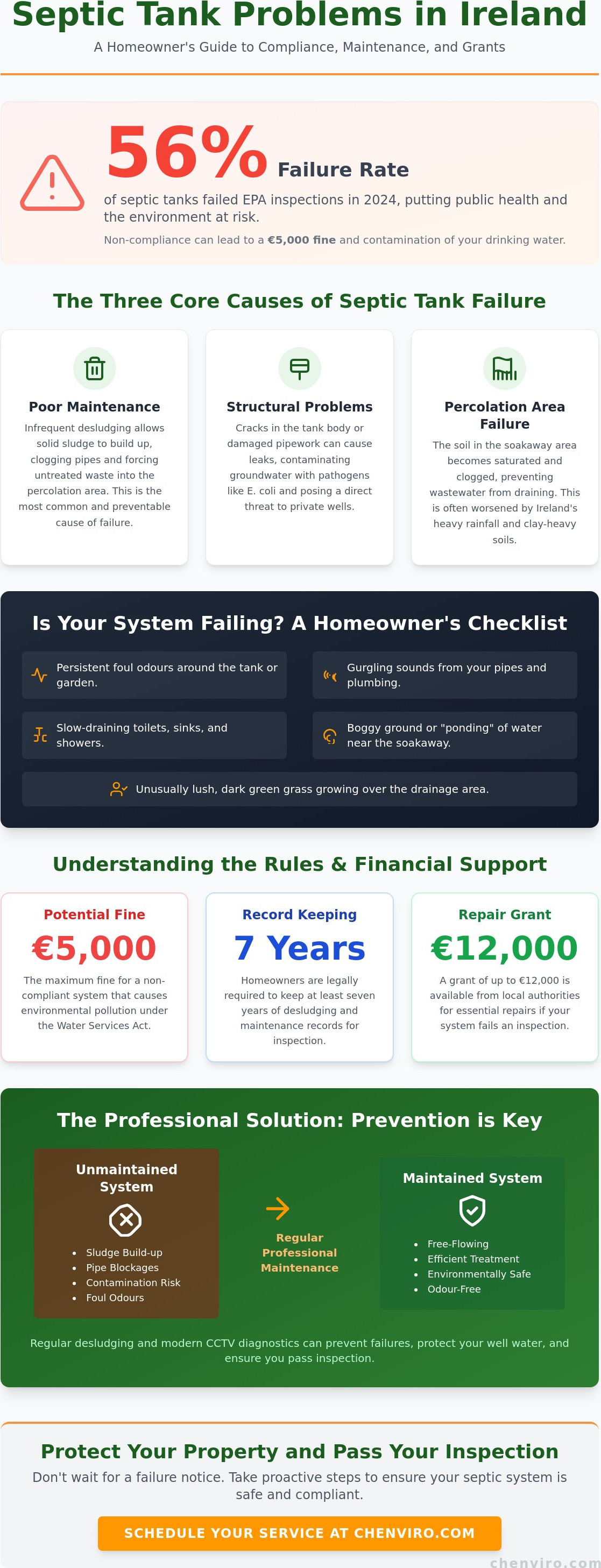
Did you know that 56% of septic tanks inspected by the EPA in 2024 failed to meet the required standards? If you've noticed boggy patches in your garden or a persistent smell, you're right to be concerned. Dealing with septic tank problems in Ireland is often a source of genuine stress, especially with the threat of a €5,000 fine for non-compliance and the risk of contaminating your own drinking water. Most homeowners find the maze of EPA regulations and the new 2026 requirements confusing and overwhelming.
The good news is that a failing system usually needs systematic professional maintenance rather than a total replacement. This guide will help you identify the most common failures and explain exactly what you need to do to pass a local authority inspection. We'll also clarify the latest 2026 regulations, including the requirement to keep seven years of desludging records, and show you how to check if you're eligible for a grant of up to €12,000 for essential repairs. By the end of this article, you'll have a clear plan to restore your system, protect your local groundwater, and ensure your garden remains clean and odour-free.
Table of Contents
Understanding the Crisis: Why 56% of Irish Septic Tanks Fail Inspections
Common Septic Tank Problems in Ireland: From Blockages to Ponding
How to Tell if Your System is Failing: Red Flags for Homeowners
Dealing with EPA Advisory Notices and Septic Tank Grants in 2026
Preventing Costly Repairs with Professional Septic Tank Cleaning
Understanding the Crisis: Why 56% of Irish Septic Tanks Fail Inspections
In 2026, the management of domestic wastewater has become a critical priority for Irish homeowners. The Environmental Protection Agency (EPA) oversees the National Inspection Plan, whilst local authorities carry out the actual boots-on-the-ground checks. Recent data reveals a stark reality. In 2024, 56% of the 1,390 systems inspected failed to meet basic standards. These septic tank problems Ireland faces aren't just administrative hurdles; they represent a significant environmental challenge. To understand the scale of the issue, one must first grasp the basics of what is a septic tank? and the role it plays in safely treating household effluent.
Most failures aren't caused by catastrophic structural collapses. Instead, they often stem from a simple lack of routine maintenance. Research shows that only about 10% of the sludge that should be removed from Irish tanks is actually collected each year. This buildup leads to blockages, ponding, and untreated waste entering the soil. It's a preventable crisis that requires a shift in how rural households view their wastewater infrastructure. If you haven't desludged your tank recently, you're likely part of the majority at risk of a failed inspection.
The Impact of the National Inspection Plan
Local authorities in counties like Meath, Louth, and Kildare use a risk-based approach to select sites for inspection. They focus on areas where groundwater is most vulnerable or where there's a higher density of domestic systems. If your property is selected, you'll receive a formal notification letter at least 10 days before the inspector arrives. Don't worry about tidying the house; these inspectors focus entirely on the external system and do not require access to the interior of your home. They'll look for surface ponding, check for odours, and verify your maintenance records.
Public Health and Environmental Risks
The stakes of a failing system are high. A faulty tank can leak E. coli and other dangerous pathogens directly into private wells. If you rely on a well for your drinking water, a poorly maintained system is a direct threat to your family's health. Additionally, excess nitrogen and phosphorus from untreated waste can leach into nearby rivers, causing algal blooms that damage local ecosystems. Under the Water Services (Amendment) Act 2012, you're legally responsible for ensuring your system doesn't cause pollution. Taking action early isn't just about avoiding a fine of up to €5,000; it's about protecting the local environment for the next generation.
Common Septic Tank Problems in Ireland: From Blockages to Ponding
Understanding septic tank problems in Ireland starts with recognising that most systems fail due to three specific issues. These are poor maintenance, structural damage, or a breakdown in the percolation area. Whilst these might sound like technical terms, they manifest in very visible ways in your garden. You might see slow-draining sinks or patches of water that never seem to dry out. Ireland's climate plays a significant role here. Our high annual rainfall puts constant hydraulic pressure on the soil. In counties with heavy clay, such as Meath or Kildare, the ground can become saturated quickly, leaving the effluent with nowhere to go.
There is a big difference between a simple blockage in a pipe and a system-wide failure. A blockage can often be cleared with a professional jetting service. However, a failure usually means the tank itself or the soakaway is no longer functioning. One of the biggest red flags for inspectors is "direct discharge." This is when wastewater is piped directly into a ditch, stream, or field drain without treatment. It's a major violation of environmental laws and a primary reason why EPA inspection failure rates remain so high across the country.
Desludging and Maintenance Failures
When you don't empty your tank, sludge levels eventually exceed the unit's capacity. This allows solid waste to flow out into the percolation pipes, clogging the soil pores. Once this happens, the damage is often permanent and expensive to fix. Modern living adds to the stress; "grey water" from high-efficiency washing machines and dishwashers can overwhelm older, smaller systems. To avoid these issues, you should follow a strict schedule for how often to empty your septic tank in Ireland. Regular servicing is the cheapest insurance policy you can buy for your property.
Structural Leaks and Direct Discharges
Concrete tanks can develop cracks over time due to ground movement or age. These leaks allow untreated waste to seep into the groundwater, which is particularly dangerous if you have a private well. Another common mistake is allowing rainwater from roof gutters to enter the septic system. This "clean" water floods the tank, preventing the natural breakdown of waste and pushing solids into the soakaway. If you're worried about hidden damage, a professional CCTV drain survey can identify cracks or root intrusions before they lead to a total system collapse. Addressing these structural issues early ensures your system remains compliant with the 2026 regulations.
How to Tell if Your System is Failing: Red Flags for Homeowners
Identifying septic tank problems in Ireland often begins with your own senses. You don't need to wait for a local authority inspector to tell you something is wrong. By staying alert to specific changes in your home and garden, you can intervene before a small issue becomes a public health risk or a legal problem. Early action is the best way to protect your property value and your family's health. Most systems provide several warnings before they fail completely, but these signals are easy to ignore if you don't know what to look for.
Sensory Signs: Smells and Slow Drainage
A healthy septic system should be relatively odourless. If you notice a persistent "rotten egg" smell around your garden or near your drains, you're likely smelling hydrogen sulphide gas. This gas is a byproduct of the anaerobic breakdown of waste and indicates that the system isn't venting correctly or is overflowing. Similarly, listen to your pipes. Gurgling sounds when you flush the toilet or empty the sink are early warning signals. They suggest that air is being trapped by a rising water level or a blockage in the main line.
You should also periodically check the internal components if it's safe to do so. Look for the "T-piece" or baffle on the outlet side of the tank. If this is submerged or blocked by floating solids, the tank is no longer separating waste effectively. This allows raw sewage to escape into the percolation area, which is a primary cause of septic tank problems in Ireland. If your toilets are slow to flush or your sinks take longer to drain than usual, it's time to call in a professional for a septic tank cleaning before the pipes back up into your home.
External Indicators: Lush Grass and Surface Water
Your garden provides the most obvious clues about the health of your soakaway. Many homeowners are surprised to learn that exceptionally lush, dark green grass in one specific area is actually a bad sign. This occurs because the nitrogen and phosphorus in the untreated effluent act as a powerful fertiliser. If that patch of grass remains vibrant whilst the rest of your lawn is dormant, your system is likely leaking or failing to filter waste deep underground.
In more severe cases, you will encounter ponding. Ponding is the visible accumulation of wastewater on the ground surface due to soil saturation or system blockage. This is particularly common in counties with heavy clay soil. During wet winters, these soils reach their limit and can no longer absorb liquid, leading to "hydraulic overload." If you see greyish water or boggy patches that don't dry out after the rain stops, your percolation area has failed. Addressing these issues immediately prevents pathogens from entering the groundwater and ensures your system remains compliant with EPA standards.
Dealing with EPA Advisory Notices and Septic Tank Grants in 2026
Receiving a letter from your local authority after an inspection can be a stressful experience. If your system fails, the inspector will issue an "Advisory Notice." This is a legal document outlining the specific septic tank problems Ireland inspectors have identified on your property. By law, the local authority must send you the final inspection report within 21 days of the site visit. This report is your roadmap for repairs. It will detail exactly what needs to be fixed, whether it's a minor pipe repair or a complete replacement of the percolation area. You generally have a set period, often between six to nine months, to complete the works and bring the system back into compliance.
The most important thing to remember is that an Advisory Notice is the key to unlocking financial support. You cannot apply for a remediation grant simply because you want to upgrade an old system. You must first have a failed inspection report in your hand. Once the notice is issued, you can begin the process of securing funding to offset the high costs of modern wastewater treatment. Acting quickly ensures you stay within the legal timeline and avoids the risk of further penalties or prosecution.
Navigating the EPA Advisory Notice
There is a significant difference between a "Pass" and a "Fail with Advisory Notice." A pass means your system is working well and your records are in order. A failure with an advisory notice means the inspector has found a risk to human health or the environment. Common remedial works requested in these notices include the installation of a new secondary treatment unit or the complete reconstruction of a clogged soakaway. To ensure you are fully prepared for an inspector's visit, review our septic tank compliance checklist. Being proactive can often help you identify and fix small issues before they trigger a formal failure notice.
Accessing Remediation Grants in 2026
As of 2026, the maximum grant for septic tank upgrades has been maintained at €12,000. This is a substantial sum designed to cover a significant portion of the costs for a new system. Crucially, the means test that previously restricted these grants has been removed, making the funds accessible to more homeowners regardless of income. However, eligibility remains very restrictive. To qualify, your system must have been registered with "Protect Our Water" by the required deadlines. If you haven't registered your system and paid the €50 fee, you will likely be ineligible for any financial assistance, even if you fail an inspection.
To apply, you must submit your Advisory Notice along with quotes from licensed contractors to your local County Council, such as Meath or Kildare. They will process the application and verify that the proposed works meet the current EPA standards. If you've received a failure notice and need a professional assessment to plan your repairs, our wastewater treatment service can help you design a compliant solution that meets all grant requirements. Following the correct procedure is essential to ensure your grant application is approved without delays.
Preventing Costly Repairs with Professional Septic Tank Cleaning
Taking a proactive approach to septic tank problems in Ireland is the only way to ensure long-term compliance and avoid the financial burden of a system failure. Whilst the 2026 grants provide a safety net for some, the most cost-effective strategy is to never need one in the first place. Regular maintenance keeps your system functioning as designed, protecting your garden from boggy patches and your well from contamination. At CH Enviro, we use modern diagnostic technology to identify issues early, often solving problems before they require expensive excavation or replacement.
Homeowners in Dublin, Meath, and Kildare face specific challenges due to soil types and high water tables. Waiting for a smell or a slow drain to appear is a gamble that rarely pays off. Instead, a scheduled septic tank cleaning service ensures that sludge levels are managed professionally, preventing the entire system from backing up during heavy Irish winters. This simple act of prevention is the single most effective way to pass an EPA inspection without the need for an Advisory Notice.
The Importance of Regular Desludging
When you neglect desludging, the solid waste at the bottom of your tank eventually reaches the outlet pipe. This leads to "carry-over," where solids enter the percolation area and clog the soil pores. Once the soil is blinded by sludge, the percolation area is effectively ruined and usually requires a total rebuild. Under the 2026 regulations, you're legally required to keep records of your desludging for seven years. These records prove to local authority inspectors that you've been responsible for your system’s upkeep. If you need reliable maintenance, we offer specialised services available in Kildare and Meath to help you stay compliant and protect your property’s infrastructure.
Professional CCTV Surveys for Hidden Issues
Not every issue is visible from the surface. Tree roots are often drawn to the moisture in your pipes, causing cracks and blockages that can lead to septic tank problems in Ireland that go unnoticed for years. A CCTV drain survey is the only definitive way to inspect the internal condition of underground pipework. By using high-definition cameras, we can spot root ingress, collapsed sections, or structural leaks without digging a single hole in your lawn.
If we do find a problem, modern technology often allows for a "No-Dig" repair. This process involves lining the existing pipe with a durable resin, creating a new pipe within the old one. It's a clean, efficient solution that saves your garden from the destruction of traditional trench digging. Combining regular cleaning with occasional camera inspections ensures your system remains in top condition, giving you peace of mind that your home meets every environmental standard for 2026 and beyond.
Secure Your Home’s Future with Proactive Septic Care
Managing septic tank problems in Ireland doesn't have to be a source of constant worry. By understanding the common causes of failure and staying ahead of the 2026 regulations, you can ensure your system remains a safe, invisible part of your property. Regular desludging and maintaining accurate records are your best defences against an EPA Advisory Notice. If structural issues do arise, the availability of grants up to €12,000 means that essential upgrades are now more accessible to homeowners across the country.
Don't wait for an inspection letter to arrive. Book your professional septic tank cleaning or inspection with CH Enviro today to protect your garden and your groundwater. We provide EPA-compliant disposal certificates and are specialists in serving Kildare, Meath, and the Greater Dublin Area. Our team uses modern CCTV technology to find hidden issues and offers no-dig repair solutions to fix pipes with minimal disruption to your garden. Taking these simple, proactive steps today will give you peace of mind and a clean, odour-free environment for years to come.
Frequently Asked Questions
What are the most common reasons for septic tank failure in Ireland?
The most common septic tank problems in Ireland stem from a lack of regular desludging and the resulting damage to the percolation area. When sludge is not removed, it flows into the soakaway pipes and clogs the soil, preventing wastewater from draining. Structural issues, such as cracks in older concrete tanks or root ingress from nearby trees, also contribute significantly to the high failure rates reported by the EPA.
Can I get a grant to fix my septic tank if it fails an inspection?
Yes, as of 2026, you can secure a grant of up to €12,000 to repair or replace a system that fails a local authority inspection. To qualify, your system must be registered with "Protect Our Water" and you must have received a formal Advisory Notice. The government has removed the previous means test, making this financial support available to more households regardless of their annual income.
How do I know if my septic tank is full or failing?
You can identify a failing system by looking for surface ponding or boggy patches in your garden that don't dry out. Inside the house, slow-draining sinks and gurgling sounds in your pipes are early warning signals that the tank is reaching its capacity. If you notice a persistent "rotten egg" odour or see patches of exceptionally lush, dark green grass over the percolation area, your system needs professional attention.
Is it illegal to have a septic tank piped into a stream in Ireland?
It is strictly illegal to discharge untreated wastewater directly into a stream, ditch, or any surface water drain. This practice, known as direct discharge, is a major violation of the Water Services (Amendment) Act 2012. Any system found bypassing the percolation area in this way will automatically fail an inspection and the homeowner could face significant legal action and environmental fines.
What happens if I ignore an EPA Advisory Notice?
If you ignore an Advisory Notice, you risk a fine of up to €5,000 and potential prosecution by your local authority. The notice is a legal requirement to bring your system up to standard within a specific timeframe. Failing to complete the remedial works also makes you ineligible for government grants and increases the risk of contaminating your own private well water with dangerous pathogens.
Does a smelly septic tank always mean it needs to be replaced?
A smelly septic tank does not always require a full replacement; it often indicates a maintenance issue or a venting problem. Foul odours are frequently caused by excessive sludge buildup or a blocked vent pipe trapping gases. However, if the smell is accompanied by wastewater rising to the surface of your garden, it suggests a more serious failure of the percolation area that needs expert diagnosis.
How much does it cost to have a septic tank professionally cleaned in Ireland?
Whilst the cost of a professional cleaning varies based on the tank size and your location, it is a small fraction of the €5,000 fine for non-compliance. Homeowners must ensure they use a licensed waste contractor who provides a proper disposal certificate. Under the 2026 regulations, you are legally required to keep these desludging records for seven years to prove your system is being maintained correctly.
Can heavy rain cause my septic tank to overflow or fail?
Heavy rain often leads to "hydraulic overload," where the soil in the percolation area becomes too saturated to absorb any more liquid. In Ireland, high rainfall puts immense pressure on systems, especially those situated in heavy clay soils. If your system overflows during wet weather, it is often a sign that the soakaway is undersized or that the soil structure has been damaged by solid waste carry-over.


Comments