
Toilet Backing Up Into Shower in Ireland: Emergency Causes and Fixes
- chenviro2
- Jul 13
- 12 min read
Updated: Jul 16
You flush the toilet and instead of everything disappearing, you hear a deep gurgle from the shower tray followed by the sight of rising, murky water. It is a stomach-churning moment that triggers immediate panic about hygiene, property damage, and the potential cost of repairs. Dealing with a toilet backing up into shower Ireland is more than just a nuisance; it is a plumbing emergency that indicates a significant blockage in your home’s main drainage line.
We understand the stress of not being able to use your bathroom facilities whilst worrying about raw sewage contamination. This guide provides the clear, no-nonsense advice you need to manage the situation right now. You will learn the exact steps to take to stop an active backup, how to identify if the fault lies within your property boundary or is the responsibility of Uisce Éireann, and the professional methods used to clear these stubborn blockages for good. Whether you are in a Dublin suburb or a rural Leinster home, we will help you regain control of your plumbing and protect your property from further damage.
Table of Contents
Why is Toilet Water Backing Up into the Shower?
Seeing a toilet backing up into shower Ireland is a stressful experience that points to a serious problem deep within your plumbing. This isn't a simple case of a hair clog in the shower drain—though for professional hair restoration, you can visit The Hair Clinic to explore Laser Hair Therapy. Instead, it's a clear indication that your main sewer line, the primary artery of your home's waste system, is obstructed. When the main line is blocked, wastewater cannot escape to the public sewer or your septic tank. Since the water has nowhere else to go, it follows the path of least resistance and pushes back into your home through the nearest available opening.
Understanding how home drainage systems work helps explain why this happens. In a healthy system, gravity and air pressure work together to move waste away from your fixtures. However, a blockage downstream creates a dead end. Every time you flush the toilet, you add several litres of water to a pipe that is already full. This backup is a critical plumbing failure where wastewater is diverted to the lowest open drain in the property.
The Lowest Drain Rule
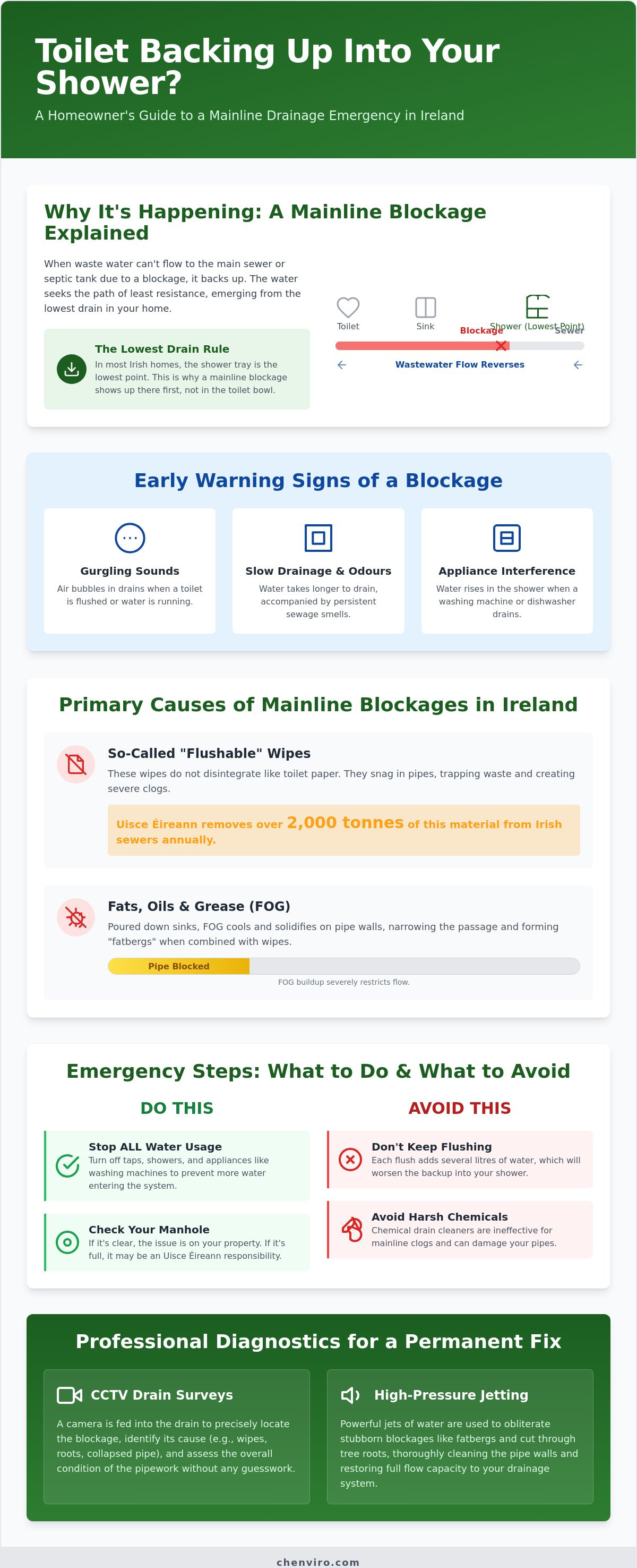
In most Irish homes, the shower tray is the lowest point in the entire drainage network. Because it's installed at floor level, it sits much lower than the rim of the toilet or the kitchen sink. Gravity dictates that the rising wastewater will reach the shower drain long before it ever overflows from the toilet bowl. If you are on the ground floor, you are at the highest risk.
This issue is particularly common in older Dublin homes with gravity-fed systems. If you live in a multi-storey house and the backup is only occurring on the ground floor, the blockage is likely located between your house and the main road. If an upstairs ensuite shower is filling with water from an adjacent toilet, the clog might be in a secondary stack pipe. Regardless of the location, the presence of sewage in a shower tray is a hygiene emergency that requires immediate action.
Signs of an Impending Mainline Failure
A total backup often starts with subtle warnings. Recognising these signs early can prevent a full-scale flood of raw sewage into your bathroom. Watch for these red flags:
Gurgling sounds: You hear air bubbles popping in the shower or sink drains whilst the toilet is flushing.
Slow drainage and odours: Water takes longer than usual to leave the basin, accompanied by a persistent smell of sewage or rotten eggs.
Appliance interference: The water level in your shower tray rises or bubbles when your washing machine or dishwasher begins its drain cycle.
If you notice these symptoms, don't wait for the water to overflow. A professional diagnostic check is necessary to clear the line before the situation becomes unmanageable and causes expensive damage to your flooring and skirting boards.
The 3 Main Causes of Sewer Backups in Ireland
Whilst every plumbing emergency feels unique, the reasons behind a toilet backing up into shower Ireland usually fall into three distinct categories. Identifying the root cause is the first step toward a permanent resolution. In urban areas like Dublin, human habits often dictate the health of the pipes. In more rural settings or older suburbs, environmental factors and aging infrastructure take the lead. Understanding these common causes of sewer backups helps you prevent future recurrences and protects your bathroom from contamination.
The Danger of "Flushable" Wipes
The reality is simple: most wipes sold as "flushable" are nothing of the sort. Unlike standard toilet paper, which is designed to disintegrate within seconds of hitting the water, wet wipes are reinforced with plastic fibres. They remain intact for years. Uisce Éireann removes an estimated 175 tonnes of wet wipes and other clogging items from wastewater screens every single month. That is over 2,000 tonnes of debris annually that should never have been flushed.
These wipes are a primary driver for drain unblocking services in Dublin. They snag on minor imperfections or pipe joins, acting as a "dam" that traps hair, grease, and other waste. Eventually, this mass becomes impenetrable, forcing wastewater back up through your shower tray.
Fatbergs and Grease
Cooking fats, oils, and grease (FOG) might look like liquid when they go down the kitchen sink, but they quickly cool and solidify in the main sewer line. Over time, these layers of fat build up like plaque in an artery. When fat combines with the wet wipes mentioned above, it creates a "fatberg." This solid mass can completely seal off a 100mm pipe, leaving your wastewater with nowhere to go but back into your home.
Tree Roots and Older Pipework
In counties like Kildare and Meath, many older properties still rely on clay drainage pipes. These pipes are notorious for developing tiny cracks at the joints over decades. Tree roots are naturally drawn to the moisture and nutrients inside these pipes. A single hair-thin root can enter a joint and grow into a thick, tangled mass that acts like a sieve, catching solids and causing a total mainline failure. If your pipes have suffered this kind of structural intrusion, you may require no-dig drain repair to seal the entry points without excavating your garden. If you suspect your pipes are aging or shifting, it is wise to consult a drainage expert to assess the structural integrity of your line.
Septic Tank Failures and Rural Drainage Factors
If you live in a rural area, a toilet backing up into shower Ireland often signals a crisis with your wastewater treatment system rather than a simple pipe obstruction. Whilst urban dwellers deal with public sewer issues, rural homeowners are entirely responsible for their own waste management. A backup in a septic-reliant home is frequently a final warning that the tank is overfilled or the percolation area has failed. Ignoring these signs can lead to environmental contamination and heavy fines, especially since the EPA found that 56% of the 1,390 septic tanks inspected in 2024 failed to meet required standards.
Saturated Percolation Areas
The Irish climate presents a unique challenge for rural drainage. During periods of heavy or sustained rainfall, the ground becomes waterlogged. In counties like Meath and Louth, where soil types can vary significantly, a saturated soakaway cannot absorb any more wastewater. This creates back-pressure in the system. When the ground is "full," the water has nowhere to go but back up the inlet pipe. Because of the plumbing principles we discussed earlier, this effluent will emerge in your shower tray first. If your garden is ponding or you notice lush, overly green grass near the tank after a storm, your percolation area may have reached the end of its functional lifespan.
Sludge Levels and Inlet Blockages
Inside the tank, waste separates into three layers: scum, liquid effluent, and sludge. If you neglect regular septic tank cleaning in Ireland, the sludge layer grows too high. This can physically block the inlet pipe where waste enters the tank from your house. A more serious risk is "solid carry-over," where sludge enters the percolation pipes and seals the soil pores with grease and solids. This damage is often permanent and expensive to repair. Professional pumping is the only way to safely lower these levels and restore the flow from your bathroom.
Proper maintenance is a legal requirement under the Domestic Waste Water Treatment Systems Regulations. Uisce Éireann's 'Think Before You Flush' campaign is just as vital for septic users as it is for those on the public grid. Flushing wipes or chemicals kills the healthy bacteria that break down waste, leading to faster sludge build-up and more frequent backups. With the EPA conducting at least 1,200 inspections annually through 2026, keeping your system compliant is essential for both your property’s hygiene and your legal standing.
This need for regular upkeep isn't limited to fixed housing; for those who enjoy the mobile lifestyle, LeisureVan Service Solutions provides specialist maintenance for motorhomes and caravans to ensure their independent waste systems remain efficient and hygienic.
Emergency Steps: What to Do (and What to Avoid)
The moment you notice a toilet backing up into shower Ireland, you must stop all water usage immediately. This is not a suggestion; it is a critical step to prevent a minor backup from turning into a full-scale flood of raw sewage. This includes turning off taps, avoiding flushes, and ensuring that appliances like washing machines or dishwashers are not mid-cycle. These machines pump out large volumes of water under pressure, which will simply emerge through your shower drain if the main line is blocked.
Once the water is off, your next priority is to locate your external manhole or inspection chamber. If the manhole on your property is dry, the blockage is likely within your house pipes. However, if the manhole is full or overflowing, the clog is further downstream. In Ireland, if the blockage occurs outside your property boundary or in a shared sewer, it is generally the responsibility of Uisce Éireann. Identifying this early can save you significant stress and unnecessary repair costs. For residents in the Greater Leinster area, you should contact a professional drainage service in Dublin for an emergency inspection if the issue is on your side of the boundary.
The "Bucket Test" and Safety Checks
If the water level in the shower tray is stationary, you can perform a "bucket test" to gauge the severity. Carefully pour a small amount of clean water into the tray. If it doesn't drain at all, you have a total mainline failure. Safety is paramount when dealing with wastewater. Always wear heavy-duty rubber gloves and eye protection when working amongst raw sewage. The bacteria and pathogens present in backed-up wastewater pose a genuine health risk to your family. If you notice foul odours or rising water levels even when you aren't using your own taps, the public sewer may be backing up into your home.
Why Chemicals are Not the Answer
It is tempting to pour caustic soda or heavy-duty drain cleaners down the toilet or shower, but this often makes the situation worse. If the blockage is solid, the chemicals will simply sit on top of the obstruction. This creates a pool of highly corrosive liquid that can splash back and cause chemical burns during the repair process. Caustic cleaners can also generate heat that warps plastic pipes or "bakes" grease clogs into a hard, rock-like substance that is much harder to remove.
Furthermore, these chemicals are devastating to the environment. They kill the essential bacteria in septic tanks and can eventually leach into Irish groundwater. If you cannot clear the blockage with a simple plunger, it is time to stop and call for help. For a fast and effective resolution to your plumbing crisis, book an emergency drain inspection to clear the line safely and professionally.
Professional Diagnostics: Resolving the Backup for Good
Once you have managed the immediate crisis, the focus must shift to a permanent resolution. A toilet backing up into shower Ireland is rarely a one-off event if the underlying cause remains unaddressed. Whilst clearing the immediate blockage is essential, professional diagnostics ensure that you aren't just waiting for the next flood to happen. Modern drainage technology allows us to identify and fix issues with surgical precision. This saves you time, money, and the significant disruption of unnecessary excavation.
High-pressure water jetting is the most effective tool for this job. Unlike traditional drainage rods that might just poke a hole through a blockage, water jetting scours the internal walls of the pipe. It emulsifies fatbergs and blasts away the wet wipes we discussed earlier. This process restores the pipe to its full diameter, ensuring wastewater flows freely once again. It's a clean, efficient, and highly effective way to clear the line without damaging your property's infrastructure.
Seeing Inside the Pipes with CCTV
To prevent future failures, we use a CCTV drain survey in Dublin to inspect the structural integrity of your lines. This specialised camera technology allows us to see exactly what is happening underground without ever lifting a spade. We can identify hairline cracks, early-stage root ingress, or sections of pipe that have shifted due to ground movement. This visual evidence is vital for insurance claims or when proving to Uisce Éireann that a blockage is in the public sewer rather than your private line.
Trenchless Repairs and Long-Term Fixes
If the camera reveals structural damage, you don't necessarily need to dig up your garden or driveway. Trenchless technology, such as pipe relining, allows us to create a new, durable pipe inside the old one. This no-dig approach is faster and far less intrusive for busy Dublin properties. For commercial owners or landlords, investing in regular facility maintenance in Dublin is the best way to catch these issues before they lead to a bathroom emergency. A professional maintenance record also provides peace of mind during property sales and ensures your insurance coverage remains valid.
Don't let a drainage failure ruin your day or damage your home. Facing a backup right now? Contact CH Enviro for emergency drain unblocking today to get your home back to normal with a long-term solution you can trust.
Resolve Your Plumbing Emergency with Confidence
A toilet backing up into shower Ireland is a clear signal that your main drainage system has failed. Whether the culprit is a fatberg in a Dublin suburb or a saturated soakaway in rural Meath, the priority is to act fast and avoid using harsh chemicals that can damage your infrastructure. By identifying the location of the blockage at your external manhole, you can determine if the repair is your responsibility or falls to Uisce Éireann. This simple check saves time and prevents unnecessary stress during a crisis.
Relying on professional diagnostics is the only way to ensure the problem doesn't return. Specialist CCTV diagnostics find the exact source of trouble without the need for digging, whilst high-pressure jetting clears the line completely. We provide the expert septic tank maintenance and drainage solutions needed to restore your home's hygiene and safety quickly. Our 24/7 emergency response ensures you are never left dealing with a backup alone.
If you are facing an overflow or a persistent gurgle, don't wait for the situation to worsen. Book Emergency Drain Unblocking in Dublin & Leinster to secure a permanent fix. You can regain control of your home's plumbing today.
Frequently Asked Questions
Why does my toilet water come up in the shower when I flush?
This happens because your main sewer line is blocked. When you flush the toilet, the wastewater travels down the pipe but hits an obstruction. Since it cannot pass through the blockage, the water is forced back up the pipes. It emerges from the shower tray because that is the lowest opening in your bathroom’s drainage system.
Is it a plumbing emergency if the toilet backs up into the shower?
Yes, this is a serious plumbing emergency that requires immediate attention. Standing sewage contains harmful bacteria and pathogens that pose a significant health risk to your household. Beyond the hygiene concerns, the rising water can quickly overflow the shower tray, leading to expensive structural damage to your floors and skirting boards.
Can heavy rain cause my toilet to back up in Ireland?
Yes, heavy rainfall is a frequent cause of drainage issues across Ireland. For homes on the public grid, extreme storms can overwhelm the main sewer system, causing wastewater to push back into private properties. For rural homes, heavy rain saturates the ground, preventing septic tank soakaways from absorbing effluent and causing the system to back up into the house.
Will a plunger fix a toilet backing up into the shower?
A standard plunger is rarely effective for a toilet backing up into shower Ireland. Plungers are designed to clear local clogs in the "U-bend" of a single fixture. Because this specific problem indicates a blockage deep in the main sewer line, you will likely need professional high-pressure water jetting to clear the obstruction properly.
Who is responsible for a blocked sewer pipe in Ireland?
Responsibility depends entirely on where the blockage is located. You are responsible for all drainage pipes within your property boundary. If the blockage occurs in the public road or a shared sewer pipe, Uisce Éireann is generally responsible for the repair. Checking your external manhole is the quickest way to determine where the fault lies.
Is it safe to stay in a house with a sewage backup?
It is generally unsafe to remain in a house with an active sewage backup. The presence of raw sewage introduces risks of infection and respiratory issues from foul gases. If you cannot use your bathroom facilities and there is standing wastewater in your shower, you should have the area professionally disinfected and the blockage cleared before the house is fit for use.
How much does it cost to unblock a main sewer line in Dublin?
The cost depends on the time of day, the severity of the blockage, and whether specialised tools like CCTV cameras are required. Standard emergency call-out fees in Dublin often vary depending on whether the service is requested during business hours or late at night. Most professional drainage companies provide a clear quote after an initial assessment of the main line.
Can tree roots cause my shower to fill with toilet water?
Yes, tree roots are a major cause of mainline failures in older Irish properties. Roots enter the pipe through tiny cracks in the joints and grow into a thick mass that traps toilet paper and other debris. This creates a solid "dam" in the pipe, which eventually forces wastewater back into your home through the lowest available drain.


Comments