
Avoiding Business Closure Due to Drainage Issues: A Practical Checklist for 2026
What if a drain problem that seems minor is an early warning that trading could be disrupted? Slow drainage, unpleasant smells or recurring blockages can affect staff, customers and daily operations. Avoiding business closure due to drainage issues starts with recognising these signs and acting before an overflow occurs.
It can be hard to know which symptoms need urgent attention or how to fit maintenance around opening hours. A practical routine makes checks easier to organise and helps you respond before a fault becomes an operational emergency. Use this checklist to identify what to look for, what to record and when to arrange professional support.
You’ll find practical steps for checking drains and grease traps, planning inspections around your trading schedule and responding when a blockage or overflow threatens business continuity. If problems recur, a CCTV drain survey can help identify the cause. Drain unblocking or a suitable no-dig repair can then address the issue with less disruption to the premises. The aim is to protect day-to-day operations with clear, timely action.
Table of Contents
Avoiding business closure due to drainage issues starts with early warning signs
A drainage fault can affect more than plumbing. It may obstruct customer access, interrupt kitchen or washroom routines, create unpleasant conditions for staff and make part of a premises difficult to use. Avoiding business closure due to drainage issues means noticing changes early and responding in proportion to the risk. Drainage systems carry wastewater away from buildings, as outlined in this overview of drainage systems, but a symptom alone won’t show exactly where or why a fault has developed.
Look out for these practical signs:
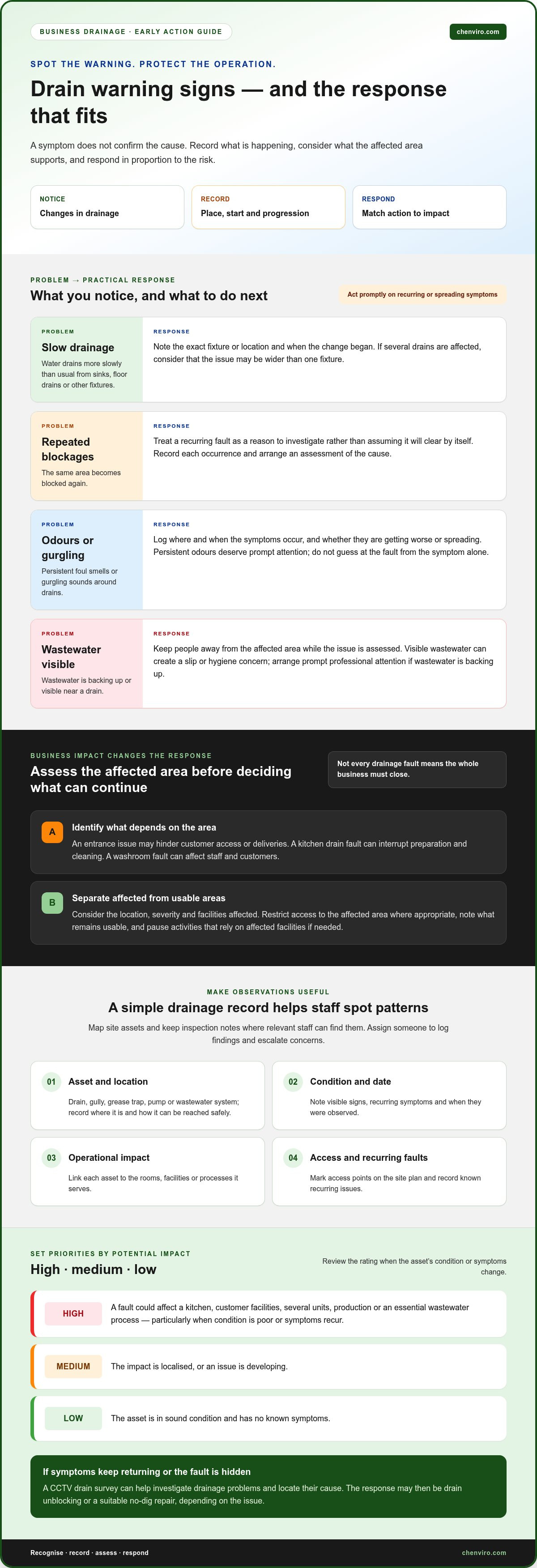
Water draining more slowly than usual from sinks, floor drains or other fixtures.
Repeated blockages, especially when the same area is affected again.
Persistent foul odours, gurgling sounds or visible wastewater near a drain.
Which drainage warning signs deserve prompt attention?
A slow fixture may have a local cause, but symptoms affecting several drains or a shared area could indicate a wider problem. Treat wastewater backing up, persistent odours and recurring blockages as reasons to act promptly rather than waiting for the issue to clear by itself. These signs don’t confirm a specific fault, so avoid guessing at the cause.
Ask staff to note when symptoms began, the exact location and whether they’re getting worse or spreading. A clear record helps with assessment. If you suspect a blockage, CH Enviro’s professional drain unblocking service guide explains how this type of problem is addressed.
How can a drainage fault disrupt normal business operations?
Consider which activities depend on the affected area. A blocked drain near an entrance may hinder customer access or deliveries. In a food business, a kitchen drain problem can interrupt preparation and cleaning routines; a fault near washrooms can affect staff and customers. Visible wastewater can also create a slip or hygiene concern, so keep people away from the affected area while the issue is assessed.
Not every drainage fault means the whole business must close. The decision depends on the location, severity and facilities affected. You may be able to restrict access to one area while other operations continue, or you may need to pause activities that rely on affected facilities. Record what remains usable, isolate affected areas where appropriate and arrange an assessment before conditions worsen.
Trace business drainage risks before a fault interrupts trading
A useful drainage plan starts with knowing what’s on site and what depends on it. Map internal drains, external gullies, grease traps, pumps and wastewater systems where present. Record each asset’s location, access point, known recurring faults and the area it serves. Linking each asset to daily operations helps you identify which faults could affect one room, several units or the wider site. It also supports avoiding business closure due to drainage issues.
Risk points vary by premises. A commercial kitchen may rely on grease traps and nearby drains; a multi-unit building may have shared routes or access points; and a site with pumping equipment may depend on it to move wastewater through the system. Include these features in your site plan so staff can report concerns clearly and checks can focus on the assets most important to operations.
What should a business drainage inspection checklist include?
Keep the checklist simple enough to use consistently. Note leaks, standing water, damaged covers, slow drainage, odours and other recurring symptoms. Mark access points clearly on a site plan and store inspection notes where relevant staff can find them. Assign someone to log findings and escalate concerns so observations aren’t missed between shifts or buried in maintenance records.
Asset: drain, gully, grease trap, pump or wastewater system.
Location and access: where it is and how it can be reached safely.
Condition: visible signs, recurring symptoms and date observed.
Operational impact: the rooms, facilities or processes it serves.
If symptoms keep returning or the fault is hidden, a CCTV drain survey guide explains how a survey can help investigate drainage problems and locate their cause.
How should you prioritise drainage assets by business impact?
Use high, medium and low ratings to make the register actionable. Mark an asset high priority if a fault could affect a kitchen, customer facilities, several units, production or an essential wastewater process, particularly if its condition is poor or symptoms are recurring. Medium priority can cover assets with a localised impact or a developing issue. Low priority can suit assets in sound condition with no known symptoms. Review ratings when conditions change.
A clear asset record helps staff schedule checks and explain recurring or concealed faults during an assessment. CH Enviro provides CCTV drain surveys to investigate drainage issues. For support suited to your business site, view CH Enviro’s commercial drainage services.
Choose the right response: routine maintenance, diagnosis or urgent drainage work
Not every drainage symptom needs the same response. A planned check may suit a system with no current warning signs, while repeated faults call for diagnosis and an active wastewater backup needs prompt professional attention. Matching the next step to the symptoms can help protect operations without treating every minor issue as a reason to stop trading. It’s a practical part of avoiding business closure due to drainage issues.
When is a routine drainage maintenance plan appropriate?
Use planned checks to monitor known risks rather than waiting for something to go wrong. Set the schedule around how heavily the site is used, the type of drainage or wastewater system and any previous problems. A busy commercial kitchen may need a different approach from a site with limited use. Include grease traps and wastewater systems where they’re part of the premises, and record findings so you can spot changes over time.
For kitchen teams, the grease trap maintenance guide offers further information for planning this part of routine care.
When should a business arrange diagnosis or urgent intervention?
Repeated blockages, slow drainage affecting several areas or symptoms that return after a drain has been cleared deserve assessment. Clearing a blockage may restore flow, but recurring problems can have a cause that isn’t visible from the surface. A CCTV drain survey can inspect pipework and help inform the next step, rather than relying on symptoms alone to choose a repair.
Act promptly if wastewater is backing up, an overflow is active or an essential facility is out of use. Keep people clear of affected areas and arrange professional support. Repair options depend on the findings. No-dig drain repair may suit some faults, but assessment should guide that decision.
Use this drainage incident checklist to limit disruption and plan reopening
A clear response helps staff act safely and gives managers useful information for assessment. If a drain backs up during trading, follow your site’s safety procedures and work through these steps:
Protect people: keep customers and staff away from wastewater, wet floors and affected equipment.
Restrict the area: use the site’s normal procedures to prevent access to affected rooms or facilities.
Stop use: tell staff not to use affected sinks, toilets or other fixtures. Don’t attempt to open drains, chambers or equipment.
Notify the responsible manager: report what has happened and which facilities or operations are affected.
Arrange assessment: seek professional drainage assistance if the fault affects facilities or threatens continued operations.
What should staff do when a drain backs up during trading?
Keep the response calm and controlled. Staff should report symptoms without disturbing wastewater or trying to clear a blockage themselves. The manager can coordinate access restrictions and arrange appropriate support. CH Enviro provides professional drain unblocking for business premises.
Capture the details while they’re fresh. Record when the problem started, where it is, what staff observed, which areas or facilities are affected and what actions have been taken. Note any change in symptoms, such as a backup spreading or returning after a fixture is used. This handover gives the person assessing the fault a clearer account and reduces guesswork.
How can managers plan for safe, organised reopening?
Don’t restore normal use of an affected area until the drainage issue has been addressed and the area is considered suitable for use. Give staff clear instructions about what remains restricted, which facilities are available and who to tell if symptoms return. Keep a written record of outstanding work and follow-up actions so every shift receives consistent information.
After the incident, review what happened. Did staff know who to notify? Were the affected assets easy to locate? Did the response checklist cover the operational impact? Use the answers to update contact details, inspection records and incident steps. This turns a disruption into practical learning and supports avoiding business closure due to drainage issues over time.
For broader planning across the premises, see the facility maintenance guide. Including drainage response in the wider site plan helps managers coordinate checks, responsibilities and safe access when problems arise.
Build a business drainage plan with CH Enviro support
A practical plan connects the site record to a clear response. Map drainage assets and the areas they serve, log warning signs and recurring faults, set checks around the property’s use, and keep incident actions and follow-up in one accessible place. This gives managers useful information to share if a problem returns and makes avoiding business closure due to drainage issues part of routine operations.
CH Enviro provides commercial and industrial drainage support across Dublin, Meath, Louth, Kildare, Wicklow and Wexford, including drain unblocking, CCTV drain surveys and no-dig drain repairs. Use the symptoms and site records to identify the service relevant to the problem.
How can professional drainage support fit into your prevention plan?
For a blockage affecting flow, drain unblocking addresses the obstruction. If symptoms keep returning, a CCTV drain survey can inspect the pipework and help locate issues that aren’t visible at the surface. Finding the cause helps inform the next step instead of relying on repeated clearance alone.
Where an assessment identifies a suitable pipe defect, no-dig drain repair provides a repair approach with less excavation. It isn’t right for every fault, so the findings should guide the decision. For kitchen sites, grease trap maintenance can form part of planned drainage care. Wastewater treatment support is relevant where the site has a treatment system to maintain.
What information should you prepare before arranging drainage support?
A concise site summary makes the initial discussion more useful. Gather:
Site details: location, access arrangements and any restrictions around trading or working areas.
Problem details: affected drains or facilities, symptoms, when they began and whether they’re changing.
History: previous blockages, repeat faults and any action already taken.
Business impact: areas or operations affected, plus the manager responsible for the site.
These details connect the operational issue to the relevant drainage response. Update the record after assessment and work, noting any follow-up so the plan remains useful.
For drainage support tailored to your site’s operational needs, contact CH Enviro about your drainage issue.
Put your drainage plan into action
A dependable drainage plan starts with knowing which assets serve critical areas, recording warning signs and scheduling checks around your site’s use. When symptoms recur, investigate the cause rather than relying on repeated clearances. If wastewater backs up or essential facilities are affected, protect people, restrict access and arrange professional assessment.
These steps make avoiding business closure due to drainage issues more manageable. CH Enviro provides commercial and industrial drainage services, including emergency drain unblocking, CCTV drain surveys and no-dig drain repairs, alongside facility maintenance support. Assessment helps determine the right response to the issue.
Before getting in touch, prepare your site location, affected areas, symptom timeline and any history of recurring faults. Contact CH Enviro to discuss drainage support for your business and its operational needs. Clear records and a practical response plan help you act promptly and keep your business running.
Frequently Asked Questions
Can drainage problems force a business to close?
Yes, drainage problems can disrupt trading if they affect essential facilities, create an unsafe area or interfere with normal operations. A blockage doesn’t automatically mean the whole business must close. The impact depends on the fault, the space affected and whether safe workarounds are available. Avoiding business closure due to drainage issues starts with recording symptoms, restricting access where needed and arranging a suitable assessment before the problem worsens.
What drainage problems should a business treat as urgent?
Active wastewater backup, overflow, widespread loss of drainage or a fault affecting essential facilities needs prompt attention. Persistent odours and repeated blockages also warrant investigation, particularly if they return after a drain has been cleared. Keep staff and customers away from affected areas, follow your site’s safety procedures and record what has happened. Professional assessment can help establish the cause and guide the next step, such as unblocking or further investigation.
How often should a business have its drains checked?
There isn’t one inspection interval that suits every business. Set a schedule based on the drainage system, how the premises are used, the history of blockages and the potential impact of disruption. Log inspection findings and recurring symptoms, then review the schedule after an incident or a change in site operations. Commercial kitchens, pump systems and wastewater treatment equipment may need checks tailored to their use and condition.
Can a CCTV drain survey help prevent business disruption?
A CCTV drain survey can inspect pipework and help locate faults that aren’t clear from surface symptoms. It may be useful if blockages keep recurring, the cause is uncertain or you need information about a drain’s condition. The survey findings can inform a suitable next step, such as repair or maintenance. A survey doesn’t guarantee that future blockages will be prevented, but it can replace guesswork with a clearer assessment.
What should staff do if a drain backs up during business hours?
Keep staff and customers away from the affected area, follow your premises’ safety procedures and notify the responsible manager. Don’t use affected fixtures or attempt to enter drains, chambers or equipment. Record the location, time, symptoms and impact on operations, then arrange professional drainage assistance if facilities or trading are affected. Give staff clear instructions about restricted areas and who to notify if the backup spreads or other symptoms appear.
Can a business keep trading during drainage repairs?
Whether trading can continue depends on the fault, the repair work and which parts of the premises are affected. A contained issue may allow unaffected areas to remain in use, while disruption to essential facilities or operations may require a broader pause. Follow site safety procedures and professional advice, and communicate restrictions clearly to staff and customers as appropriate. Don’t assume every drainage repair requires the whole business to close.
How can businesses in Dublin and surrounding counties arrange drainage support?
Prepare the site location, affected drains or facilities, symptoms, incident timeline and details of previous blockages. This helps explain both the drainage problem and its impact on operations. CH Enviro provides drainage support across Dublin, Meath, Louth, Kildare, Wicklow and Wexford, including drain unblocking, CCTV surveys and no-dig repairs. Contact CH Enviro to discuss the issue and the appropriate next steps for your site.


Comments