
Gurgling Toilet Sound Meaning: Why Your Pipes are Making Noise
What does a gurgling toilet mean? The gurgling toilet sound meaning often points to trapped air escaping through the bowl because a blockage or restriction is disrupting drainage. The noise is unsettling, but it does not automatically mean sewage is about to back up. Slow-draining sinks or bubbling in other fixtures can indicate a problem affecting more than the toilet.
This guide explains the likely causes and what to do next. You’ll learn how to distinguish a local toilet clog from an issue with the main drain, which simple checks are sensible, and when to get a drainage professional involved. We also cover how blocked vents and septic tank issues can cause gurgling, particularly in rural homes. Acting on persistent noise early can help prevent a partial blockage from becoming a complete one. Where a drain is obstructed, professional high-pressure jetting may be needed to clear it.
Table of Contents
What Does a Gurgling Toilet Sound Actually Mean?
The gurgling toilet sound meaning is usually that air is moving through the water in the toilet’s trap when it should not. The curved section of pipe holds water to help block sewer gases from entering your home. If air is forced through it, you may hear bubbling or a hollow glug. The noise can point to a restriction elsewhere in the drainage system, not just a problem inside the toilet.
A single bubble after flushing may be a brief pressure change. Persistent gurgling, repeated bubbling or noise that returns whenever water drains deserves attention. Treat it as an early warning, not proof of an imminent sewage backup. A partial blockage may still let wastewater through, but it can worsen until the drain is fully obstructed.
The Physics of Plumbing: Why Air Matters
Wastewater needs room to flow, and air helps keep pressure balanced in the pipes. Plumbing vents let air move through the system, while the toilet’s water trap helps keep drain gases out of the room. If a blockage or restricted vent interferes with airflow, pressure can pull or push air through the nearest available route: the water in the toilet bowl.
That’s why the toilet may gurgle when you run the shower or washing machine. As water moves through shared pipework, it changes the air pressure. If the system can’t draw in or release air freely, bubbles may rise through the toilet trap. The timing is useful: a sound linked to another appliance may mean the issue extends beyond the toilet itself.
Is a Gurgling Toilet Dangerous?
Gurgling doesn’t automatically mean sewage is about to spill into your bathroom. The concern is what may be causing it. A developing blockage can restrict wastewater flow and increase the risk of a backup, particularly if more than one fixture is affected. If the toilet water rises, drains poorly or wastewater appears elsewhere, stop using water where practical and arrange a professional assessment.
The water in the trap acts as a seal against sewer gases. Repeated bubbling or siphoning can disturb that seal, potentially allowing unpleasant gases into the room. If you notice a persistent foul smell alongside the noise, ventilate the area and take the change seriously. Rural homeowners should also consider their septic system: a Septic tank receives and treats household wastewater, and a problem with the tank or its drainage can affect how waste and air move through the pipes.
Don’t ignore gurgling that continues for more than 24 hours, keeps returning or comes with slow drainage. Note which fixtures are in use when it happens and whether the toilet’s water level changes. This can help show whether the noise is isolated or linked to a wider drainage problem.
The 3 Primary Culprits Behind Gurgling Toilet Noises
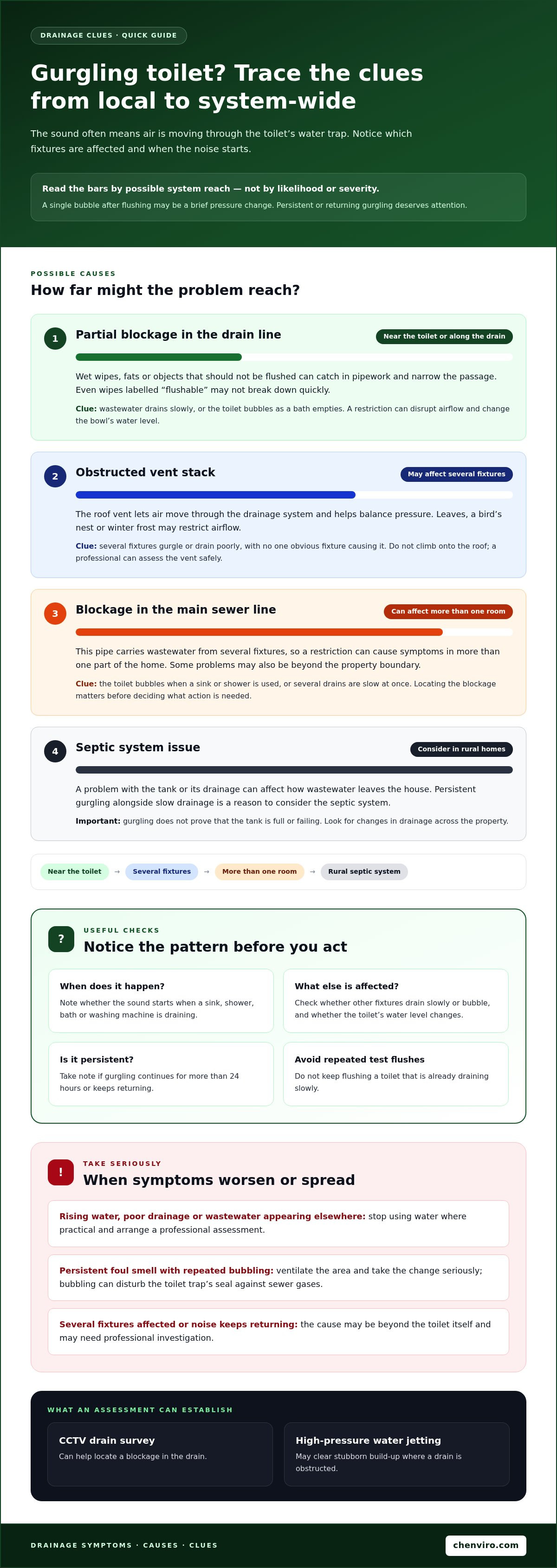
The noise can come from a restriction close to the toilet, a problem with the plumbing vent or a blockage farther along the drain line. The gurgling toilet sound meaning is easier to narrow down when you notice which fixtures are affected and what’s happening when the sound starts. For example, a toilet that bubbles as the bath empties may point to an issue in shared pipework rather than a simple toilet-trap clog.
Partial Blockages in the Drain Line
Wet wipes, fats and objects that shouldn’t be flushed can catch in the pipework and gradually narrow the passage. Even wipes labelled “flushable” may not break down quickly, allowing them to snag on rough pipe surfaces or other debris. Repeated flushing in a Dublin home can add to a bottleneck, slowing wastewater and disrupting airflow through the drain.
When a bath drains, its moving water can create a pressure change in connected pipes. If a partial blockage restricts the flow, air may be pulled through the toilet’s water trap, causing bubbling or a change in the bowl’s water level.
Vent Stack Obstructions
The vent stack extends through the roof and lets air move in and out of the drainage system to help balance pressure. Leaves or a bird’s nest can obstruct its opening, and frost may also restrict airflow in winter. A vent issue becomes more likely if several fixtures gurgle or drain poorly, without one obvious fixture being the source. Don’t climb onto the roof to investigate. A professional can assess the vent and pipework safely.
A blockage in the main sewer line is another possibility. Because this pipe carries wastewater from several fixtures, a restriction can cause problems in more than one room. If the toilet bubbles when you use a sink or shower, or several drains are slow at once, the cause may be farther downstream than the toilet. Some problems can also lie beyond the property boundary, so locating the blockage matters before deciding what action is needed.
For homes connected to a septic system, a downstream problem can also affect how wastewater leaves the house. The EPA on Septic Systems explains how household wastewater flows through a septic tank and into the drainfield. A restriction or system issue may therefore show up as symptoms inside the home. In rural areas, persistent gurgling alongside slow drainage is a reason to consider whether the tank needs attention, rather than assuming the toilet itself is at fault.
Don’t keep flushing to test a toilet that’s already draining slowly. If several fixtures are affected or the noise keeps returning, CH Enviro’s drain unblocking service can investigate and address a suspected blockage before it becomes a complete obstruction.
Gurgling in Rural Areas: Is Your Septic Tank the Problem?
If your home in Kildare or Meath uses a septic tank, a gurgling toilet may be a warning that wastewater isn’t moving through the system as it should. It doesn’t prove that the tank is full or failing, but it deserves attention, especially if other drains are slow too. A blockage near one fixture can make a similar noise, so look for changes around the whole house before assuming the tank is to blame.
Think of the system as a route for wastewater and air. If a full tank, restricted outlet or struggling drainage field slows the flow, pressure in the connected pipework can change. Air may then bubble through the toilet’s water trap. This is sometimes described as an “air pocket”, but it isn’t a diagnosis. The exact cause needs to be established rather than guessed from the sound alone.
Heavy Irish rain can add to the strain. If the ground around a soakaway or drainage field is saturated, wastewater may disperse less effectively for a time. You might notice gurgling or slower drainage after prolonged wet weather, but rain alone doesn’t confirm a septic fault. Compare whether several fixtures are affected and whether the symptoms continue once conditions improve.
Homes on older urban drainage networks, including parts of Dublin, differ from rural properties that rely on private septic systems. That distinction matters: a rural gurgle may warrant checking the tank and drainage field, while an urban one may point to a restriction in shared pipework or the mains connection. The same fix won’t necessarily suit both.
Warning Signs Your Septic Tank Needs Attention
Look for a pattern rather than relying on one symptom. Slow drainage across the house, persistent foul odours near the tank or garden, and unusually lush grass in one patch over the drainage field can all suggest the system needs assessment. None proves on its own that the tank is full. Note when the signs appear and whether they worsen after heavy rain.
Maintenance, Repairs and Environmental Care
Regular maintenance helps identify problems before they progress. A routine tank clean may be appropriate depending on the system and its condition; a damaged tank, outlet or drainage field may need a different repair. Delaying investigation can allow wastewater to escape or affect the surrounding ground, creating environmental concerns. Local authorities in Wicklow and Wexford have wastewater management responsibilities, but don’t infer a compliance breach from a gurgle alone.
For practical information on septic tank cleaning Ireland, see how maintenance fits into looking after a rural system. If the toilet gurgles alongside slow drainage throughout the house, arrange an assessment of the septic tank and drainage route. Finding the cause early can help distinguish routine cleaning from a fault that needs repair, before the problem escalates.
How to Diagnose and Silence a Gurgling Toilet Safely
Start by observing the pattern rather than applying force. This can help show whether the noise is limited to the toilet or linked to another fixture. Don’t keep flushing to test it, particularly if the bowl is rising or draining slowly.
Track when it happens. Note whether the toilet gurgles after flushing or when the shower, bath, sink or washing machine is draining. Check whether other fixtures are slow or bubbling too.
Try a cautious tape test. If there’s no sign of a backup, briefly cover an unused basin or shower drain opening with removable tape, then run a small amount of water elsewhere and listen for a change. Remove the tape straight away. Don’t cover the toilet, an overflow or any drain you’re using. This is only a clue, not a diagnosis.
Look into the toilet bowl. If visible material is within easy reach, remove it with gloves. Don’t reach blindly into the trap or use an object that could scratch or damage the toilet.
Use a plunger only for a likely local clog. Make a seal over the outlet and use steady, controlled strokes. Stop if water rises, other fixtures are affected or the gurgling worsens. A plunger may shift a blockage near the toilet, but it won’t clear a deep obstruction or correct a vent problem.
Leave roof checks to safe access. You can look for an obvious obstruction from the ground, but don’t climb onto a roof to inspect the vent stack. A nest or leaves at the opening may be a clue, but a professional should assess it safely.
DIY Checks Every Homeowner Can Perform
For a suspected toilet-trap clog, a toilet auger may reach farther than a plunger. Use it gently and follow its instructions; forcing it can damage the toilet or push debris deeper. Avoid harsh chemical drain cleaners, especially if you’re unsure of the condition or material of older pipework. Chemicals can create a handling hazard and won’t resolve a blockage in the main line.
When to Stop and Call the Professionals
Stop DIY work if wastewater rises in another fixture, several drains are slow, the toilet repeatedly gurgles or plunging causes water to splash back. This “blowback” can expose you to contaminated water, while unsuitable tools may compact a blockage or damage pipework. These signs can point to a deeper obstruction in the main line or outside drain.
Recurring symptoms need more than another round of plunging. A CCTV drain survey in Dublin can help locate the cause inside the pipework and inform the next step. If the pattern suggests a blockage, arrange professional drain unblocking before a partial restriction develops into a complete blockage.
Professional Solutions: How CH Enviro Resolves Gurgling Pipes
Repeated gurgling can signal a restriction that’s getting worse. If a partial blockage progresses, a drain may stop flowing altogether. CH Enviro investigates the cause and matches the work to what the pipe needs, rather than treating every noisy toilet as the same problem. The right approach may involve clearing a blockage, inspecting the drain or repairing damage.
CCTV Surveys: The End of Guesswork
For gurgling that keeps returning, a CCTV drain survey lets CH Enviro inspect the inside of the pipework using a camera. The footage can help locate debris, roots, cracks or a collapsed section, and show whether the issue is isolated or part of a wider drain problem. This is especially useful when symptoms persist after an apparent blockage has cleared.
A survey can help avoid unnecessary excavation by showing where attention is needed before repair work is planned. If the inspection finds structural damage, CH Enviro can use the findings to assess a suitable no-dig drain repair in Dublin. No-dig methods can address certain pipe damage without opening a trench along the whole route; the appropriate repair depends on what the camera reveals.
Clearing Blockages and Protecting Drainage
Where a build-up is restricting flow, professional high-pressure water jetting can clear stubborn material from the pipework. This differs from repeatedly plunging a toilet: the aim is to remove the bottleneck in the drain, including restrictions beyond the fixture. Clearing it can restore flow and reduce the risk of a partial blockage developing into a complete one.
If the camera shows damage rather than a removable obstruction, jetting alone won’t repair the pipe. Inspection helps distinguish these problems so the next step can be planned around the cause. This matters in homes connected to urban mains as well as rural properties with septic systems, where the drainage layout and likely fault may differ.
CH Enviro works across Dublin, Meath, Louth, Kildare, Wicklow and Wexford, handling drainage problems in urban and rural settings. The approach is practical: establish whether the issue is a blockage, a damaged pipe or another restriction, then carry out the relevant drainage work. For persistent symptoms, a drainage service in Dublin can investigate the wider system instead of repeatedly addressing the toilet alone.
If a drain is already slow or the gurgling keeps returning, don’t wait for the flow to stop completely. CH Enviro’s drain unblocking service can address a suspected obstruction, with further investigation where needed. Explain which fixtures are affected and when the noise occurs; those details help the team assess the problem. Arrange professional help for recurring drain problems before a restriction becomes a full blockage.
Take the Next Step Before the Drain Stops
A gurgling toilet doesn’t tell you exactly what’s wrong, but it is a reason to pay attention to changes in how your drains behave. If the sound keeps returning, note when it happens and whether other fixtures are affected. That record can help a drainage professional narrow down the cause and recommend a suitable fix, rather than relying on guesswork.
Understanding the gurgling toilet sound meaning can help you act before a developing restriction becomes a complete blockage. You don’t need to wait for wastewater to back up before seeking help. If you’re dealing with persistent noise or slow drainage, contact CH Enviro for professional drain unblocking and CCTV surveys. A clear assessment is a practical first step towards getting your drainage working properly again.
Frequently Asked Questions
Why does my toilet gurgle when I shower?
Your shower and toilet may connect to the same drainage pipe, so water running from the shower can change pressure in the shared pipework. In this situation, the gurgling toilet sound meaning may be that air is moving through a connected drain as water empties. Note whether the shower also drains slowly or leaves water standing. If the noise keeps happening, arrange an assessment rather than assuming the toilet itself is faulty.
Can a gurgling toilet fix itself?
A brief bubble may stop without intervention, but that doesn’t prove the cause has gone away. A loose piece of debris might shift temporarily, then catch again when more water passes through the drain. Watch to see whether the noise returns during normal use. If it does, or another fixture starts draining poorly, the underlying restriction needs attention rather than being left to resolve itself.
Will plunging a gurgling toilet work?
Plunging may help if the problem is a small blockage close to the toilet outlet. Use a toilet plunger that fits the bowl opening, keep it submerged enough to form a seal, and push steadily rather than forcefully. Stop if the water rises, splashes back or the noise is coming from several fixtures. A plunger can’t clear every obstruction, and repeated force may make a deeper blockage harder to diagnose.
How much does it cost to fix a gurgling toilet in Dublin?
There isn’t one reliable price for every gurgling toilet in Dublin. The work depends on whether the issue is confined to the toilet or involves a shared drain, an outside pipe or a septic system. Access and the cause also affect what’s needed. The useful first step is identifying the problem, since a CCTV survey or drain unblocking may be appropriate in different cases. Ask for the proposed work and its cost before it begins.
Is a gurgling toilet a sign of a full septic tank?
It can be a clue, but it doesn’t confirm that a septic tank is full. In a home with a septic system, look for symptoms beyond the toilet, such as slow drainage at several sinks or persistent odours near the tank or drainage field. If these occur together, have the system assessed. CH Enviro’s septic tank cleaning service supports rural property maintenance in areas such as Meath and Kildare.
What happens if I ignore a gurgling toilet sound?
If the noise comes from a developing blockage, leaving it uninvestigated may allow the restriction to worsen until wastewater can’t pass properly. More fixtures may then be affected, or wastewater may back up into the property. The gurgling toilet sound meaning isn’t a guarantee that a backup will happen, but persistent noise is a reason to act early. Reduce water use if drainage is getting slower, and seek help promptly if a fixture begins to overflow.
Can a blocked roof vent cause my toilet to bubble?
Yes. A blocked plumbing vent can interfere with airflow and pressure in the drainage system, which may make air bubble through the toilet water. Leaves or a nest at the roof opening are possible causes, but the noise alone can’t confirm a vent obstruction. Don’t climb onto a roof to check it yourself. If bubbling affects several fixtures, have the vent and drains inspected to distinguish an airflow problem from a blockage.
How do I know if my main sewer line is blocked?
Several slow or noisy fixtures at once can point to a blockage in a shared drain or main line. Look for a pattern: the toilet may bubble when the washing machine empties, or a ground-floor drain may also start draining slowly. Wastewater backing up into a lower fixture is a stronger warning. Stop running water and arrange a professional inspection to locate the restriction before trying repeated DIY fixes.


Comments