
DIY Drain Unblocking or Professional Help: Which to Choose
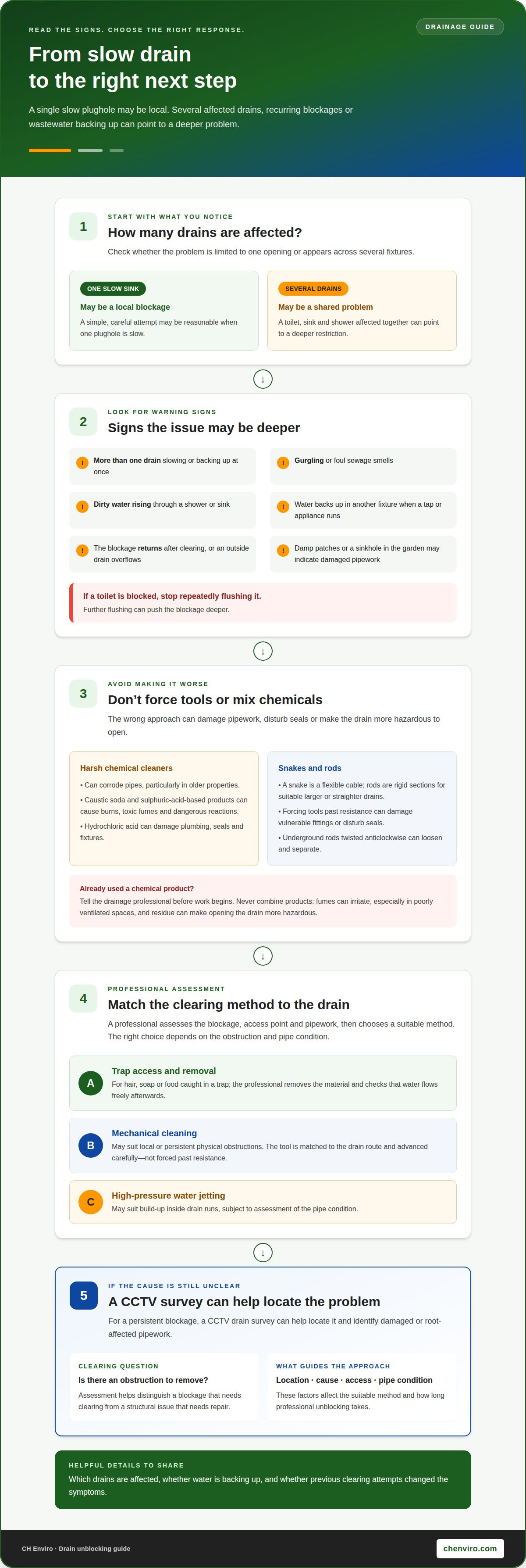
One slow sink may have a local blockage that you can carefully try to clear yourself. Several affected drains, recurring blockages or wastewater backing up are signs to seek professional help. The choice between DIY drain unblocking and a professional service depends on where the blockage is and whether it keeps returning.
It’s understandable to try a simple fix when one plughole is slow. But a blockage farther along the pipe, or one affecting several fixtures, may need more than a household approach. This guide explains what a DIY attempt involves, which warning signs point to a deeper issue and when professional clearing may help.
You’ll also learn how professionals assess stubborn blockages and when a CCTV drain survey can help identify the cause. Use the signs below to judge whether the problem appears local or needs closer investigation.
Table of Contents
Expert Solutions for Stubborn Blocked Drains?
In Ireland, responsibility depends on whether the blockage is in a drain serving one property or in a shared or public sewer. Establishing where the obstruction lies helps determine who should arrange its clearance. Don’t assume an overflowing outside drain is suitable for household tools.
Professional drain unblocking has no set duration. The location and cause of the blockage, access to the pipe and the pipework’s condition all affect how long clearing takes. A local hair clog is different from a persistent obstruction farther along the system.
Harsh chemical cleaners can corrode pipes, particularly in older properties. Caustic soda and sulphuric-acid-based products can also cause burns, toxic fumes and dangerous reactions. Hydrochloric acid can damage metal and plastic plumbing, rubber seals, and porcelain or enamel fixtures. Baking soda and vinegar may have little effect beyond the trap, while a drain snake can shift a blockage without removing grease or sludge from pipe walls.
If you’ve already poured a chemical product down the drain, tell the drainage professional before work begins. Never combine products: fumes can irritate, especially in poorly ventilated spaces, and residue can make opening the drain more hazardous. For toilet drain chemicals, follow the label exactly and don’t use them repeatedly as a routine fix.
For hair, soap or food caught in a trap, a professional can access the trap, remove the material and check that water flows freely afterwards. A blockage beyond the trap may call for mechanical cleaning or jetting. The right method depends on the obstruction and pipe condition, not simply on whether the drain is backing up.
Choose professional mechanical cleaning or jetting if a blockage persists, affects several fixtures or returns after clearing. The obstruction and pipework determine which method is suitable.
What Does Professional Drain Unblocking Involve?
A professional assesses the blockage, access point and pipework before choosing a clearing method. The DIY drain unblocking vs professional service decision often comes down to where the obstruction is and whether it can be cleared safely. Flexible drain snakes and rigid rods suit different drains, and forcing either tool can cause damage.
Risks of using snakes, rods and other drain-clearing tools
A drain snake is a flexible cable for local obstructions; drain rods are rigid sections suited to appropriate larger or straighter drains. A professional matches the tool to the drain route and pipe condition, advancing it carefully rather than forcing it past resistance. Resistance may indicate a bend, trap or obstruction that calls for another approach.
Underground rods need careful handling: twisting them anticlockwise can loosen their sections and leave them detached inside the drain. Older pipework may also be vulnerable to cracked plastic fittings or disturbed seals. A plunger may help with a minor blockage near an opening, but it won’t reach every obstruction. Grease or a deeper blockage may need another method.
Risks of poorly carried out drainage repairs
A repair that leaves joints improperly refitted or unchecked can cause leaks, while an unresolved obstruction may block the drain again. Unlike clearing a local clog, repair work changes or reconnects pipework, so the pipe’s condition and the finished joints matter.
Forcing tools through vulnerable fittings can disturb seals and cause leaks. If rods separate underground, retrieving them may require excavation. Dismantling pipework without being able to refit and check the joints safely can leave the system in worse condition. Don’t respond to a failed clearing attempt by applying more force.
A professional assesses the affected drain, chooses suitable mechanical equipment and stops if resistance suggests another approach is needed. If a blockage persists, a CCTV drain survey can help locate it and identify damaged or root-affected pipework. In the DIY drain unblocking vs professional service comparison, this inspection can distinguish a blockage that needs clearing from a structural issue that needs repair.
For a stubborn blockage, a professional drain unblocking service can assess the pipework and select a suitable method. Share which drains are affected, whether water is backing up, and whether previous clearing attempts changed the symptoms. That context helps direct attention to the relevant part of the drainage system before work begins.
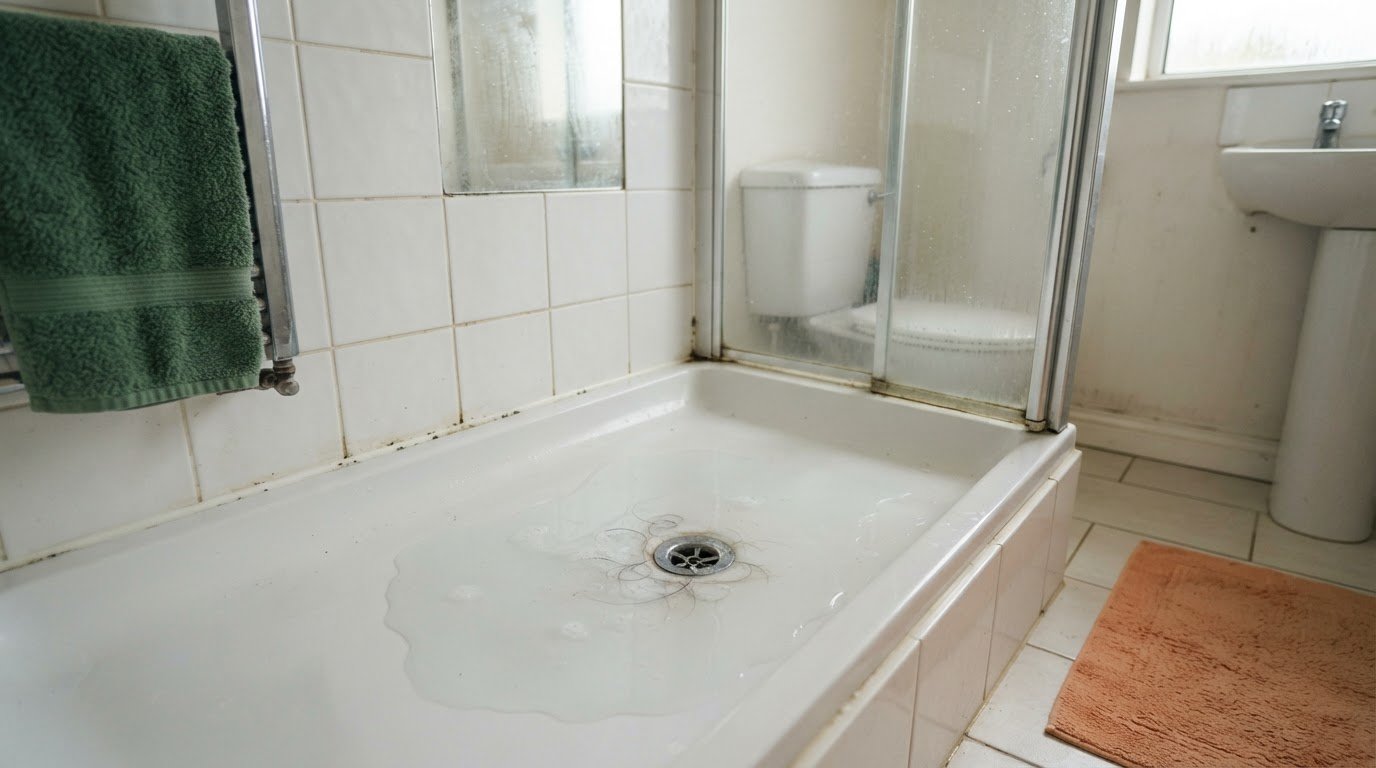
Signs that multiple drains share a deeper problem
One slow sink may have a local cause. If a toilet, sink and shower are affected together, the blockage may be deeper in the shared drainage system.
Warning signs for professional help
Several drains slowing or backing up at once can indicate a restriction in a main drain rather than debris in one plughole. Gurgling, foul sewage smells or dirty water rising through a shower or sink are further warning signs. If water backs up in another fixture while a tap or appliance runs, arrange a professional assessment.
Call a specialist if a blockage returns soon after clearing or an outside drain overflows. Damp patches or a sinkhole in the garden can indicate damaged pipework. These signs differ from a single local clog because they may point to a wider obstruction or structural issue. Stop repeatedly flushing a blocked toilet, as further flushing can push the blockage deeper.
Household drains and public sewers
A drainage specialist can inspect accessible chambers and use a CCTV drain survey to locate the obstruction, trace the pipe route and assess its condition. This evidence helps distinguish a blockage in a household drain from one in a shared or public sewer. Symptoms alone can’t show exactly where the blockage is.
In Ireland, the location and connection of the affected pipework help establish whether the issue is confined to one property or lies in a shared sewer. A specialist considers which fixtures are affected, checks accessible drainage points and views inside the pipe by camera where needed. That’s more reliable than assuming an outside drain serves only one property.
Seek help promptly if wastewater is backing up, several fixtures are affected or an outside drain is overflowing. A drain survey can help identify whether recurring blockages stem from grease build-up, roots, damaged pipes or another obstruction. If one fixture is slow and the problem clears, it may be a local issue. If it returns, spreads or comes with sewage smells, arrange a professional investigation rather than repeating the same attempt.
Professional mechanical clearing and high-pressure water jetting
After assessing the blockage and pipe condition, a drainage professional selects mechanical cleaning, jetting or further inspection. The right method depends on whether the obstruction is a local object, accumulated build-up or a deeper issue in the drain run.
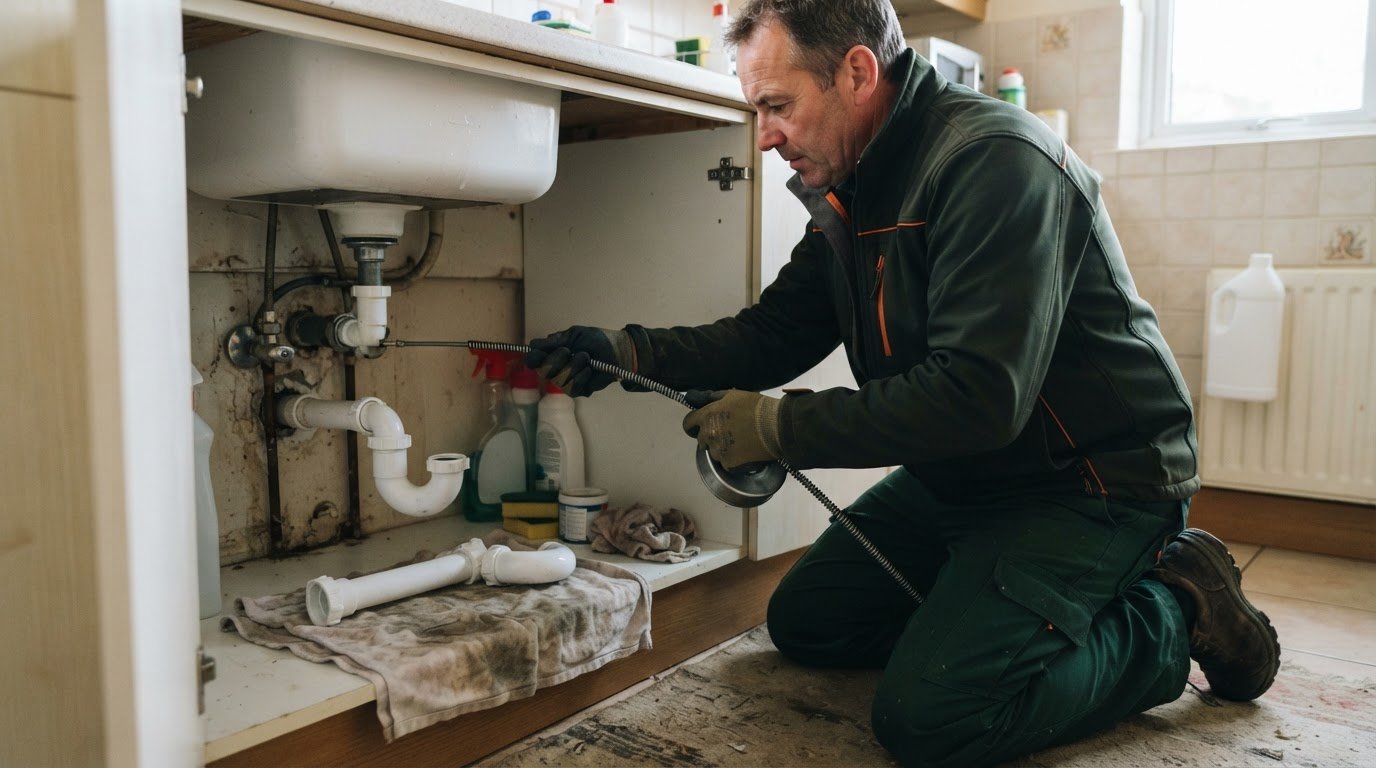
Mechanical clearing uses specialist equipment, such as rodding tools, to break up or remove an obstruction. A drain snake is flexible and can reach local blockages; rods suit appropriate larger or straighter drains. Professionals advance equipment slowly and avoid forcing it against resistance, which could indicate a bend, trap or vulnerable section of pipework. Repeated attempts with the wrong tool can damage a household drain instead of clearing it.
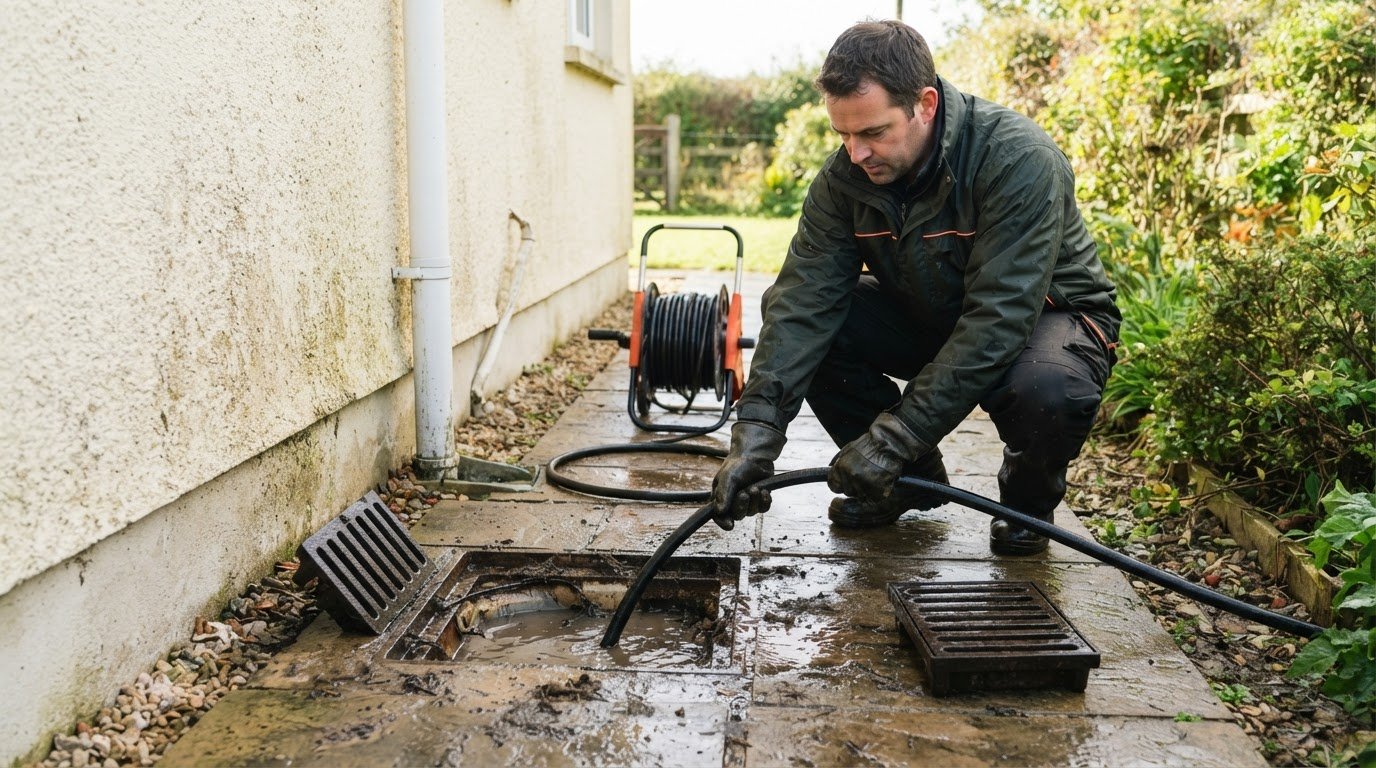
High-pressure water jetting directs water through a drain to clear obstructions and wash build-up from pipe walls. It may be suitable where grease or sludge remains after a blockage is opened. The pipe’s condition and access affect whether jetting is appropriate. A blocked toilet or backed-up sink may need a different approach from build-up along a longer drain run.
A CCTV drain survey provides visual evidence. Camera inspection can help locate the blockage and show whether roots, damage or structural problems affect the pipe. This helps distinguish a drain that needs clearing from one that needs repair. If the inspection identifies damaged pipework, repeating jetting attempts won’t fix it; no-dig drain repair is a separate option for addressing drain damage.
Mechanical clearing and jetting solve different problems, so the method should follow an assessment rather than a guess. For a persistent blockage or recurring back-up, arrange professional drain unblocking and describe which fixtures are affected, such as a toilet and shower. That detail helps direct attention to the relevant part of the drainage system.
CH Enviro: Drain Unblocking Service
CH Enviro’s Drain Unblocking Service is a practical next step when a blockage persists, returns after clearing or affects several fixtures. CH Enviro assesses drainage issues and carries out professional clearing, helping you move beyond repeated household attempts.
If blockages recur or foul smells continue, a CCTV Drain Survey can help investigate the cause inside the pipework. If the survey identifies damage, No-Dig Drain Repair may be appropriate. The right next step depends on whether the problem is a blockage, a recurring obstruction or a damaged drain.
When contacting CH Enviro, describe which drains are affected, what symptoms you’ve noticed and whether the blockage has returned. This gives the team useful context about the problem.
Contact CH Enviro to discuss a persistent or recurring blocked drain.
Choose the next step with confidence
The decision between DIY drain unblocking and a professional service is about more than getting water moving again. If a blockage keeps returning, look for a lasting explanation rather than treating temporary flow as proof that the underlying issue has gone. A clear assessment helps distinguish a one-off obstruction from a problem that needs further attention.
Before arranging help, note what has changed since the drainage problem began, including whether symptoms are spreading or returning. Sharing that context can help focus the assessment on the affected part of the system. You don’t need to diagnose the cause yourself.
For a persistent blocked drain, take the next step and contact CH Enviro about blocked drains. A professional can assess the issue and discuss a suitable way forward. You can move ahead with a clearer understanding of what the drainage problem needs.
Frequently Asked Questions
How can you reduce the risk of another blockage?
Keep cooking fat, oil and food scraps out of kitchen sinks; put them in the bin instead. Don’t flush wipes or other unsuitable items, even if they’re labelled flushable. In bathrooms, clearing visible hair from a plughole can help prevent it building up in the waste. If the same drain repeatedly blocks despite these habits, the cause may be farther along the pipe.
Should I call a plumber or a drain specialist?
Call a drain specialist for recurring blockages, several affected fixtures, an overflowing outside drain or wastewater backing up. A plumber generally handles faults with taps, toilets or internal plumbing fixtures, while a drainage specialist investigates blockages in drain runs. If you’re unsure where the problem lies, describe which fixtures are affected and what happens when water runs. This can help focus the assessment.
What Causes Drains to Become Blocked?
Drains can block when hair, soap residue, grease or food scraps collect inside pipes. Wipes and other unsuitable items can also obstruct a toilet or drain. If blockages keep returning, possible causes include a foreign object, tree roots, damaged pipework or a deeper obstruction. The cause determines the right response: removing a local build-up won’t fix a cracked pipe or an obstruction farther along the system.
What Happens When a Drainage Specialist Visits?
A drainage specialist assesses the symptoms and access points, then chooses a suitable way to investigate or clear the blockage. Depending on the obstruction and pipe condition, they may use mechanical equipment, water jetting or a CCTV inspection. Explain when the problem began, which fixtures are affected and whether previous attempts changed anything. This context can help focus the inspection.
When should you stop DIY and call a professional?
Stop if a careful attempt doesn’t clear the blockage, if it soon returns or if several fixtures are affected. Dirty water backing up, sewage smells, gurgling or an overflowing outside drain are further reasons to call a professional. Don’t keep flushing a blocked toilet or force a tool against resistance. These actions can push an obstruction farther along or damage vulnerable pipework.
How does a professional unblock a drain safely?
A professional considers the blockage and pipework before selecting an appropriate clearing method. Mechanical equipment can break up or retrieve an obstruction; water jetting can wash away suitable deposits. If the blockage’s location or cause is unclear, a CCTV survey can show the pipe interior. This helps distinguish a removable obstruction from signs of roots or structural damage that need further attention.
Comments