
Drain-Cleaning Options for Homeowners
A drain cleaner may clear a blockage while putting the pipework at risk. The short answer to whether chemical drain cleaners are bad for pipes is yes: strong products, repeated use or leaving cleaner trapped in a blocked drain for too long can corrode or weaken pipes, especially older plumbing and PVC.
It’s understandable to reach for a quick fix when water won’t drain. But chemical cleaners can create hazardous fumes if mixed with other products, so follow the label and use protective gloves and eye protection in a well-ventilated room.
This guide explains how cleaners can affect different pipes and why contact time matters. You’ll also learn which gentle DIY methods may help with a minor blockage, when professional drain cleaning makes more sense, and what recurring or widespread drainage problems can indicate.
Table of Contents
Is chemical drain cleaner safe to use?
Chemical drain cleaners can contain caustic soda, bleach, hydrochloric acid or sulphuric acid. Caustic products can generate heat as they work on a blockage. This heat, along with their corrosive action, can weaken plumbing, particularly older pipes. Already worn metal pipes may be more vulnerable to strong acidic cleaners. PVC pipes can also be damaged if a product is too strong or trapped behind a blockage. One use of a suitable cleaner may leave no visible damage, but repeated use can increase the risk. Strong products are not safe for every drain.
In Ireland, follow the product label for instructions and safety advice. Wear protective gloves and eye protection, and ventilate the room. Don’t add cleaner to a completely blocked drain where water cannot move. Never combine it with another drain product or household cleaner, as mixtures can create dangerous fumes or reactions. Keep products separate, even if the first treatment hasn’t cleared the blockage.
Call a professional plumber for a stubborn blockage, or if several fixtures drain slowly, the drain smells foul, or blockages keep returning. These signs can point to a problem beyond a simple surface obstruction. If water is overflowing or a leak is developing, seek plumbing help promptly to limit further damage. Emergency plumbing services address urgent drainage problems, but the right response depends on what is blocked and where. A recurring blockage may need investigation rather than another dose of chemical cleaner.
Don’t assume an emergency plumbing trip charge is a universal fixed fee. Any service price depends on the case and is given after a quote request; the blockage location, access to the pipework and work required affect the cost. Ask for the full quoted amount before proceeding, including any call-out or travel charge. That gives you a clear basis for deciding whether professional help is the right next step, rather than using more cleaner on older or vulnerable plumbing.
Risks of leaving cleaner in pipes too long
Drain cleaner can keep reacting if it remains trapped behind a blockage. Follow the product label’s contact time and don’t leave residue sitting in the pipework.
Damage to plastic and PVC pipes
Strong cleaner can damage plastic or PVC if it becomes trapped, stays in the pipe too long or is used repeatedly. Heat from caustic products can add stress as the chemicals act on the blockage. Check the label’s directions and consider whether the drain is fully blocked. If water cannot move, don’t pour cleaner into the pipe: it may remain concentrated in one place instead of draining away.
Corrosion of metal pipes
Strong chemical cleaners can corrode metal pipework, particularly if the pipes are old or already weakened. The risk depends on the product, contact time and pipe condition. Repeated use can cause damage over time, even if one suitable application leaves no visible mark. If a blockage returns after treatment, adding more cleaner may increase exposure without addressing the underlying cause.
Which ingredients can be most harmful to pipes? Strong acids, including sulphuric or hydrochloric acid, and caustic ingredients such as sodium hydroxide or potassium hydroxide can be corrosive. Their effects depend on the pipe material and whether the product remains trapped or is used repeatedly.
There are also health risks. Fumes can cause respiratory problems, while accidental skin contact can cause severe burns. Wear protective gloves and eye protection, keep the room ventilated, and follow the label. Never mix drain cleaner with another product: reactions can produce hazardous gases.
Cleaner can also contaminate water sources, harming aquatic life and ecosystems. Use only the amount and contact time stated on the product label, and don’t pour a second cleaner into the same drain. If fumes build up or cleaner splashes onto skin, avoid further contact and follow the product’s safety instructions.
Professional drain-cleaning alternatives
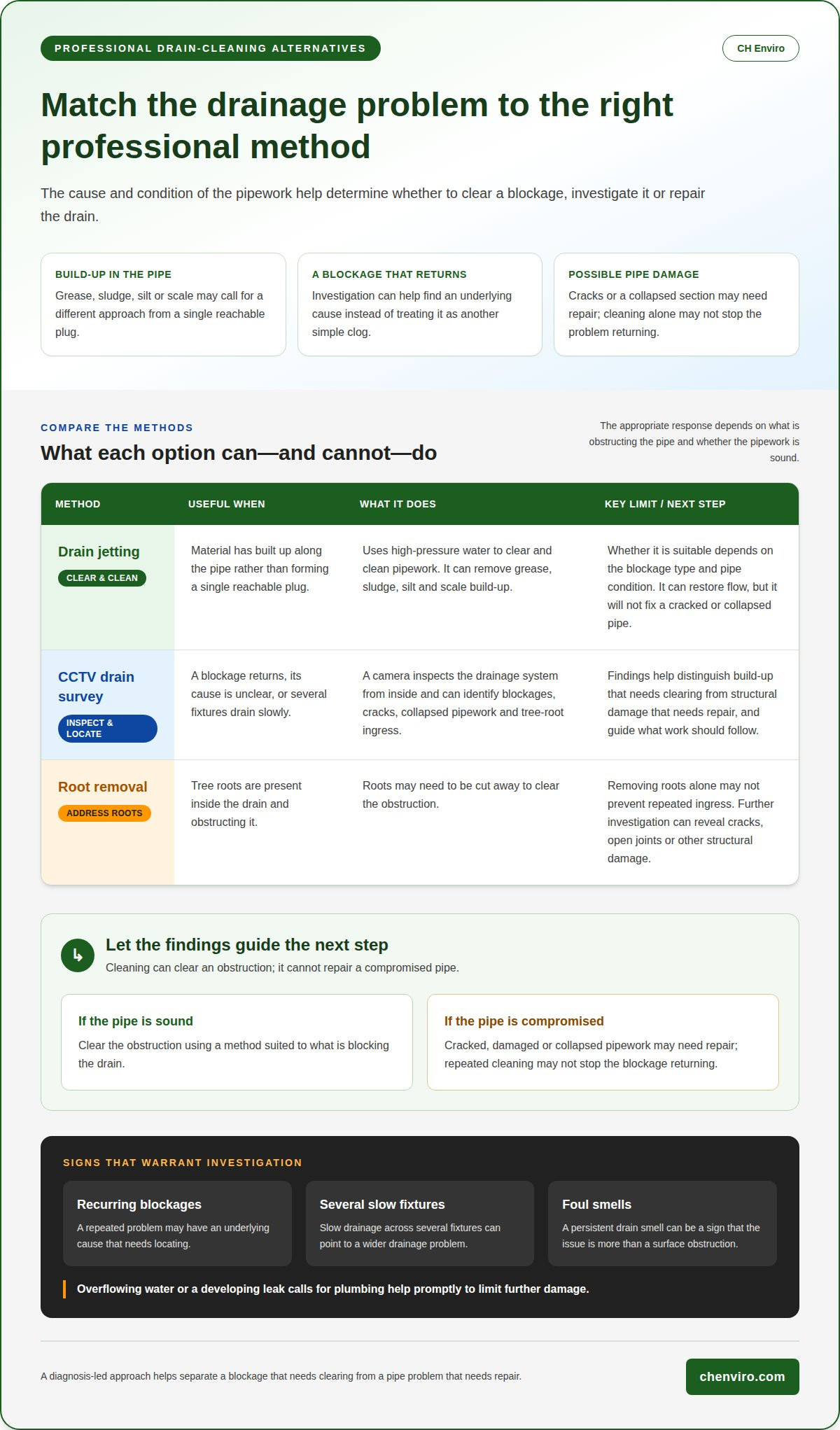
Professional drain cleaning can address a blockage without relying on chemical products. The right method depends on what is obstructing the pipe and whether the pipework is damaged. Grease or sludge build-up calls for a different approach from tree roots or a collapsed section. Recurring blockages, foul smells or slow drainage across several fixtures can indicate a wider drainage problem. A specialist can identify the cause before choosing a cleaning or repair method.
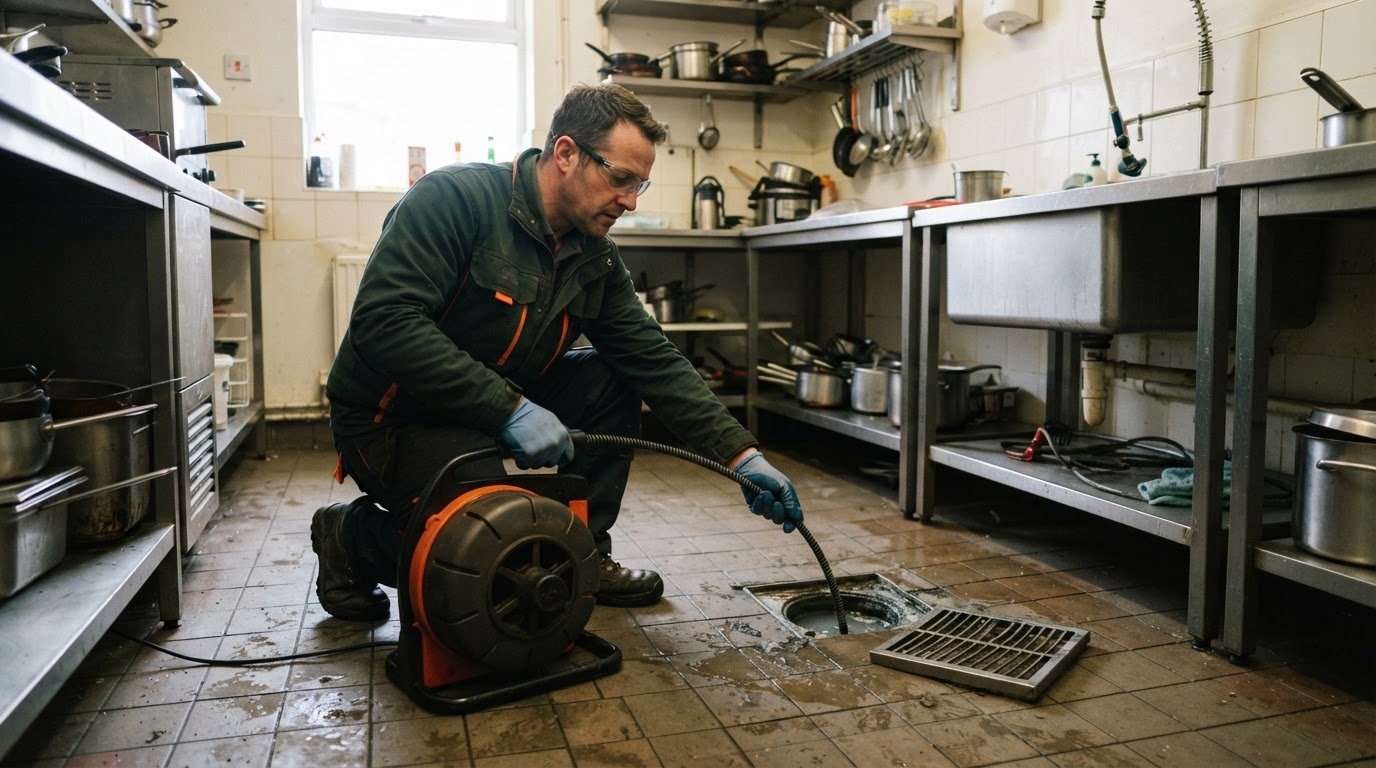
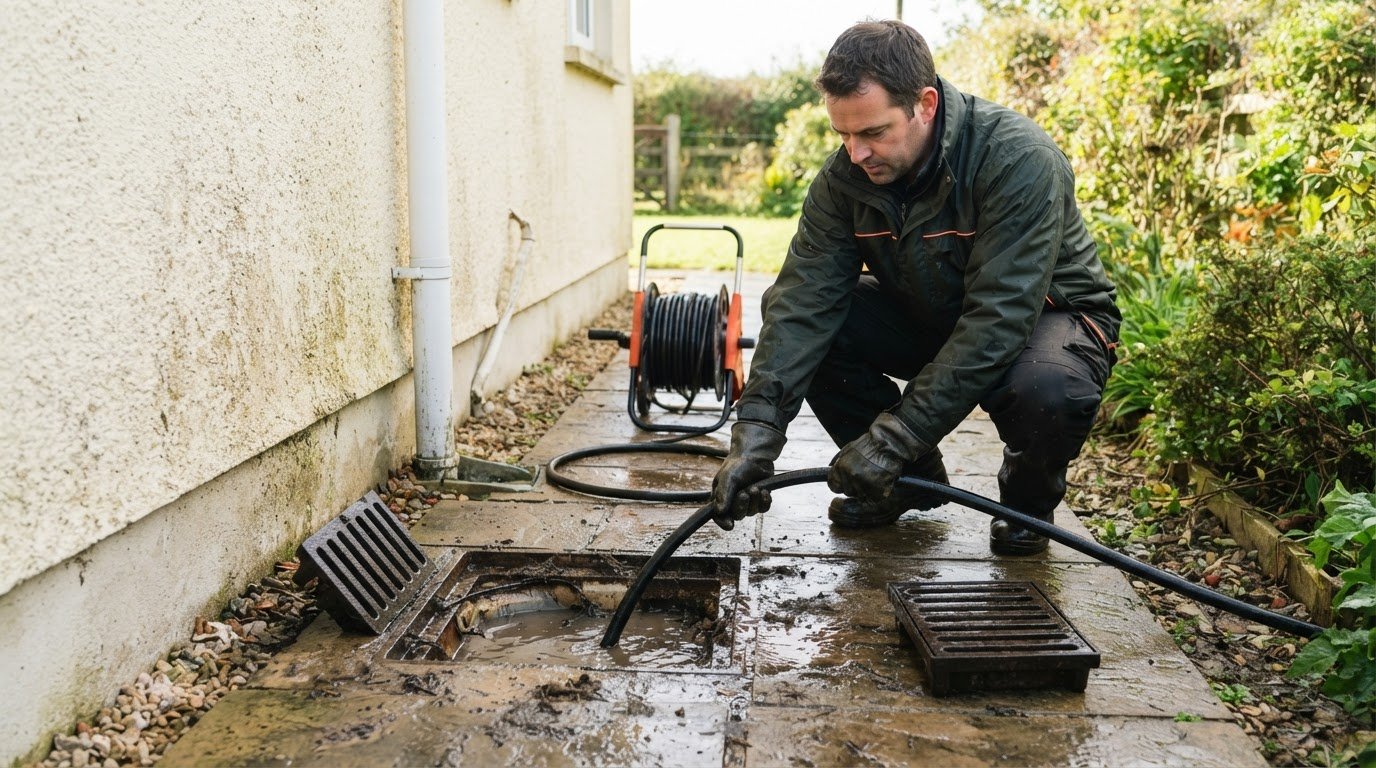
Drain jetting uses high-pressure water to clear and clean pipework. It can remove grease, sludge, silt and scale build-up from inside a drain, making it useful when material has accumulated along the pipe rather than forming a single reachable plug. Unlike chemical cleaners, jetting uses water to clear the obstruction. The blockage type and pipe condition help determine whether it is appropriate. Clearing the obstruction can restore flow, but it won’t fix a cracked or collapsed pipe.
A CCTV drain survey uses a camera to inspect the drainage system from inside. It can identify blockages, cracks, collapsed pipework and tree root ingress. This is especially useful when a blockage returns after cleaning or its cause cannot be located from the affected fixture. The inspection helps distinguish a build-up that needs clearing from structural damage that needs repair, giving a clearer basis for deciding what work should follow.
Tree roots inside a drain may need to be cut away to clear the obstruction. However, removing roots alone may not resolve repeated ingress. Further investigation can reveal cracks, open joints or other structural damage that lets roots enter. If pipework is cracked, damaged or collapsed, cleaning alone may not stop the blockage returning. The next step depends on the survey findings: clear the obstruction if the pipe is sound, or consider repairs if the pipe itself is compromised. This diagnosis-led approach avoids treating every recurring blockage as a simple clog.
DIY alternatives for minor blockages
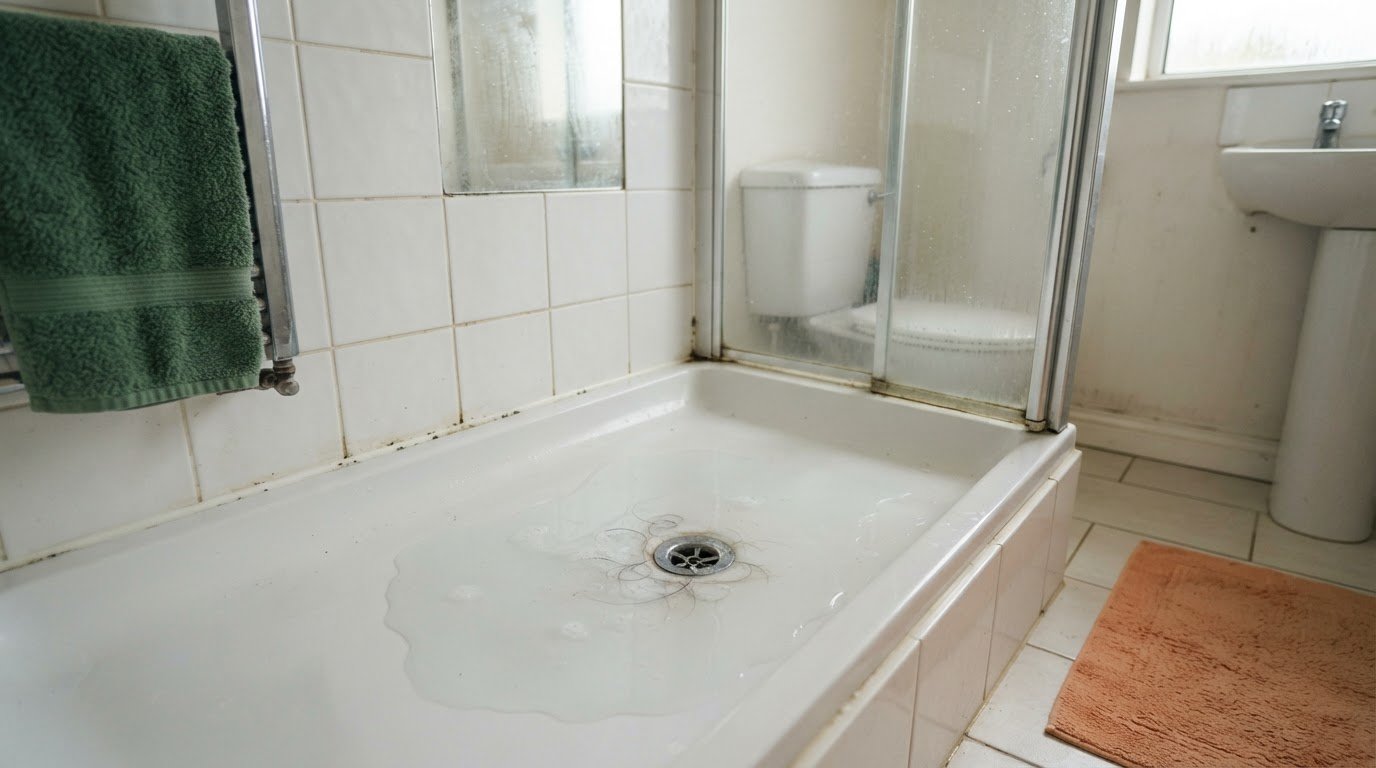
For a slow plughole or a small, nearby clog, try a physical method before using chemicals. These approaches suit minor obstructions, not recurring blockages or drains that are completely stopped.
A plunger can shift a minor blockage using pressure. Seal the plunger over the plughole, then work it firmly to create suction. This may dislodge a soft obstruction near the opening. Stop if water starts backing up elsewhere, as the blockage may extend beyond the fixture.
Remove visible debris around the plughole first. Hair, soap residue and food particles can collect near the surface and restrict flow. If the plughole has an accessible trap, carefully clear out any collected material and refit it securely. This can help when the clog is close to the sink or basin opening.
A drain snake can help remove shallow hair blockages. Feed it gently into the plughole, then withdraw it slowly to catch debris. Don’t force it against resistance, which may indicate a deeper obstruction. A snake is for reachable clogs, not for diagnosing damaged pipework or clearing a blockage that keeps returning.
For light build-up, bicarbonate of soda followed by vinegar and hot water may help. Avoid boiling water if you don’t know the pipe material. Don’t combine this approach with chemical drain cleaner, as mixing products can cause hazardous reactions. Use one method at a time.
If a plunger or careful plughole cleaning doesn’t restore flow, stop rather than repeating attempts or pushing tools deeper. Slow drainage in several fixtures, foul smells and recurring clogs can point to a larger issue. Cracked or damaged pipework may need repair, because clearing the immediate obstruction won’t fix the underlying fault.
If a minor blockage persists, arrange professional drain help before repeated DIY attempts risk making the problem harder to resolve.
CH Enviro
CH Enviro can help when a blockage persists, returns or may involve damaged pipework. Its Drain Unblocking Service addresses drainage obstructions, while a CCTV Survey can help identify what is happening inside the system. If the survey finds damaged pipes, No-Dig Technology Repairs can provide a repair option without treating the problem as a simple clog.
This is a practical next step if chemical cleaner hasn’t cleared the drain or you’re concerned it may have affected the pipes. A recurring blockage may need more than another DIY treatment. Contact CH Enviro to discuss the drainage problem and arrange the appropriate service.
Choose the next step based on the blockage
Before trying another treatment, note where the water is slow and whether the problem affects one fixture or several. Record when it began, whether it has returned and any cleaner already used. These details help explain what is happening without guesswork. If there is a leak, visible damage or water backing up, stop using the affected fixture and seek help rather than pushing a tool further into the pipe.
So, are chemical drain cleaners bad for pipes? They can be, especially if strong products are left trapped or used repeatedly. The useful next step is to match the response to the fault, not simply repeat a treatment that hasn’t worked. Where the blockage persists or returns, professional investigation can help establish whether the issue is a clog or damaged pipework. Contact CH Enviro for drain help to discuss the problem and a practical way forward. A clear account of the symptoms gives the conversation a helpful starting point, and you can move towards resolving the drainage issue with confidence.
Frequently Asked Questions
Can Drain Cleaner Damage Your Pipes?
Yes, chemical drain cleaners can be bad for pipes, particularly if they’re strong, used repeatedly or left trapped. Older plumbing and PVC pipework can be vulnerable, and corrosion or weakening may eventually lead to leaks or breaks. One use of a suitable product may not cause visible damage, but that doesn’t make repeated applications a safe fix for a blockage that keeps returning.
Can I use drain cleaner in a completely blocked sink?
No. If water cannot move through the sink, cleaner may remain concentrated behind the blockage instead of draining away. This increases the risk of prolonged contact with the pipework and leaves hazardous product in the sink. Don’t add another dose or another cleaning product. A completely blocked drain is a reason to stop chemical treatment and have the obstruction assessed.
Is caustic soda safe for drains?
Caustic soda, also called sodium hydroxide, is a strong chemical, not a risk-free drain remedy. Caustic cleaners can generate heat as they work on clogs, and strong products may harm vulnerable pipework. Use a product containing it only as directed on its label. Keep it away from skin and eyes, and don’t combine it with other drain or household cleaners.
What happens if drain cleaner is left too long?
Cleaner left in the pipe beyond the contact time stated on its label can continue exposing the pipework to corrosive chemicals. Plastic and PVC pipes can be damaged if a strong product is trapped or left too long; strong cleaners can also corrode old or weakened metal pipes. If you’ve exceeded the stated time, don’t add another product. Follow the label’s next-step instructions.
Why should you be careful with chemical drain unblockers?
Chemical unblockers can cause harm beyond pipe damage. Fumes may affect breathing, and direct skin contact can cause severe burns. Mixing products can also create hazardous gases or vigorous reactions. Read the label before use, wear protective gloves and eye protection, and keep the room ventilated. Store the container safely, away from children and other cleaning products.
Do chemical drain cleaners damage PVC, copper, or older pipes?
Chemical drain cleaners can damage PVC when the product is too strong, trapped behind a blockage, left too long or used repeatedly. Copper is a metal, and strong drain cleaners can corrode metal pipes, particularly if they’re old or weakened. Older plumbing deserves extra caution because existing wear can make pipework more vulnerable. Product strength, contact time and pipe condition all matter.
Comments