
How Often to Empty Your Septic Tank in Ireland: The 2026 Homeowner’s Guide
Did you know that only about 10% of the sludge that should be removed from Irish septic tanks is actually collected each year? This suggests that the vast majority of homeowners are neglecting a vital piece of infrastructure until it fails. If you are unsure how often to empty your septic tank in Ireland, you aren't alone. Most people wait for a foul smell in the garden or a slow drain before they take action. By then, the internal damage to your soakaway might already be done.
It's frustrating to manage complex EPA regulations while trying to keep your home running smoothly. We've created this guide to give you a clear, no-nonsense maintenance schedule that keeps you compliant with the 2026 European Union Water Policy. You'll learn the exact desludging intervals required for your household size and the specific records you must now keep for seven years to avoid a €5,000 fine. We will also cover how to spot early signs of trouble and how to find a reliable, licensed contractor to protect your property and your wallet.
Key Takeaways
Understand the three distinct layers within your system to see why periodic desludging is vital for preventing blockages.
Determine how often to empty septic tank Ireland standards require by balancing your household occupancy with your tank’s physical capacity.
Recognise the early warning signs, such as gurgling pipes or slow drains, before they lead to expensive soakaway repairs.
Ensure full compliance with the 2026 EPA National Inspection Plan and the mandatory seven-year maintenance record requirement.
Learn why a comprehensive professional clean is superior to basic skimming for maintaining long-term system efficiency.
Table of Contents
Understanding the Basics of Septic Tank Desludging
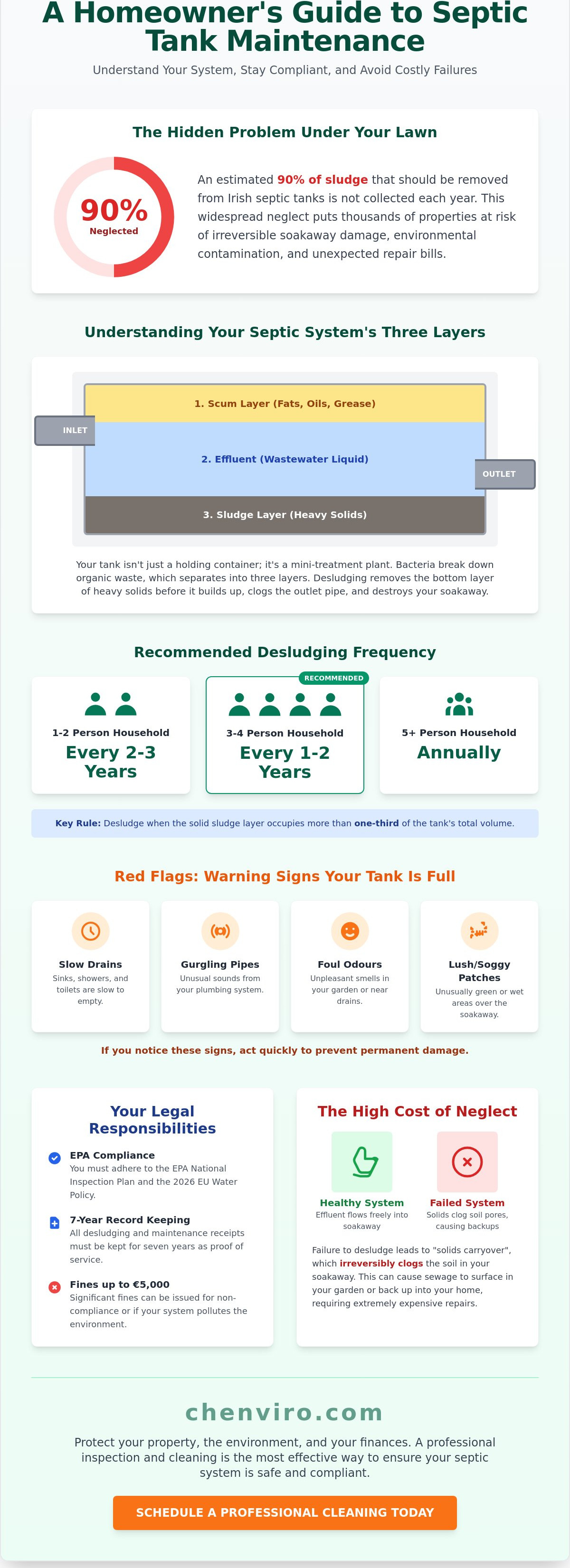
Desludging is the process of removing the heavy, inorganic solids that settle at the bottom of your wastewater system. To understand why this matters, you first need to know what a septic tank is and how it functions as a compact treatment plant. It isn't just a holding tank; it's a living biological environment that separates waste into three distinct zones:
The Scum Layer: This top layer consists of fats, oils, and grease that float on the surface.
The Effluent: The middle layer is relatively clear liquid that is eventually discharged into your percolation area.
The Sludge Layer: The bottom layer contains heavy solids and inorganic material that bacteria cannot break down.
Many homeowners in Ireland only think about their system when they see a puddle in the garden or smell something foul. This "out of sight, out of mind" approach is dangerous. Irish soil, particularly in areas with heavy clay, is not forgiving. If you wait too long to determine how often to empty septic tank Ireland regulations suggest, you risk permanent damage to your property's drainage infrastructure.
Why "Emptied" Doesn’t Always Mean "Empty"
A common mistake is assuming a tank is "full" just because the water level is high. In reality, your septic tank should always be full of liquid to operate correctly. This liquid provides the environment for beneficial bacteria to digest organic matter. When we talk about emptying the tank, we're specifically referring to the removal of the accumulated sludge. If the sludge takes up more than one-third of the tank's total volume, it's time for a service. Removing too much liquid or using harsh chemicals can actually kill the bacteria you need, making the system less efficient.
The Risks of Neglecting Your Maintenance Schedule
Neglect leads to "solids carryover." This happens when the sludge layer grows too high and begins to spill into the outlet pipe. These solids then travel to your soakaway, where they clog the soil pores. In the heavy clay soils found across much of Ireland, this clogging is often irreversible. Once the soil is sealed by sludge, the wastewater has nowhere to go but up to the surface or back into your house. This is why the "Protect Our Water" initiative emphasises regular maintenance. A failing system doesn't just ruin your garden; it can contaminate local groundwater and nearby wells, leading to environmental damage that is incredibly expensive to fix.
Factors Determining How Often to Empty Your Tank
Every household is different, which means there is no single rule for every property. While the EPA provides general guidelines, the actual speed at which your system fills up depends on several practical factors. Your tank isn't a bottomless pit. It has a finite capacity to process waste, and once that capacity is exceeded, the risk of a backup increases significantly. If you are trying to calculate how often to empty septic tank Ireland regulations and system health require, you must look at your specific living situation.
The primary driver of sludge accumulation is your household size. More residents simply mean more organic matter and more water entering the system. Older Irish homes, particularly those built before the 1990s, often have smaller concrete tanks. these were designed for a different era of water usage. Modern habits, such as using high-pressure power showers and running multiple laundry cycles daily, introduce vast amounts of "grey water" into the tank. This high volume of water can stir up the settled sludge, pushing it toward the outlet before it has time to break down. If your system is older, it likely has a more fragile soakaway that needs extra protection from this solids carryover.
The Occupancy vs. Frequency Calculation
As a general rule, a family of four living in a home with a standard-sized tank should book a service annually. If there are only two residents, you might be able to extend that interval to every two or three years. However, this is just an estimate. Professional technicians use a tool called a "sludge judge", which is a clear plastic pipe lowered into the tank to measure the exact depth of the solids layer. If you haven't had an inspection in over a year, a professional septic tank cleaning can prevent these issues before they start.
The Impact of Irish Weather and Hydraulic Overload
Irish weather plays a larger role in septic health than many realise. In regions with high rainfall, such as Wicklow or Meath, systems are frequently subjected to hydraulic overload. This happens when the ground becomes saturated, and the percolation area can no longer soak up the effluent. The problem is often made worse by poor plumbing where roof water or guttering is wrongly diverted into the septic tank. This massive influx of rainwater flushes the tank out prematurely. During particularly wet winters, we see a sharp rise in emergency call-outs because systems simply cannot cope with the combined volume of household waste and storm water. Keeping your sludge levels low ensures there is more "buffer" room when the heavy rains arrive.
Red Flags: How to Tell if Your Tank is Overdue
Waiting for a total system failure before you act is a recipe for a massive repair bill. While you now understand that household occupancy dictates how often to empty septic tank Ireland experts suggest, your system will usually provide physical clues when it has reached its limit. These signs are distress signals that shouldn't be ignored. If your drains are acting up, the problem is likely deeper than a simple sink clog; it's the entire wastewater infrastructure struggling to cope.
Common indicators that your tank is overdue for a service include:
Universal Slow Drains: If every sink, shower, and toilet in your home is draining slowly, the issue is systemic. This happens when the tank is too full to accept new wastewater quickly.
Plumbing Gurgles: Listen for gurgling or bubbling sounds in your pipes, especially when the washing machine discharges or the dishwasher is running. This indicates air is being trapped by high liquid levels in the tank.
The "Lush" Patch: A section of grass over the percolation area that is unusually bright green or fast-growing is a major warning. It suggests effluent is surfacing too close to the roots, effectively over-fertilising the lawn because the soil can no longer filter it.
Persistent Odours: Foul smells near the tank or coming from internal drains are a clear sign that gases are escaping. This often happens when the sludge layer is high enough to interfere with the natural venting of the system.
Internal vs. External Warning Signs
Check for sewage backing up into low-lying entry points like shower trays or baths. These are the lowest drains in the house and will be the first to show signs of a backup. Outside, look for "ponding" or damp patches in the garden even during dry spells. This means your soakaway is saturated and can't process any more liquid. In Ireland, you might notice smells are worse during periods of low barometric pressure. Whilst many blame the weather, it's often a sign that your tank's seals or vents are struggling with high sludge volumes.
The "Silent" Failure: When You See No Signs At All
The most dangerous scenario is the silent failure. A tank can appear to be working perfectly while it's actually discharging fine solids into the percolation area. This happens when the sludge layer grows so high that it bypasses the baffles. You won't see a backup immediately, but you are slowly ruining your soakaway pipes. By the time you notice a problem, the damage is often permanent. If you suspect your system is sluggish but aren't sure why, Professional Drain Unblocking Services in Dublin can help diagnose the issue. A CCTV drain survey is the only way to confirm if your pipes are clear or if sludge has begun to migrate into the soil, saving you from a total system replacement.
Irish Regulations and Your Legal Responsibilities
Owning a septic tank in Ireland comes with specific legal obligations that go beyond simple garden maintenance. You must register your domestic wastewater treatment system with "Protect Our Water" and pay a one-time fee of €50. Failure to do so is a serious offence that can result in a fine of up to €5,000. These rules are in place because over 400,000 tanks treat wastewater for roughly one-third of the population. Proper oversight is essential to prevent environmental damage. Understanding how often to empty septic tank Ireland law expects is the first step toward staying on the right side of the authorities.
Under the European Union (Water Policy) Regulations 2026, published on March 3, 2026, you are now legally required to keep records of your septic tank desludging for a period of seven years. This is an increase from the previous five-year requirement. If an inspector knocks on your door, you need to prove exactly when your tank was last serviced and who performed the work. Keeping a folder with your waste transfer notes is the easiest way to stay compliant.
The National Inspection Plan Explained
Local authorities are currently carrying out inspections under the National Inspection Plan for 2022-2026. You'll receive a letter if your system is selected for an official check. Inspectors look for leaks, structural integrity, and evidence of regular maintenance. If your system fails, you might be eligible for a remediation grant of up to €12,000. However, eligibility criteria are extremely narrow. These grants are usually reserved for systems in high-priority water protection areas or those that failed a specific inspection. Most homeowners have to cover repair costs themselves if their system is found to be non-compliant.
Waste Collection Permits (NWCPO)
You cannot simply hire anyone with a tractor and a tanker to empty your tank. It's illegal to use a contractor who doesn't hold a valid National Waste Collection Permit Office (NWCPO) permit. If you hire an unlicensed collector who fly-tips your sludge, you can be held legally responsible and prosecuted. Always demand a "waste transfer note" after every service. This document is your legal proof that the waste was handled and disposed of correctly at a licensed facility. CH Enviro handles all documentation and compliance requirements, giving you total peace of mind. To ensure your system meets every legal standard, book your septic tank cleaning with a licensed professional today.
Professional Septic Tank Cleaning: The CH Enviro Approach
At CH Enviro, we take a straight-talking approach to your wastewater system. We understand that determining how often to empty septic tank Ireland homeowners require can be a source of stress. That's why we provide a clear, honest assessment of your system’s health during every visit. Many contractors simply "skim" the top liquid to save time and move to the next job. We don't. Our team performs a comprehensive clean, removing the heavy, compacted sludge from the very bottom of the tank. This is the only way to ensure your system continues to function as designed and stays within EPA guidelines.
We serve Dublin, Meath, Kildare, and the surrounding counties with deep local expertise. Our technicians understand the specific drainage challenges posed by local soil types and weather patterns. To provide a complete solution, we often combine our cleaning services with a CCTV drain survey. This allows us to see inside your pipes and identify cracks, leaks, or root ingress before they cause a total system failure. It's about giving you a full picture of your infrastructure, not just a quick fix.
What Happens During a Professional Service?
When our vacuum tanker arrives at your property, we use high-pressure jetting equipment to break up stubborn solids that have settled over time. We don't just pump out the liquid; we ensure the heavy waste is fully agitated and removed. During the process, our technicians conduct a visual inspection of the T-pipes and baffles. These components are your last line of defence against solids entering the percolation area. If they're damaged or displaced, we'll let you know immediately. Once the cleaning is complete, we perform a final cleanup of the area and provide the necessary waste transfer notes for your seven-year legal records.
Booking Your Maintenance Before an Emergency Strikes
Scheduled maintenance is significantly cheaper than emergency repairs. A system backup usually happens at the most inconvenient time, often during heavy rain or when you have guests. By the time sewage is backing up into your shower, the cost of resolution has already tripled. We can organise recurring maintenance contracts to take the guesswork out of your schedule. This proactive approach ensures you stay compliant with the 2026 regulations whilst protecting the long-term integrity of your soakaway. Don't wait for a foul smell or a slow drain to take action. Contact CH Enviro today for professional septic tank cleaning and ensure your home's wastewater system is handled by the experts.
Secure Your Home’s Drainage Future
Managing your wastewater system doesn't have to be a guessing game. You now know that how often to empty septic tank Ireland guidelines suggest depends on your household's occupancy and your tank's specific capacity. By staying ahead of the sludge layer and recognising the early warning signs, you protect your garden from contamination and your bank account from the cost of a total soakaway replacement. Proactive care is always more affordable than a reactive crisis.
Compliance is just as vital as the physical maintenance itself. Ensure you keep your waste transfer notes for the required seven years and only ever use a fully permitted collector. As a fully NWCPO permitted service provider, CH Enviro helps homeowners across Dublin, Meath, Kildare, and Wicklow stay legal and worry-free. We provide comprehensive documentation with every visit so you are always prepared for a local authority inspection. Taking these small steps now ensures your system remains efficient and environmentally sound.
Don't wait for your drains to slow down or smells to appear. Book Your Professional Septic Tank Cleaning with CH Enviro today to keep your system running perfectly for years to come.
Frequently Asked Questions
How often should I empty my septic tank in Ireland?
You should empty your tank every one to three years depending on your household occupancy and tank capacity. While the EPA suggests a maximum interval of five years, most family homes require more frequent desludging to prevent solids from clogging the percolation area. If you are unsure how often to empty septic tank Ireland experts recommend for your specific setup, an annual inspection is the safest approach.
Can I empty my septic tank myself or spread it on my land?
No, it is illegal to empty a septic tank yourself or spread the contents on your land. Domestic sludge contains harmful pathogens and high concentrations of nitrogen that can contaminate local groundwater and wells. Only contractors holding a valid National Waste Collection Permit Office (NWCPO) permit are authorised to collect, transport, and dispose of this waste at licensed treatment facilities.
What is the average cost to empty a septic tank in Dublin and surrounding areas?
The cost to service a septic tank depends on the size of the unit and its location relative to disposal facilities. Factors such as the ease of access for a vacuum tanker and the volume of sludge removed will determine the final price. You should contact a permitted local provider for a direct quote that reflects the specific requirements of your property and system type.
Will heavy rain in Ireland cause my septic tank to fill up faster?
Heavy rainfall can cause a system to fill up faster if surface water or roof runoff is incorrectly diverted into the tank. This leads to hydraulic overload, which flushes the tank out before the solids have had time to settle properly. Ensuring your gutters and storm drains are separated from your wastewater system is essential for preventing backups during wet Irish winters.
How do I know if my septic tank collector is legally authorised?
You can verify a collector’s authorisation by checking the National Waste Collection Permit Office (NWCPO) online database for their specific permit number. A legally authorised provider will always issue a waste transfer note once the job is finished. Under the 2026 regulations, you must keep these records for seven years to prove how often to empty septic tank Ireland requirements were met on your property.
What happens if I fail a septic tank inspection by the local authority?
If your system fails an inspection, the local authority will issue an advisory notice detailing the necessary repairs or upgrades. You are legally required to fix the issues within a specific timeframe to avoid potential fines of up to €5,000. Whilst some homeowners may qualify for a remediation grant of up to €12,000, the eligibility criteria are strictly limited to certain high-priority water areas.
Can I use additives to avoid having to empty my tank?
Additives cannot replace the physical removal of inorganic solids from your tank. While some biological products can help maintain the bacteria needed to break down organic waste, they do not dissolve the heavy sludge that settles at the bottom. Relying on additives alone often leads to a false sense of security and eventual failure of the soakaway pipes due to solids carryover.
How long does a professional septic tank cleaning service take?
A standard professional cleaning service usually takes between 45 and 90 minutes to complete. This time includes the arrival of the vacuum tanker, the thorough removal of sludge, and a visual check of the tank's internal baffles and T-pipes. If your tank is buried deep or has not been serviced in over five years, the process may take slightly longer to ensure a comprehensive clean.


Comments