
Tree Roots in Drains Symptoms: Identifying Root Intrusion in Irish Properties
- chenviro2
- 3 days ago
- 12 min read
In the damp Irish climate, tree roots aren't just growing by chance; they are actively hunting your drainage system through a process called hydrotropism. While you might think your garden and your plumbing exist in separate worlds, the reality is that the moisture and nutrients inside your pipes act as a beacon for thirsty root systems. Recognising the specific tree roots in drains symptoms Ireland property owners encounter is the first step in preventing a minor leak from turning into a total pipe collapse. If you've noticed recurring blockages or a persistent sewage smell near your flowerbeds, you're likely dealing with an underground intrusion.
It’s incredibly frustrating to pay for a drain unblocking only to have the same backup return a few weeks later, especially when you fear the only solution is digging up your prized garden. This guide will help you identify these subtle warning signs, allowing you to stop structural damage before it becomes a major financial burden. We'll examine the red flags of root intrusion, explain why older clay pipes are particularly vulnerable, and show you how modern CCTV surveys and no-dig repairs can fix the problem without destroying your driveway. You can confirm the source of your drainage issues and secure a long-term fix that keeps your property functional and your garden intact.
Table of Contents
Understanding Tree Root Intrusion in Irish Drainage Systems
Roots aren't passive observers of your garden's layout. They are active hunters. Through a biological process called hydrotropism, tree roots sense moisture gradients and nutrient concentrations in the soil. Even in a country with Ireland's high rainfall, the warm, nutrient-rich wastewater inside your pipes acts as a concentrated "liquid fertiliser" that roots will travel long distances to find. Understanding how tree roots invade drainage systems is essential for any homeowner with mature greenery near their property boundaries. Identifying tree roots in drains symptoms Ireland property owners often ignore starts with recognising this biological drive.
Older properties, particularly in established areas of Dublin and Meath, often rely on clay or concrete pipes. These materials are naturally porous and feature numerous joints that can weaken over decades. A root as thin as a human hair can find its way through a microscopic fracture or a slightly perished mortar joint. Once inside, the root has access to a constant supply of water and oxygen. It begins to thicken rapidly; this expansion exerts incredible pressure from the inside out, eventually shattering the structural integrity of the pipe.
Why Irish Gardens and Mature Trees are a Risky Mix
Common Irish species like Willow, Poplar, and Ash are notorious for their aggressive, water-seeking root systems. In many suburban Dublin estates, these mature trees sit right on boundary lines, mere metres from main sewer runs. Capillary action draws moisture toward the outside of the pipe, creating a trail for roots to follow. They don't need a large hole to start; they only need a single hairline crack. Once the first "feeder" root enters, it signals the rest of the system to follow, leading to a rapid escalation of the problem.
The Lifecycle of a Root Blockage
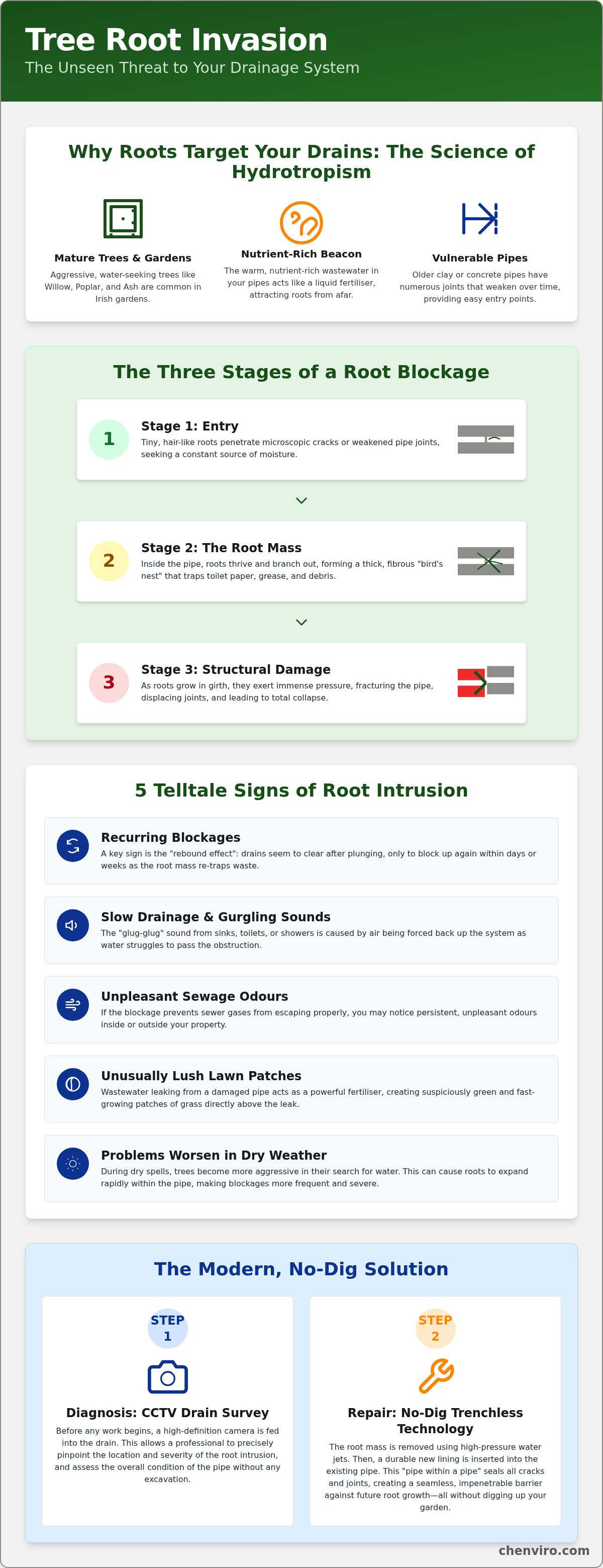
A root-related drainage crisis typically unfolds in three distinct stages. Recognising these early can save you from a total system collapse.
Stage 1: Entry. Hair-like roots penetrate joints or cracks. At this point, tree roots in drains symptoms Ireland homeowners might notice are limited to occasional gurgling sounds.
Stage 2: The Root Mass. Inside the pipe, the roots branch out into a thick, fibrous mat. This "birds nest" structure catches grease, toilet paper, and debris, leading to frequent, stubborn blockages.
Stage 3: Structural Displacement. As the roots grow in girth, they lift or shift pipe sections. This causes "lips" in the joints that trap even more waste and eventually leads to complete pipe failure or collapse.
By the time you reach the third stage, the damage is often visible on the surface. However, catching the issue during the first two stages allows for much simpler, less invasive solutions.
5 Critical Tree Roots in Drains Symptoms Ireland Homeowners Should Note
Identifying the specific tree roots in drains symptoms Ireland property owners face requires looking beyond a simple sink clog. A standard grease blockage usually happens once and stays blocked until cleared. Root intrusion is different. It creates a "rebound effect" where the system seems to recover before failing again. You might use a plunger or high-pressure hose and see a temporary improvement. However, because the root mass remains inside the pipe, it quickly begins snagging toilet paper and solid waste. If your drains work fine for a few days and then suddenly back up, roots are the likely culprit.
Paradoxically, these symptoms often worsen during dry spells. When surface soil moisture drops, trees extend their reach to find reliable sources. This leads to direct and indirect damage as roots expand within the pipe to drink. Whilst standard blockages are often caused by what you put down the sink, root issues are dictated by the environment outside. If you notice your drainage slowing down during a dry Irish summer, don't ignore it.
Persistent Gurgling and Slow Drainage
The "glug-glug" sound from your toilet or kitchen sink is a classic warning sign. As water tries to pass the fibrous root mat, air is forced back up the system in bubbles. You'll notice this isn't just limited to one sink. If multiple fixtures are slow, the problem is in the main line. Domestic "unblocker" chemicals are almost always useless in these cases. They might dissolve a small amount of grease, but they won't affect a woody root system. If the flow doesn't improve after a chemical treatment, you're likely dealing with a physical obstruction.
Recurring Blockages and Foul Odours
Are you noticing a smell of stagnant water or raw sewage amongst your garden borders or near gully traps? This often points to a pipe that has been breached. Roots create a rough surface that "snags" debris like wet wipes or grease. This material then rots, creating foul smells that fluctuate based on your water usage. If the scent is stronger in the evening when the house is busy, the blockage is likely holding back significant waste. These smells are often more noticeable outdoors before they penetrate the home.
Distinguishing between internal plumbing and a main line root issue is simple. If only your kitchen sink is slow, it's likely a local fat clog. If the whole house is struggling and you see water rising in external gullies, the problem is further down the line. A professional CCTV drain survey is the only way to confirm if roots are the cause without guessing. Identifying these tree roots in drains symptoms Ireland early can save you from a complete pipe collapse.
External Property Damage: Signs the Problem is Underground
When internal issues like slow drainage are ignored, the problem eventually migrates to the surface. Whilst the gurgling in your toilet is a clear internal warning, the physical state of your garden can provide even more definitive evidence of an underground crisis. In established Irish properties, the transition from a blocked pipe to a structurally damaged one often manifests in the landscape before it causes a total indoor backup. Monitoring these external tree roots in drains symptoms Ireland homeowners often overlook is vital for preventing expensive land subsidence or wall collapse.
One of the most telling signs is a "greener patch" of grass that appears in a specific, straight line across your lawn. Whilst a lush garden is usually desirable, a strip of grass that is significantly taller, thicker, or more vibrant than the rest of the garden suggests a leak. The tree roots have breached the pipe, allowing nutrient-rich sewage to saturate the surrounding soil. This acts as a constant supply of liquid fertiliser. If this green line aligns with your drainage run or leads toward a mature tree, you're looking at a clear red flag for root intrusion.
Sinkholes and Wet Patches in the Garden
Leaking wastewater doesn't just feed the grass; it actively destabilises the ground. As water escapes through root-damaged joints, it washes away the fine silt and soil surrounding the pipe. Over time, this creates a hollow void beneath the surface. You might notice small depressions or "soft spots" appearing in the lawn, particularly near mature trees in areas like Dublin or Wicklow. These aren't just natural ground movements. They are often the precursor to a sinkhole. If you find puddles that refuse to drain during dry spells, or if the ground feels "spongy" underfoot, the soil is likely being sucked into the pipe through a root-damaged breach.
Structural Cracks and Boundary Wall Displacement
Tree roots are capable of exerting several tonnes of pressure as they grow in girth. When they are confined within a drainage pipe, this pressure is transferred directly to the surrounding structures. You might notice fresh cracks in garden walls, patios, or driveways that seem to follow the path of your plumbing. This is often mistaken for natural subsidence, but the presence of other tree roots in drains symptoms Ireland residents report suggests a more specific cause.
Check your manhole covers and external gully traps regularly. If you see fine, hair-like roots peeking through the edges of the cover or growing inside the chamber, the intrusion is already advanced. At this stage, the roots are no longer just seeking water; they are physically displacing the concrete and masonry. Catching this early allows for a professional intervention before the pressure shatters the pipe entirely, necessitating a much more invasive excavation.
Professional Diagnosis: Moving from Symptoms to Solutions
Relying on guesswork is the most expensive way to manage drainage issues. If you have spotted the tree roots in drains symptoms Ireland properties typically exhibit, your next step must be a precise diagnosis. Many homeowners fall into the trap of repeatedly paying for basic "rod and jet" services. Whilst this might provide immediate relief, it's a sticking-plaster solution. Standard rods often leave the main root mass intact, allowing it to regrow even more vigorously within weeks. A professional drainage engineer uses technology to move beyond these temporary fixes, identifying the exact entry point and the extent of the structural damage.
In Ireland, the Water Services Act 2007 dictates that property owners are responsible for the maintenance of wastewater pipes within their boundary. This makes a formal diagnostic report a vital document. If you intend to make an insurance claim for "accidental damage" caused by roots, your insurer will require high-quality evidence. A professional survey provides the time-stamped footage and structural assessment needed to support your case. Before the engineer arrives, ensure all manhole covers are accessible and clear of garden furniture or heavy planters to allow for a seamless inspection.
Why CCTV Drain Surveys are Non-Negotiable
Modern high-definition cameras allow engineers to see the "root curtain" inside the pipe in real time. This isn't just about seeing the blockage; it's about mapping the exact location and depth of the intrusion. This data is critical for planning a long-term fix. A CCTV Drain Survey Dublin homeowners trust will provide a clear picture of whether the pipe is merely breached or completely collapsed. Without this visual confirmation, you risk paying for repairs that may not actually solve the root cause of the problem.
Drain Surveys Before Buying a House
Hidden root damage is a common oversight during property transactions in Ireland. Standard mortgage valuations and structural surveys rarely include a detailed look at the drainage system. Identifying tree roots in drains symptoms Ireland buyers should look for before closing a sale can save thousands in immediate repair costs. A pre-purchase survey ensures that the "no-dig" suitability of the pipes is assessed early. If roots are found, you can negotiate the repair costs before signing the contract. If you suspect your current property has an issue, you should book a professional CCTV survey to get a fixed diagnosis and avoid further structural decay.
Effective Treatment: Resolving Root Damage Without Excavation
The prospect of digging up a manicured garden or a paved driveway often stops homeowners from addressing the tree roots in drains symptoms Ireland properties frequently exhibit. However, the "No-Dig" revolution has changed how we handle these crises. Trenchless technology allows for full structural repairs without the need for heavy machinery or excavation. This approach is not only cleaner and faster but can also save up to 60% on costs compared to traditional digging methods.
The process begins with high-pressure water jetting to clear any grease or waste caught in the fibrous root mat. Once the line is clear, specialised robotic root cutters are deployed through existing manholes. These precision tools use high-torque blades to shave the roots back to the pipe wall, restoring full flow capacity without damaging the host pipe. If the damage is confined to a single joint, a localised patch repair can be applied to seal the breach effectively and prevent immediate regrowth.
Pipe Relining: A Permanent Barrier
Removing the roots is only half the battle. Unless the entry point is sealed, the roots will return, often thicker than before. Pipe relining creates a "pipe within a pipe" by inserting a flexible liner saturated with epoxy resin into the damaged run. Once the resin cures, it forms a seamless, structurally sound barrier that roots simply cannot penetrate. Opting for a No-Dig Drain Repair Dublin provides a solution with a 50-year life expectancy. This far exceeds the durability of the original clay pipes found in older Irish estates.
Proactive Maintenance and Prevention
Keeping your drainage system healthy requires more than just reactive fixes. Scheduling a regular drain unblocking service Dublin homeowners can rely on prevents the buildup of debris that roots love to snag. For properties with mature or protected trees, annual CCTV inspections are the best way to catch new growth before it exerts structural pressure. You may also consider installing physical root barriers between large trees and your drainage lines to redirect growth away from vulnerable joints. This proactive stance ensures you won't have to deal with the stressful tree roots in drains symptoms Ireland residents fear most.
Secure Your Property with Trenchless Drainage Solutions
Recognising the tree roots in drains symptoms Ireland homes often display is the first step toward a permanent fix. Whether you've noticed the "rebound effect" of recurring blockages, persistent sewage smells, or unusually lush patches of grass, these red flags indicate that your drainage system is under threat. Ignoring these signs only leads to more expensive repairs and potential ground subsidence. Modern trenchless technology means you no longer have to choose between a functional sewer and a beautiful garden.
By opting for a precise diagnostic approach, you can pinpoint the exact entry point of root intrusion and apply a permanent fix without the need for disruptive excavation. CH Enviro specialises in expert CCTV diagnostics and garden-friendly trenchless repairs across Dublin, Meath, and Kildare. Don't let a minor root intrusion turn into a total pipe collapse. Contact CH Enviro today for a professional CCTV Drain Survey and No-Dig Repair to restore your drainage system with confidence. You can secure a long-term, reliable solution whilst keeping your driveway and flowerbeds intact.
Frequently Asked Questions
How do I know if tree roots are in my drain or if it is just a normal blockage?
You can distinguish them by the frequency of the backup. Standard clogs from grease or hair usually stay clear once jetted. If you notice the specific tree roots in drains symptoms Ireland homeowners report, such as a drain that blocks again within days of being rodded, roots are the likely cause. They act like a net, catching waste and causing a rapid "rebound" blockage that regular cleaning cannot solve.
Will my home insurance cover the cost of removing tree roots from my drains in Ireland?
Many Irish home insurance policies cover root damage under "accidental damage" to underground services. However, they rarely cover "gradual deterioration" or wear and tear. You will almost certainly need a professional CCTV survey report to prove the cause to your insurer. It's best to check your individual policy for "trace and access" cover before starting any major work to understand your specific level of protection.
Can I use copper sulphate or chemicals to kill tree roots in my pipes?
We don't recommend using copper sulphate or generic root-killing chemicals. These substances are often toxic to the wider environment and can damage the local ecosystem. More importantly, they don't remove the physical root mass already inside the pipe. Even if the chemical kills the root, the woody structure remains to catch debris, and the entry hole stays open for new growth to enter the system later.
Do I have to cut down the tree to stop the roots from blocking my drains?
You don't have to remove the tree to protect your plumbing. Whilst cutting down the tree stops the growth, it doesn't fix the hole in the pipe. Modern trenchless repairs allow you to seal the pipe from the inside. This creates an impenetrable barrier that lets you keep your mature garden greenery whilst ensuring your drainage system stays perfectly functional and free from future intrusions for decades.
How much does a CCTV drain survey cost in Dublin to check for roots?
The cost of a CCTV survey depends on the size of your property and the length of the drainage run being inspected. Whilst we don't provide a single fixed price here, it is a small investment compared to the cost of a full pipe collapse. A professional survey provides a recorded video file and a structural report, which are essential for planning a "no-dig" repair or making an insurance claim.
What is no-dig drain repair and does it work for root damage?
No-dig repair is a trenchless technology that fixes pipes without excavation. It works exceptionally well for root damage. We use robotic cutters to clear the intrusion and then install a resin-impregnated liner. This creates a new, seamless pipe wall inside the old one. It is a permanent solution that stops roots from ever finding a way back into your system, protecting your garden and your home.
Whose responsibility is it if tree roots from a neighbour’s garden block my drain?
In Ireland, the maintenance of pipes within your property boundary is your responsibility under the Water Services Act 2007. If a neighbour's tree roots cause the damage, it can lead to complex legal disputes amongst residents. Most homeowners find it faster and more cost-effective to repair the pipe using no-dig technology rather than pursuing a lengthy civil claim against a neighbour for root encroachment or damage.
Can tree roots grow through plastic (PVC) drainage pipes?
Roots can certainly enter PVC pipes, though they find it harder than with older clay systems. Plastic pipes have fewer joints, but if a joint becomes loose or the pipe is cracked by ground movement, roots will find the leak. Once they are inside a PVC pipe, they grow just as aggressively. Identifying tree roots in drains symptoms Ireland is just as important for modern homes as it is for older properties.


Comments