
Annual drainage system health check in Kildare: survey time
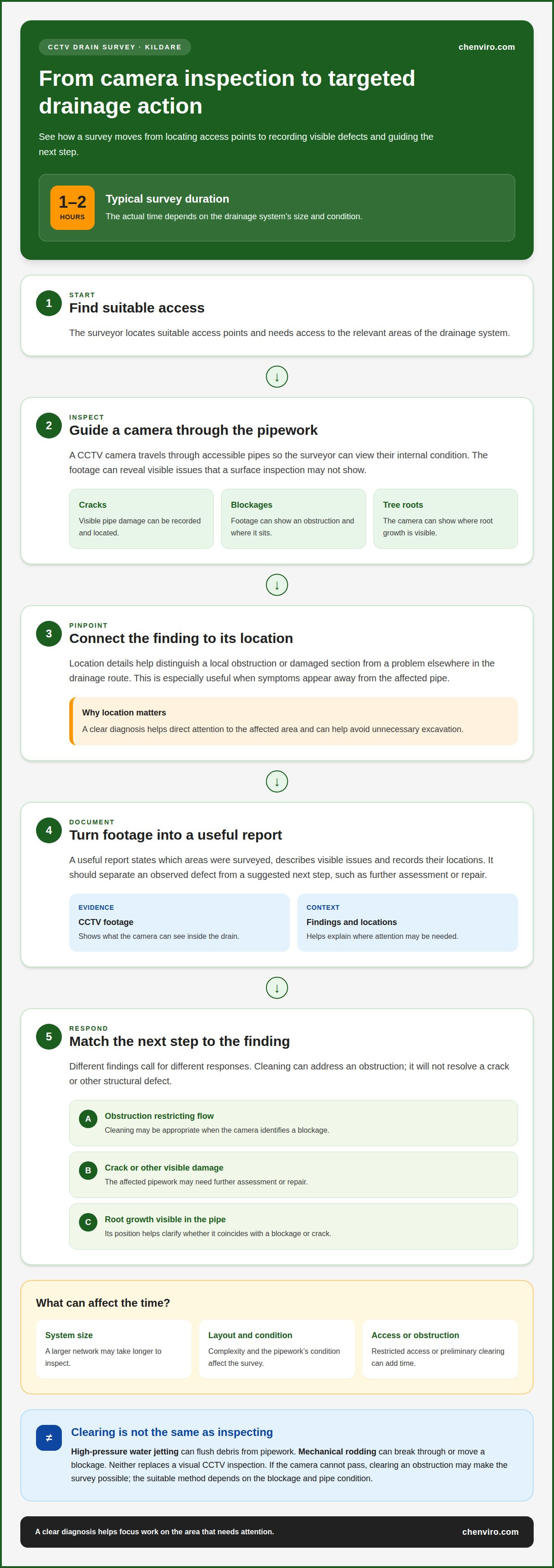
A drainage check needn’t take up the whole day. An annual drainage system health check in Kildare typically takes 1-2 hours, depending on the size and complexity of the system. A CCTV survey can reveal cracks, blockages and tree-root intrusion, helping pinpoint where a problem lies.
It’s reasonable to want to know whether you need to be present and how much disruption to expect. The survey’s duration and findings depend on the drainage system’s layout and condition, so the surveyor needs access to the relevant areas.
This guide explains what happens during a survey, which defects it can identify and how an accurate diagnosis can direct repairs to the areas that need attention. You’ll also learn how CCTV footage helps clarify the drainage system’s condition and supports an informed decision about the next step.
Table of Contents
Survey duration
A CCTV drain survey in Kildare typically takes 1-2 hours, depending on the system’s size and condition. A compact layout with clear access may take less time than a larger network with multiple branches. The surveyor first locates suitable access points, then guides a camera through the pipework to assess its condition. Allow extra time if access is restricted or the system needs preliminary clearing.
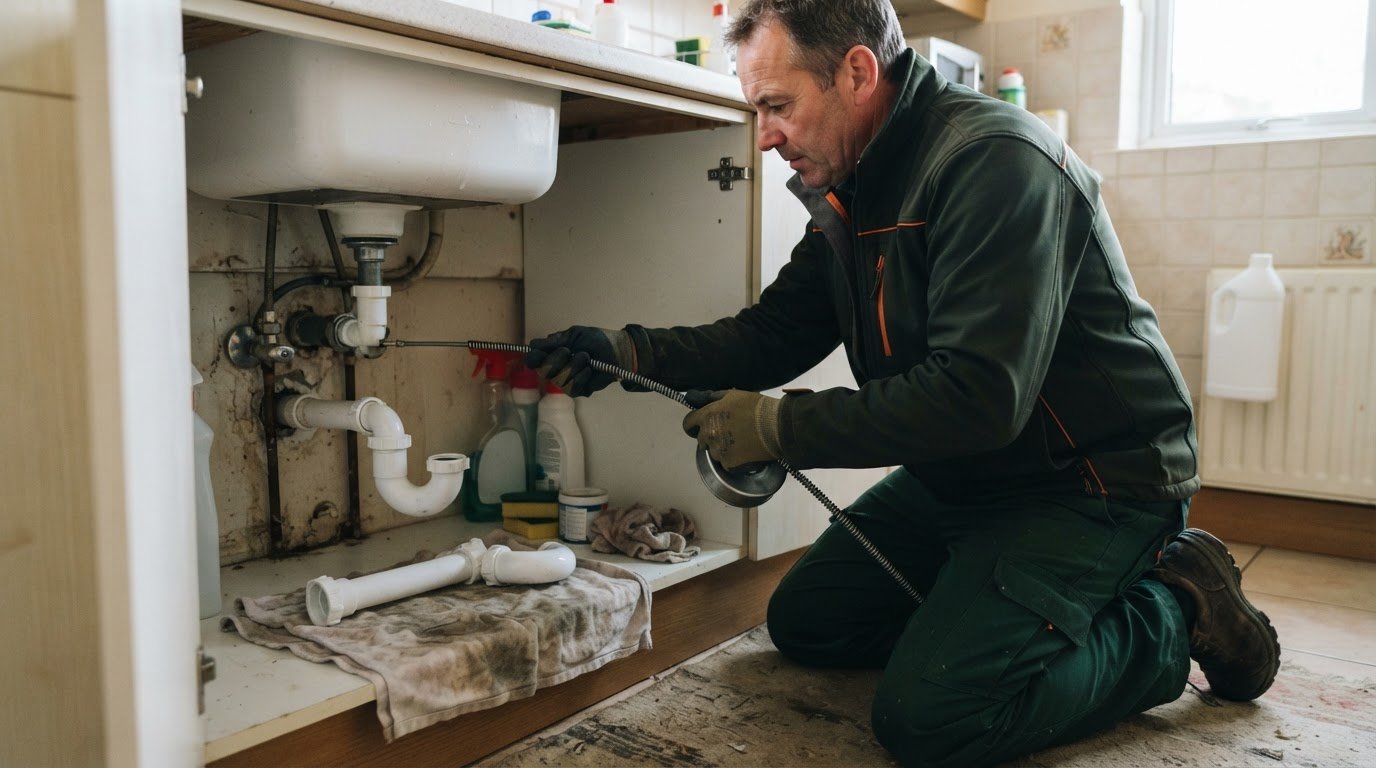
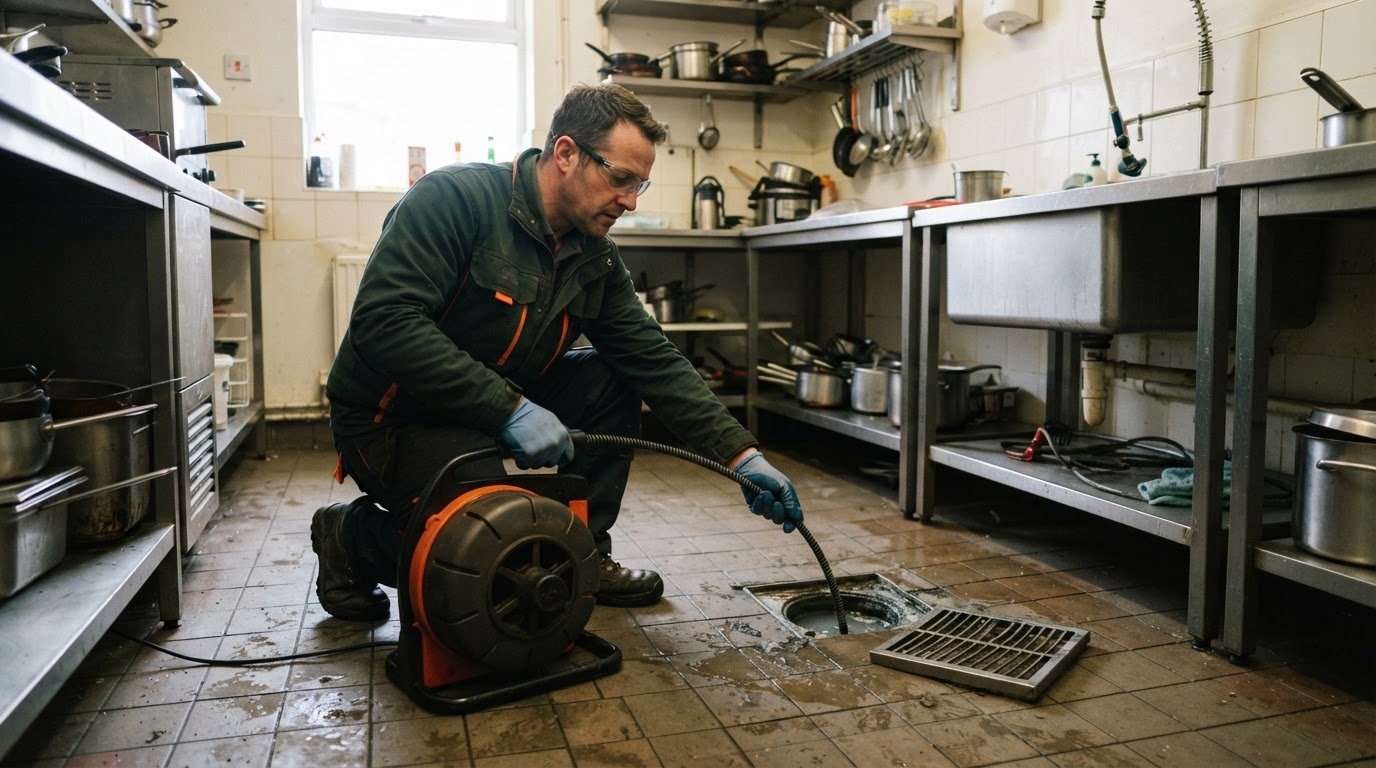
High-pressure water jetting and mechanical rodding clear obstructions; they don’t replace a visual inspection. Jetting can flush debris from pipework, while rodding can break through or move a blockage. If a camera can’t pass, clearing the obstruction may make a CCTV survey possible. The right method depends on the blockage and the pipe’s condition.
When buying a home, a drain survey can identify defects that aren’t apparent during a surface inspection. Ask for a report showing which areas were surveyed, any visible issues and their locations. CCTV footage and documentation can also record the system’s condition before an incident, which may support an insurance claim. They don’t determine whether an insurer will accept a claim.
A useful report connects its findings to practical recommendations. It should distinguish an observed defect from a suggested next step, such as further assessment or repair. Clear footage and location details help show where work is needed, rather than leaving the decision to guesswork.
For private wastewater systems, a percolation test is required by law for a new-build planning application when the property isn’t connected to mains drainage. It measures how quickly water is absorbed into the ground to assess whether the site is suitable for a septic system or wastewater treatment unit.
In Kildare, responsibility depends on whether the drain is part of a private property system or the public network managed by Uisce Éireann. Property owners generally arrange private-system maintenance, so it’s important to establish where the boundary between the systems lies.
There’s no single inspection interval for every Irish property. Regular maintenance is advisable, but timing depends on the system’s condition and use, as well as any previous problems. A CCTV survey is useful when a visual assessment is needed; an annual maintenance plan is a separate arrangement.
Early detection of blockages and damage
Identifying a drainage concern early can help address it before it becomes more disruptive. A camera inspection can locate the problem and show its visible condition.
CCTV defect detection
A CCTV survey sends a camera through accessible pipework, giving the surveyor a view inside the drain. Footage can reveal cracks, blockages and other visible damage, then help pinpoint where they occur. This matters when symptoms appear away from the affected pipe, such as a recurring blockage in one part of the property. A CCTV drain survey can provide visual evidence for a clearer repair decision.
Tree root penetration
Tree roots can enter drainage pipes and obstruct flow. A camera can show where root growth is visible and whether it coincides with a blockage or crack. Pinpointing the location helps distinguish a localised issue from a problem elsewhere in the system. The footage also provides a useful reference if the same area needs attention again.
Risks of unmaintained drainage
Blockages or damage can restrict flow, causing wastewater to back up or surface. If wastewater escapes through a damaged pipe, nearby ground or parts of a property may also be affected. The risk depends on the defect, its location and how the system is used. A survey can identify visible problems before they cause greater disruption, though it can’t prevent every drainage incident.
If you suspect a leak, CCTV footage can help locate visible cracks or damage along the pipe route. The report records what the camera shows and where the issue appears, helping direct further assessment or repair. Pinpointing the affected area can also help avoid unnecessary excavation.
Support for septic tank repairs or upgrades in County Kildare depends on the scheme’s eligibility rules and the work involved. Not every property or repair will qualify, so confirm the applicable criteria before relying on grant support.
Common pipe defects and blockages
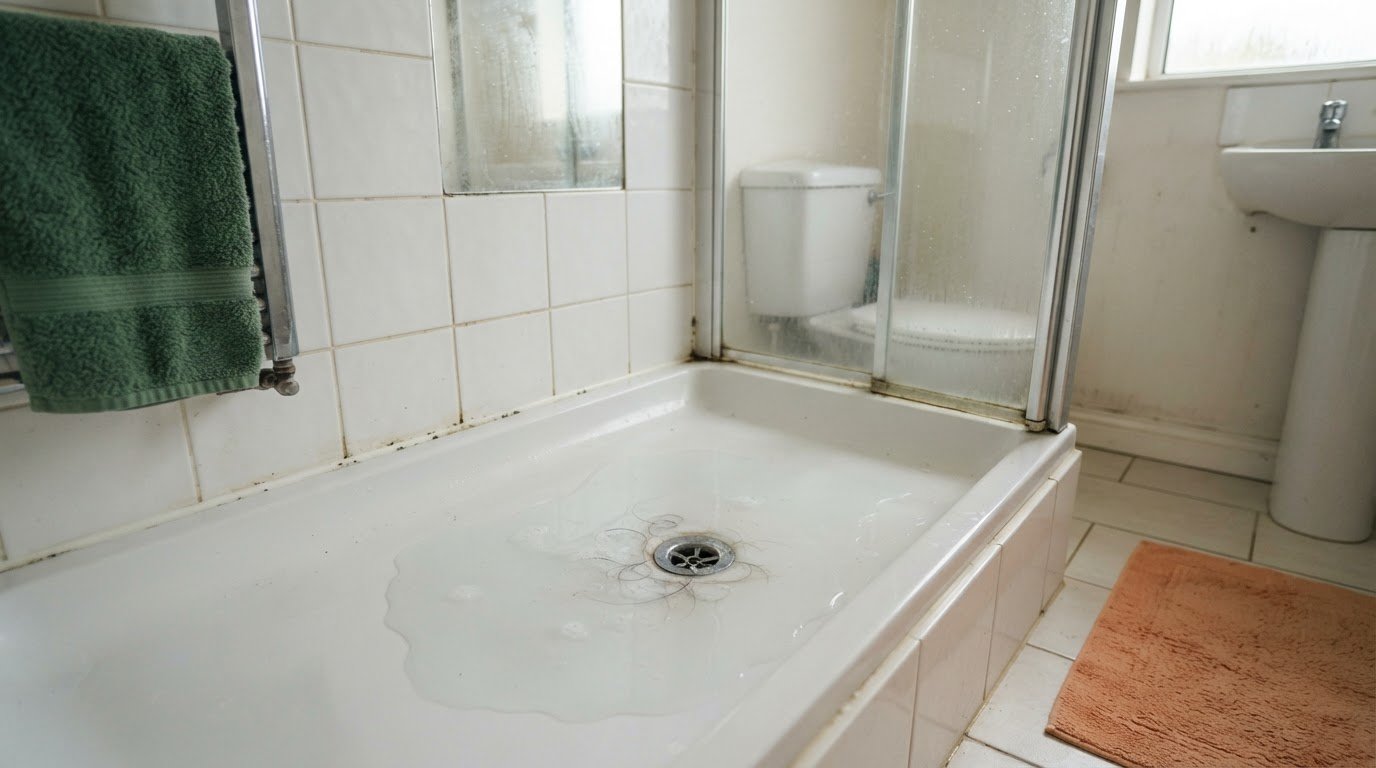
A CCTV inspection can help establish whether a recurring drainage problem is caused by an obstruction or visible pipe damage. Common findings include blockages, cracks and tree roots inside pipes. These affect flow in different ways, so identifying the type and position of a defect helps determine the next step. A blockage may call for cleaning, while a crack may need repair.
Blockages reduce the space available for wastewater to flow through. If a drain repeatedly slows or backs up, an obstruction may be preventing normal flow. Camera footage can show whether material is blocking the pipe and where it sits, helping distinguish a local obstruction from a problem further along the drainage route.
Cracks are another important finding. A camera can capture visible damage inside a pipe, giving the surveyor a closer view than surface symptoms allow. The footage can also locate the affected section and support a more focused assessment. A report should describe the visible defect and its position, rather than simply label the whole system as damaged.
Tree roots can enter drainage pipes and contribute to obstruction or damage. CCTV footage can show where roots are visible and how they relate to the affected section. The distinction matters: clearing an obstruction and repairing a damaged pipe address different problems. A clear record helps explain what the inspection found.
Cleaning may be appropriate when the camera identifies an obstruction restricting flow, but it won’t resolve a crack or other structural defect. A thorough assessment considers the footage, the defect’s location and the symptoms reported. The surveyor can then recommend a suitable next step, such as clearing a blockage or assessing damaged pipework for repair. This helps address the cause, not just the visible symptom.
Accurate diagnosis and targeted repairs
An accurate drain inspection links visible symptoms to the defect’s condition and location. Slow drainage, for example, can result from a blockage or damaged pipework, so the symptom alone may not reveal the cause. CCTV footage lets engineers assess the accessible pipe interior without extensive excavation or guesswork. This gives repair decisions a clearer starting point and helps distinguish an obstruction from structural damage.
Next, review the footage and record what it shows. A useful report identifies the affected section, describes the visible issue and provides a relevant recommendation. If the camera shows an obstruction, clearing it may be appropriate. If it shows a crack, the finding may instead call for a repair assessment. Matching the recommendation to the observed defect helps avoid treating the wrong problem.
Location matters. A report that pinpoints a damaged section can help focus repairs there rather than disturb unaffected pipework. If the footage shows a defect suitable for repair without excavation, a no-dig approach may be considered. The right method depends on the pipe’s condition and the nature of the problem. A survey supports that decision, but not every repair is suitable for the same method.
Clear findings also explain what happens next. A report can separate confirmed observations from recommendations, helping property owners understand why work is proposed. For example, a camera may show a blockage without establishing that the pipe itself is damaged. Keeping that distinction clear helps plan targeted repairs and avoid assuming every recurring symptom requires pipe replacement.
If recurring drainage symptoms need a clearer diagnosis, arrange a CCTV drain survey to assess the pipework and inform the next repair decision.
CH Enviro
CH Enviro can help you move from identifying a drainage concern to choosing a practical next step. A CCTV Drain Survey shows the pipe’s condition, while a Drain Unblocking Service addresses obstructions. If inspection findings point to pipe damage, No-Dig Drain Repair may be appropriate. Septic Tank Cleaning supports maintenance of private wastewater systems.
Share the symptoms you’ve noticed, such as recurring blockages or slow drainage, and any previous survey findings. This context helps focus the assessment and recommendations on your property’s needs. If you’re planning an annual check, have concerns about a defect, or need help deciding what work is appropriate, contact CH Enviro to discuss the drainage issue.
Make a clear plan for your drainage system
Planning an annual drainage system health check in Kildare gives you a useful opportunity to review your property’s drains. Treat the findings as a practical record for future decisions, not as a reason to carry out unnecessary work. If symptoms change later, comparing them with the survey findings can help clarify what needs attention.
CH Enviro’s CCTV Drain Survey, Drain Unblocking Service and No-Dig Drain Repair can connect survey findings with appropriate next steps. The right option depends on what the inspection identifies and whether there’s an active blockage or a defect requiring repair. Keeping the findings and recommendations together makes the proposed work easier to understand and helps you decide how to proceed.
If you’re ready to plan an inspection, arrange a survey with CH Enviro. A clear starting point can help you make informed decisions about your drains.
Frequently Asked Questions
Do I need to be present during the survey?
You don’t need to watch the inspection throughout, but the surveyor needs access to relevant drain entry points. Being available at the start can help you point out concerns, such as a recurring problem near a particular room or outside drain. If you can’t stay, arrange access in advance so the surveyor can reach the agreed inspection areas.
What does an annual drainage system health check in Kildare include?
An annual check can include a visual CCTV inspection of accessible drainage pipework, followed by a report of observed issues and recommendations. The surveyor may record the location of a blockage, crack or visible root intrusion. The inspection’s scope depends on the system and available access. For private wastewater systems, tank servicing is separate from a camera survey and addresses different maintenance needs.
What equipment and methods are used for a drain health check, including CCTV surveys?
A CCTV survey uses a camera to inspect the inside of accessible drainage pipes and record visible conditions. If an obstruction stops the camera progressing, high-pressure water jetting or mechanical rodding may clear it. These are clearing methods, not inspection equipment. The suitable approach depends on what is obstructing the pipe and whether the camera can pass through.
What are the signs of drainage problems that need urgent attention?
Wastewater surfacing, repeated backups or a drain that stops flowing are clear reasons to arrange a prompt assessment. A persistent blockage may indicate an obstruction or a defect that needs investigation. Note where symptoms occur and whether they return after clearing, as this can help narrow down the affected section. Don’t assume recurring symptoms are resolved just because flow briefly improves.
How long does a drainage inspection take and how should homeowners prepare?
A CCTV drain inspection in Kildare typically takes 1-2 hours, depending on the system’s size and condition. Before the appointment, make sure the agreed access points are reachable and share any recurring symptoms or previous findings. For an annual drainage system health check, this context helps the surveyor focus on relevant areas and explain observations clearly after the inspection.
Comments