
Commercial Drainage Contractors in Ireland: How to Choose the Right Partner
The longest service list doesn’t necessarily make a drainage contractor the right choice. A blocked drain or recurring fault can interrupt business operations and affect staff and customers, yet a brief service listing may not explain how a provider will diagnose the issue, work around site access or clarify what happens next. Choosing commercial drainage contractors Ireland businesses can rely on means looking beyond the list of services.
Before arranging work, you need to know whether the contractor’s services match the problem, what information they need about your site and whether inspection or follow-up work may be relevant. Clear answers help you compare providers and prepare your team for the work.
This guide explains what commercial drainage contractors do and how to assess their capabilities before choosing a provider. You’ll find practical questions to ask about diagnosis, work scope and access, along with ways to plan inspection and maintenance. The focus is on operational fit, evidence and prevention, not promises.
Table of Contents
Commercial Drainage for Business Sites in Ireland
A commercial drainage contractor manages drainage faults and systems at business premises, using suitable inspection and repair methods to address problems that can affect site operations. Work may start with a call-out for a blockage or recurring fault. It can also involve planned inspection, repairs and maintenance to help a business understand the condition of its drainage and consider follow-up work.
A fault can restrict access, disrupt normal activity or create difficulties for staff, customers and other building users. The practical response depends on where the problem is, how the site is used and which parts of the drainage system are accessible. If you’re reviewing surface-water management, Sustainable Drainage Systems (SuDS) provide background on approaches that manage runoff using natural and built features.
Which commercial sites may need specialist drainage support?
Offices, hospitality venues, industrial premises and managed facilities can all need drainage support, but the work varies by site. A hospitality venue may need to consider kitchen wastewater and grease trap maintenance. An industrial site may have a more complex drainage layout, while an office or managed facility may need to coordinate access around occupied areas.
Operating hours, drain locations and access restrictions all affect how work is planned. A general commercial service listing doesn’t establish experience with your specific property type. Ask about comparable systems or site conditions, and explain any operational constraints before agreeing the scope. For example, note whether drains are behind secured doors, whether equipment access is limited, and which areas must remain accessible.
When is a drainage contractor different from a general plumber?
A plumber is often the right contact for a minor issue with a tap, toilet or internal pipework. A drainage contractor is more likely to be appropriate when the fault involves blocked or damaged drains, inspection of pipework or a larger site drainage system. Depending on the issue, a drain camera may help investigate what is happening inside a pipe.
The distinction is practical, not absolute. Some faults may involve both internal plumbing and drainage, so describe the symptoms rather than guessing at the cause. Note where the issue appears, whether it affects one outlet or several, and what access is available. Commercial drainage contractors Ireland businesses consider should be able to explain whether the reported fault fits their services, what they need to assess it and what may fall outside the agreed scope. That helps you approach the right provider without assuming every drainage concern requires the same trade.
Commercial Drainage Services in Ireland: Match the Work to the Problem
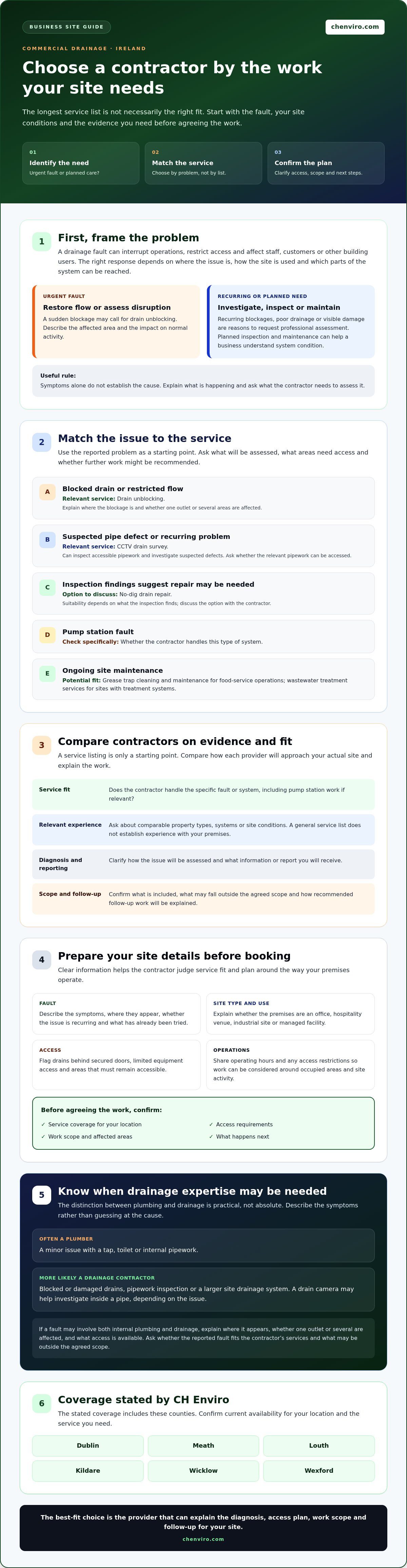
A useful service list explains what a contractor can do. The next question is which service fits the fault and how the work might affect your site. A blockage in one drain, suspected damage in a buried pipe and a pump station fault call for different assessments. When you contact a provider, describe the symptoms, location and any access or operating constraints.
Drain unblocking: For a blocked drain or restricted flow.
CCTV drain survey: To inspect accessible pipework and investigate suspected defects.
No-dig drain repair: A repair option to discuss if inspection findings suggest it’s suitable.
Pump station work: If the issue involves a pump station, check that the contractor specifically handles this type of system.
Planned maintenance: Grease trap cleaning and maintenance may suit food-service operations; wastewater treatment services may be relevant to sites with treatment systems.
Ask what parts of the system need to be accessed, which areas may be affected and whether further work could be recommended. Surface-water concerns may also involve local authorities; LocalGov.ie outlines local authorities' role in surface water drainage.
How should a business distinguish an urgent blockage from a repair need?
A sudden blockage may call for unblocking, while recurring blockages, poor drainage or visible damage are reasons to request a professional assessment. Symptoms alone don’t establish the cause. A contractor may need to inspect the relevant drain before advising whether further investigation or repair should be considered. When contacting a provider, say whether the problem is recurring, which outlets or areas are affected and what has already been tried. For more detail on the service, read this guide to professional drain unblocking services in Dublin.
When should a commercial site consider a CCTV survey or no-dig repair?
If a fault keeps returning or pipe damage is suspected, a CCTV survey may help assess the pipe’s condition and inform next steps. It doesn’t guarantee a diagnosis or a particular repair. If inspection findings indicate damage, ask whether no-dig repair is suitable for that location and pipe. You can read more about CCTV drain surveys in Dublin and no-dig drain repair.
The contractor should recommend the next step based on inspection findings, the site layout and the work required, not on symptoms alone. Before booking, discuss access, areas that may be disrupted, the proposed scope and any follow-up. If drain unblocking may fit your issue, discuss the drainage problem with CH Enviro and confirm whether the relevant service is available for your site.
How to Compare Commercial Drainage Contractors in Ireland
A broad service list doesn’t prove a contractor is suitable for your site. Compare how each provider would approach your specific fault, what evidence supports its recommendation and how the work would be carried out. This helps you assess commercial drainage contractors Ireland businesses may consider on more than service names alone.
Ask providers for evidence of any relevant credentials, insurance and safety arrangements for the proposed work. Don’t assume a credential or policy applies to your job simply because it appears in a general service description. If permits, qualifications or other requirements may apply to your particular site or scope, confirm them with the contractor and the appropriate authority before arranging work.
What questions should a business ask before appointing a contractor?
Ask for the recommendation in practical terms: what service is proposed, what information or inspection supports it, and what the work includes or excludes. Confirm who will coordinate access, arrange any site induction, manage work-area safety arrangements and update your site contact. Request findings and recommended follow-up in writing so responsibilities and next steps are clear.
How can a contractor minimise disruption to business operations?
Discuss scheduling, affected areas, access routes and operating constraints before agreeing the work. For example, tell the contractor if equipment access is restricted or if work near a busy entrance could affect staff or visitors. Agree who will communicate changes if site conditions mean the scope needs reassessment. No contractor can promise uninterrupted operations without knowing the conditions on site, but clear planning helps you prepare for possible disruption.
Compare the answers side by side. A suitable provider should explain its proposed approach, what it needs from your team and how it will report its findings. If answers remain vague about scope, access or follow-up, clarify those points before booking.
Selecting a Commercial Drainage Contractor Across Dublin and Nearby Counties
A provider’s general coverage area doesn’t confirm that it can take on work at your specific site. Before choosing from commercial drainage contractors Ireland businesses may consider, check the location, service fit and practical arrangements in a consistent way.
Use this five-step checklist:
Define the issue. Note what’s happening, where it’s occurring and whether it’s recurring.
Gather site details. Prepare the address, property type, access information and any relevant drainage records.
Confirm coverage. Ask whether the contractor currently serves the exact location and can provide the service required.
Compare the scope. Check what inspection or work is proposed, what it includes and how access and disruption will be managed.
Agree next steps. Confirm the site contact, scheduling, updates and how findings or follow-up recommendations will be shared.
CH Enviro’s stated coverage areas are Dublin, Meath, Louth, Kildare, Wicklow and Wexford. Confirm current service availability for your location before making arrangements. Coverage alone doesn’t establish scheduling, access requirements or whether the particular service is available for your site.
What site information helps a contractor assess the request?
Have the site address, property type, a clear description of the drainage issue and when symptoms began ready. Mention operating hours, restricted entrances, access limitations and any areas that may be affected by work. Previous inspection reports or repair records can provide useful context. Name a site contact who can coordinate access and receive updates, especially if the person arranging the work won’t be on site.
Before requesting service, have the address, property type, symptoms and start date, access restrictions, operating hours, relevant records and site contact ready.
How should businesses plan ongoing drainage maintenance?
Build a maintenance plan around how the site is used, the system’s condition and professional inspection findings, rather than assuming every property needs the same schedule. Keep a record of inspections, completed work and recommendations. These notes make it easier to identify recurring issues, brief a contractor and decide what follow-up may be appropriate. For broader property upkeep, see this guide to facility maintenance planning in Dublin.
To check whether CH Enviro’s services may suit your location and drainage issue, discuss your site’s drainage requirements with CH Enviro. Confirm current coverage, access arrangements and scope before booking.
How CH Enviro Supports Commercial Drainage Needs in Ireland
CH Enviro provides drainage and environmental services for commercial and industrial customers. Its service range may be relevant when a site needs support with a drain fault alongside related grease trap or wastewater requirements. The right service depends on the issue and property, so confirm the scope and current availability rather than assuming every option suits every site.
Which CH Enviro services may be relevant to a commercial site?
Depending on the problem, relevant services include drain unblocking, CCTV drain surveys and no-dig drain repair. A survey may help assess pipework before repair options are considered; it doesn’t guarantee a particular finding or outcome. For sites with kitchens, grease trap cleaning and maintenance may be relevant. Wastewater treatment services may suit premises with wastewater treatment needs. These are distinct services, not a single package, and suitability should be discussed for the specific site.
CH Enviro’s stated local coverage includes Dublin, Meath, Louth, Kildare, Wicklow and Wexford. Check that the service you need is currently available at your location before arranging work.
What should a business do before requesting a drainage assessment?
Prepare a straightforward description of the fault, the site location, when the issue began and whether it has happened before. Include any known system or inspection history. Explain operating constraints, access restrictions and which areas may be affected, then identify a site contact who can coordinate arrangements.
Before work begins, ask whether the relevant service is available for your location, what scope is proposed, what access is needed and what findings or follow-up information will be provided. Clear answers help you decide whether the proposed work fits the issue and your site’s practical needs.
For businesses considering commercial drainage contractors Ireland, CH Enviro’s range may be worth discussing where drainage and environmental maintenance needs overlap. You can discuss your commercial drainage requirements with CH Enviro and confirm the relevant service, coverage and arrangements for your site.
Choose a Drainage Partner with Confidence
The right contractor is one whose services fit your drainage issue and site, and who can explain the proposed work, access requirements and follow-up clearly. When assessing commercial drainage contractors Ireland businesses may choose from, look beyond a broad service list. Ask what supports the recommendation and how work will be planned around your operations.
CH Enviro’s services include drain unblocking, CCTV drain surveys and no-dig repairs, alongside grease trap maintenance and wastewater treatment. Its stated coverage includes Dublin, Meath, Louth, Kildare, Wicklow and Wexford. Confirm current availability for your location and the service you need, as well as the scope and site arrangements, before booking.
Have the site address, a clear description of the issue and any access or operating constraints ready. With those details to hand, you can discuss your commercial drainage requirements with CH Enviro and check whether a relevant service may suit your site.
Frequently Asked Questions
What does a commercial drainage contractor do?
A commercial drainage contractor assesses and carries out work on drainage systems at business premises. Depending on the provider, services may include drain unblocking, CCTV surveys, no-dig repairs and planned maintenance. Some also handle related requirements such as grease trap maintenance or wastewater treatment. Check the contractor’s actual service list rather than assuming every provider covers every system. Clarify the proposed work, site access arrangements and what information you’ll receive afterwards.
How do I choose a commercial drainage contractor in Ireland?
Choose a contractor whose services match the fault and whose proposed approach is clear. Ask what inspection or information supports the recommendation, whether they have relevant experience with your type of site, and what equipment and access will be needed. Request a written scope, including exclusions and follow-up recommendations. Check evidence of relevant credentials, insurance and safety arrangements for the work. A broad service list alone doesn’t establish suitability for your premises.
Can a commercial drainage contractor work outside Dublin?
Some contractors cover areas beyond Dublin, but coverage and service availability vary. CH Enviro’s stated coverage includes Dublin, Meath, Louth, Kildare, Wicklow and Wexford. Confirm that your exact location is currently served and that the specific service you need is available there. Also discuss site access, scheduling and operating constraints, as these can affect how the job is planned.
How much does a commercial drainage contractor charge?
The cost depends on the service required and the conditions at your site, so ask the contractor to confirm pricing for your specific scope. Unblocking, a CCTV survey and repair work involve different tasks, and access or further work identified during inspection may affect what’s required. Ask what the quoted amount covers, whether it includes inspection and reporting, and how any additional work will be agreed before it proceeds. Don’t rely on a general service listing as a price estimate.
When should a business arrange a CCTV drain survey?
Consider asking about a CCTV drain survey if blockages keep returning, drainage is persistently poor or pipe damage is suspected. A camera inspection can help assess accessible pipework and inform possible next steps, but symptoms alone don’t confirm the cause and a survey doesn’t guarantee a particular diagnosis. Tell the contractor where the problem occurs and share any previous inspection or repair records. Ask what the survey can cover and what findings will be reported.
Can commercial drainage repairs be completed without excavation?
Some repairs may be possible without excavation, but suitability depends on the pipe condition, location and inspection findings. Ask whether no-dig repair is an option for your site and what evidence supports that recommendation. A CCTV survey may help assess the pipe before repair options are discussed. Don’t assume every defect can be repaired this way or that excavation can always be avoided. Confirm the proposed scope, access needs and potential disruption before agreeing to work.
What information should I have ready before contacting a drainage contractor?
Have the site address, property type, a clear description of the fault and when it began ready. Note whether the issue has happened before, and share any known drainage history or previous inspection reports. Explain operating hours, access restrictions and areas that could be affected by work. Identify a site contact who can coordinate access and receive updates. This information helps the contractor discuss service fit, availability, proposed scope and next steps with you.


Comments