
Facility management drain services in Meath and cleaning costs
A drain-cleaning cost depends on what’s causing the problem, how accessible the drain is and whether cleaning alone will resolve it; the price is provided after a quote request. For facility management drain services in Meath, the right first step is to identify the issue before deciding what work is needed. If you’re managing a property, a blockage can disrupt daily operations and leave you weighing urgency against cost.
A useful estimate reflects the job, not just the label “drain cleaning”. This guide explains what can affect the cost and what to expect from emergency call-outs, CCTV inspections and commercial drainage work across Meath and Dublin.
You’ll also learn which signs may point to a blockage or wastewater problem, and how cleaning, inspection and repair can help address it. The aim is practical: understand the likely next step and what information helps define the work before it begins.
Table of Contents
How much does a drain cleaning cost?
Drain-cleaning costs depend on the blockage, access to the pipe and any work needed after inspection. The price depends on the specific job and is provided after a quote request. Key cost factors include the obstruction’s location and severity, as well as whether repairs are required. A simple blockage may need cleaning, while a damaged pipe requires diagnosis and repair. In a commercial facility, the affected drain and its impact on operations also shape the work involved.
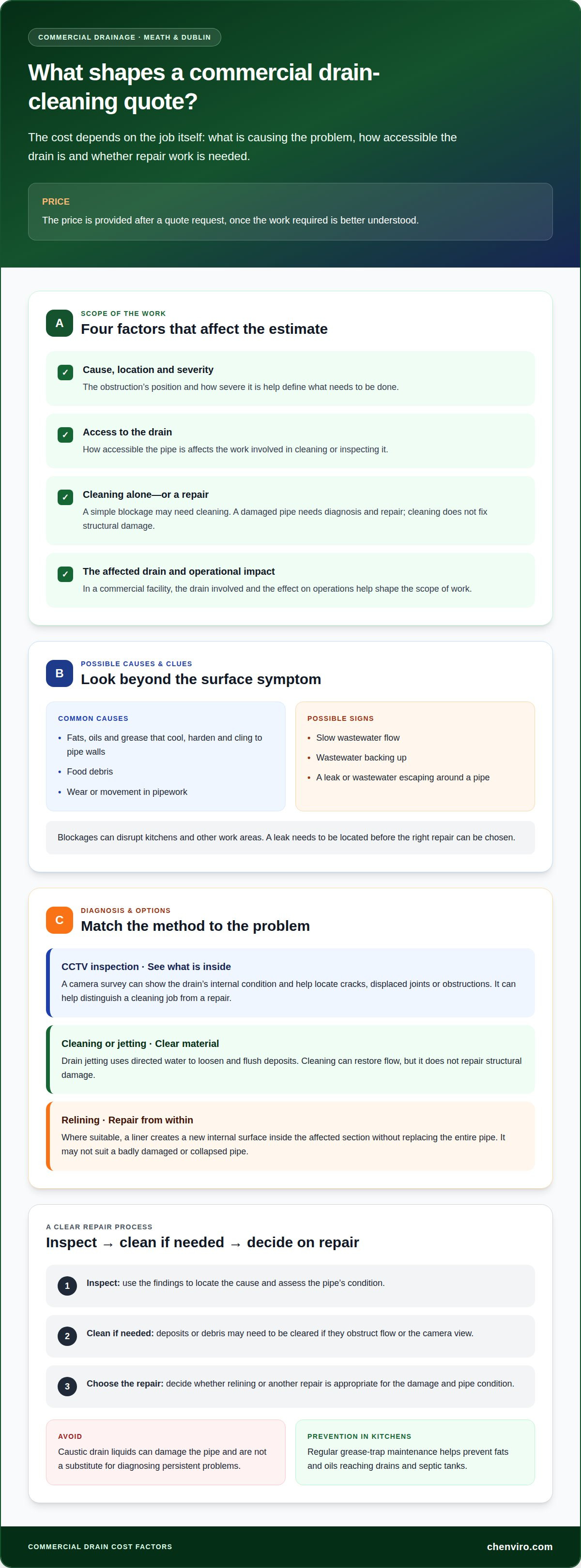
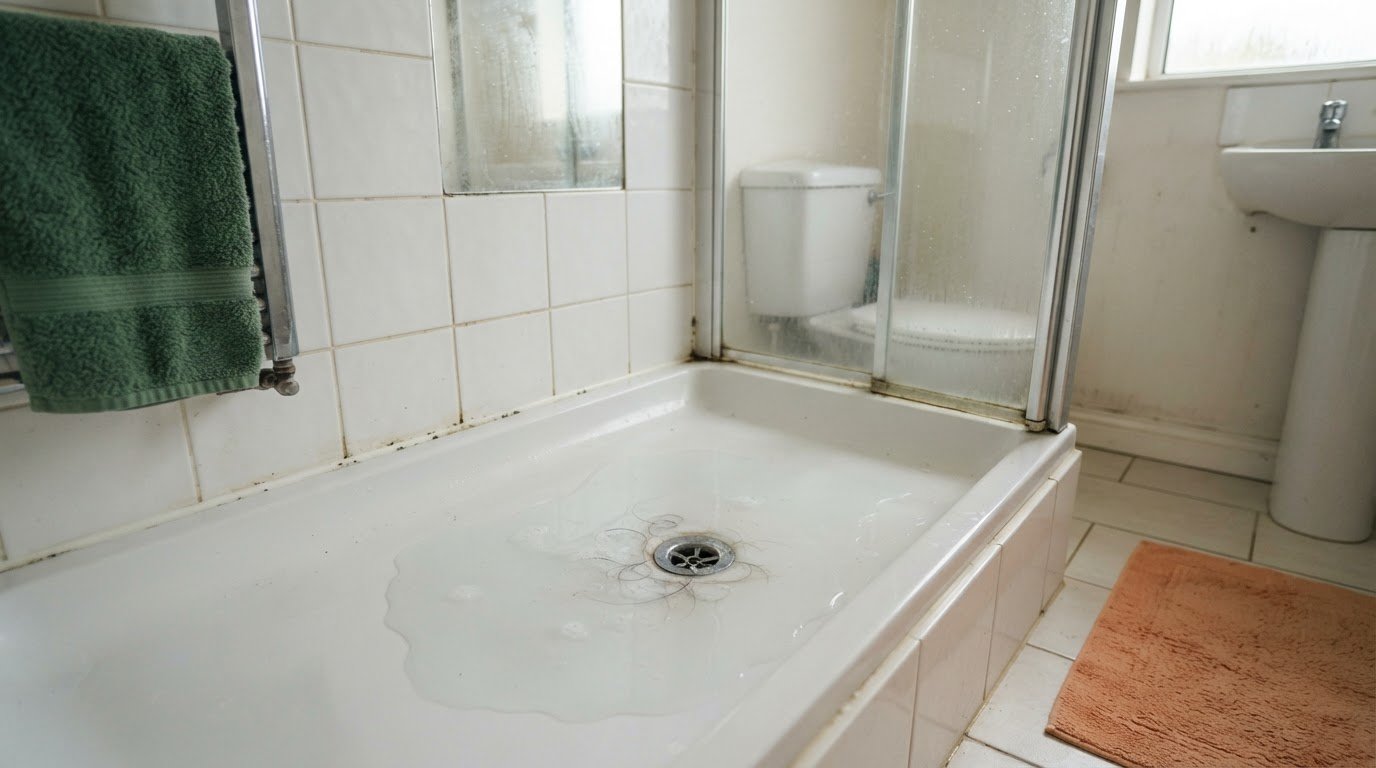
Common causes of blocked or damaged drains at commercial facilities include fats, oils and grease, food debris, and wear or movement in pipework. Fats, oils and grease can cool, harden and cling to pipe walls. Blockages can slow wastewater flow, cause backups and disrupt kitchens or other work areas. A leak can also let wastewater escape around a pipe, so locating the fault is important before choosing a repair.
To diagnose a leak, first identify where water is escaping and whether a blockage is also restricting flow. A CCTV inspection shows the drain’s internal condition and can help pinpoint cracks, displaced joints or obstructions. Cleaning removes material blocking the pipe, but it does not fix structural damage. Inspection findings help distinguish a cleaning job from a repair, keeping the proposed work focused on the cause.
Where excavation would disrupt a site, no-dig repairs can address certain pipe problems from within the existing drain. Relining involves fitting a liner inside the affected section to create a new internal surface without replacing the entire pipe. The right approach depends on the damage and the pipe’s condition. If a pipe is badly damaged or collapsed, relining may not be suitable and a different repair may be needed.
Drain damage can lead to recurring blockages, leaks or wastewater backing up into a building. A clear repair process starts with inspection, followed by cleaning if deposits obstruct the view or flow, and then a decision on relining or another repair. Caustic drain liquids can damage the pipe, so they are not a substitute for diagnosing persistent problems. In kitchens, regular grease-trap maintenance helps prevent fats and oils from reaching drains and septic tanks.
Emergency drain call-outs in Meath and Dublin
Wastewater backing up, persistently slow toilets or foul smells near a tank can signal an urgent drainage or septic problem. When comparing services in Meath or Dublin, look at the work covered and whether it addresses drains, septic tanks or both.
Emergency drain unblocking
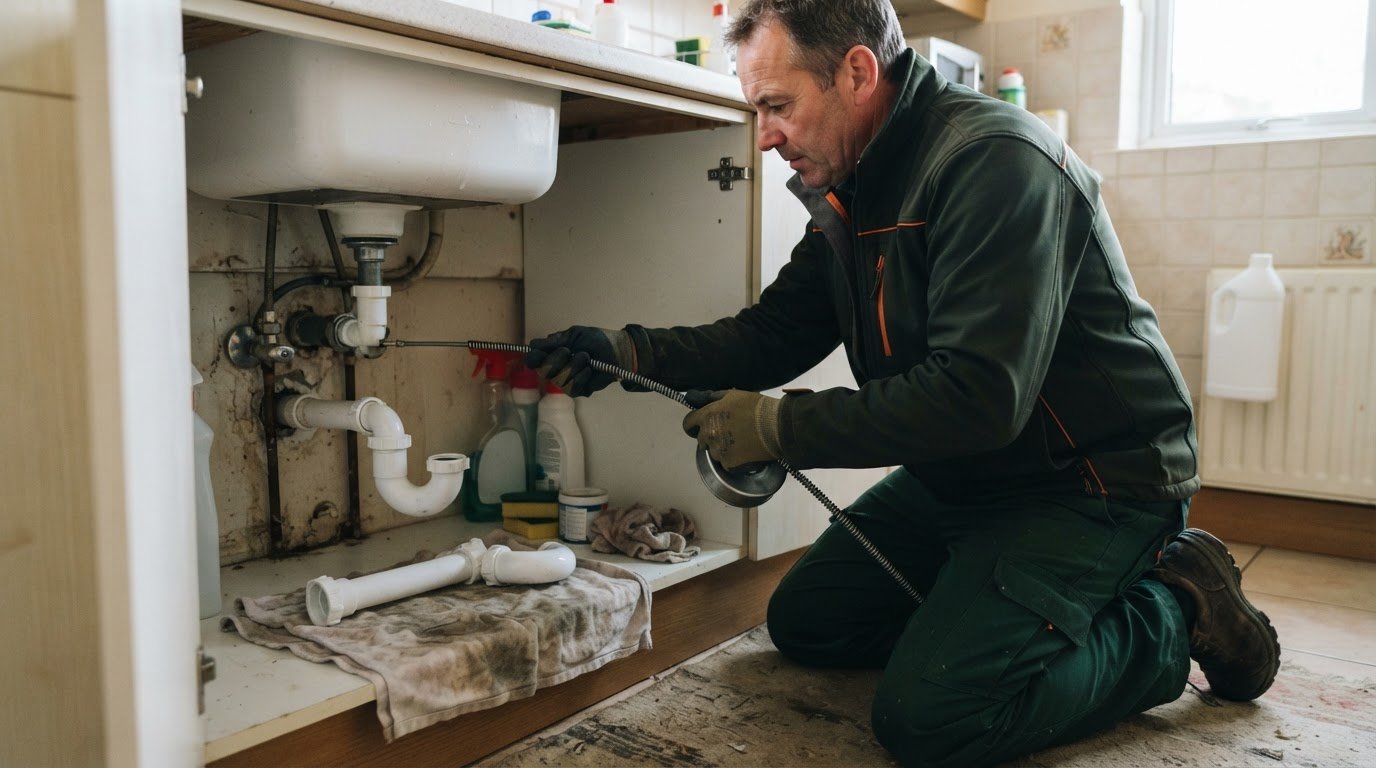
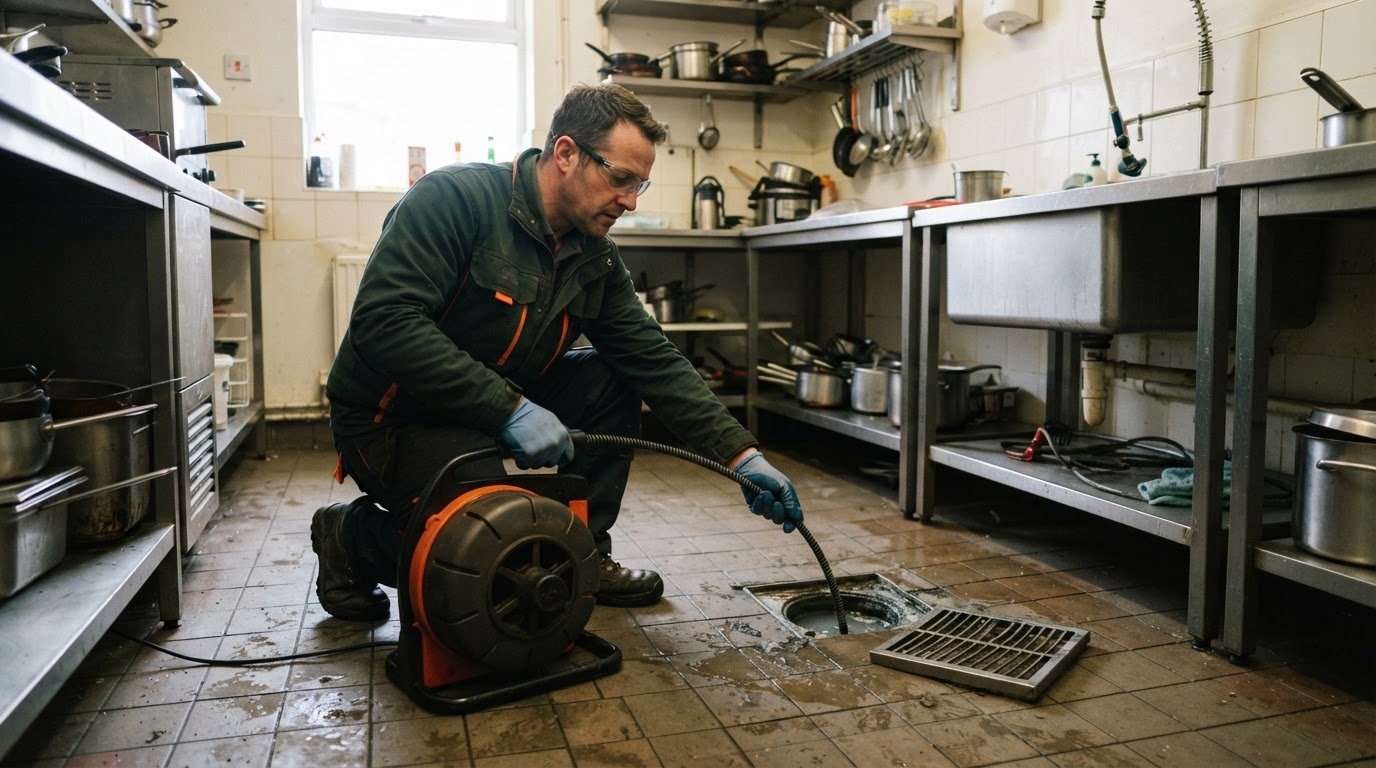
An emergency unblocking call-out focuses on restoring flow and identifying what is stopping wastewater from moving. A blocked sink in a commercial kitchen differs from toilets backing up across several facilities, so describe the affected area and fixtures clearly. Repeated blockages may point to a deeper issue rather than a one-off obstruction. If wastewater is entering occupied areas, restrict access and report the location promptly.
Foul smells around a drain or garden can indicate a full or malfunctioning septic tank. Slow sinks or toilets may also signal that a tank is at capacity or a blockage is present. Wastewater backing up into fixtures is a reason to arrange urgent septic tank attention.
Round-the-clock emergency response
A 24/7 emergency call-out arrangement means a service can receive and respond to calls at any hour, including overnight. Don’t assume every drainage service offers this. For a facility manager, the practical issue is whether help can be requested when a blockage affects operations outside normal working hours. Clear information about the problem, site and access helps establish what response is needed.
Separate an urgent active backup from a slow drain that remains usable, and explain any immediate impact on staff or customers. This helps the call handler understand the priority and whether the issue involves a drain or septic tank.
Actions during a drain emergency
Where possible, stop using fixtures connected to the affected drain to limit further wastewater entering the system. Keep staff and visitors away from backed-up sinks, toilets or wet areas. Tell the responding service which fixtures are affected, when the problem began and whether there are foul smells or water near a tank or soakaway.
For a suspected septic issue, explain whether the problem affects one toilet or several areas. Avoid pouring caustic liquids into the drain, as these can damage it. Record the symptoms and any recent recurrence for the attending technician. This provides a clearer starting point for diagnosis and helps distinguish a blockage from a tank problem.
CCTV drain inspections and surveys
A CCTV survey sends a camera through accessible sections of a drainage system. The operator views the inside of the pipe to locate obstructions, cracks, displaced joints or other visible defects. For example, recurring problems in a particular branch can be traced before deciding whether cleaning or repair is appropriate.
Drain jetting uses directed water to loosen and flush deposits from a pipe. It can help clear an obstruction that restricts flow, while a camera survey helps identify the drain’s condition. The methods serve different purposes: jetting removes material inside the pipe, while CCTV inspection shows what remains and whether repairs may be needed.
Consider a survey when a blockage returns, a leak is suspected or the cause of poor drainage is unclear. A camera inspection can also help assess a pipe before repair work, including relining. If debris obscures the pipe, cleaning may be needed before the camera can provide a clearer view.
A useful survey report records the inspected section, visible defects and their locations. This gives a facility manager a practical basis for planning work, rather than relying only on surface symptoms such as slow drainage. For instance, identifying a damaged joint can help distinguish a repair requirement from a blockage that needs cleaning.
The process usually starts by identifying the affected drain and choosing an access point. The camera then travels through the pipe as the operator reviews the footage and records findings. The report can guide the next step, such as further cleaning, monitoring the affected section or arranging repairs. A CCTV drain survey is especially useful when the system needs diagnosis before choosing the work.
Commercial drain services in Meath
Commercial drainage needs vary by site: a restaurant kitchen, office block and industrial unit each place different demands on the system. In Meath, identify the affected area, symptoms and operational impact before deciding which maintenance or repair work is appropriate.
Fats, oils and grease washed into kitchen sinks can cool, harden and stick inside pipes. Food debris increases the risk of blockages. A grease trap holds greasy kitchen water so fats and oils rise, while cleaner water continues towards the septic tank. Regular cleaning helps prevent problems and protect connected drains and tanks.
Pooling water near a soakaway or tank can indicate that wastewater is not draining correctly. A useful assessment considers where the water is pooling, which fixtures are affected and whether drainage symptoms are recurring. Commercial drainage services in Meath may cover unblocking, CCTV inspection, repairs and grease-trap maintenance. Match the work to the fault rather than treating every symptom as a routine blockage.
Permits and approvals depend on the proposed work and the site. Routine cleaning differs from altering a pipe or making a connection, so define the scope and relevant site requirements before work begins. Responsibility for a drain depends on its ownership and whether it serves private premises or a public sewer. Establish the affected pipe’s route and ownership before assigning responsibility for repairs.
A commercial maintenance contract should clearly describe its tasks, such as planned cleaning, inspections, reporting and how defects are handled. It should also distinguish scheduled maintenance from additional repairs, so the facility manager understands the agreed scope. For example, grease-trap cleaning and a CCTV survey are separate tasks and should be described individually if both are included.
For Meath facilities dealing with grease, debris or recurring blockages, arrange commercial drain maintenance to address the specific drainage issue and keep the work focused on the site’s needs.
CH Enviro
CH Enviro helps facility managers address drainage problems with inspection, cleaning and repair services. If a blockage is disrupting a site, drain unblocking can restore flow; a CCTV drain survey can help identify the cause of recurring issues. If inspection finds pipe damage, no-dig drain repair can provide an option. CH Enviro also provides septic tank cleaning for facilities that rely on septic systems.
Choose the next step based on the symptoms and inspection findings. This keeps the work focused, whether the issue is a blocked drain, a suspected pipe defect or a tank needing attention. Contact CH Enviro to discuss the drainage problem at your facility.
Set a clear next step for your site
For facility management drain services in Meath, the useful next step is to match the symptoms to the right action. Note which area is affected, whether the issue has returned and how it affects daily operations. If a CCTV survey has identified damage, include the findings when discussing repairs. Clear details help focus the conversation on the drainage problem and the work it needs.
CH Enviro provides drain unblocking, CCTV drain surveys and no-dig drain repairs. These services can address a blockage, investigate a recurring issue or deal with pipe damage. Choose the service that best matches the current problem, rather than treating every drainage fault as the same job.
Contact CH Enviro about drain services to discuss the issue affecting your facility. A clear account of the problem is a practical place to start, and the next step can then focus on resolving it.
Frequently Asked Questions
What is your emergency response time?
CH Enviro offers emergency support around the clock, but response time involves more than call availability. The site location, access arrangements and reported symptoms affect how a call-out is assessed. When reporting a problem, describe the affected area, whether wastewater is backing up and any access restrictions. These details help establish what the drainage issue requires.
How long does it take to get a drain unblocked?
Unblocking time depends on the obstruction’s location and severity, access to the affected pipe and whether the cause is clear. A blockage in an accessible branch differs from one deeper in the drainage system or linked to pipe damage. Inspection may also be needed. For facility management drain services in Meath, explain whether the problem has happened before and which fixtures are affected.
Is drain preventative maintenance really necessary?
Yes, planned maintenance can help identify developing drainage issues before they interrupt a facility’s normal use. The right schedule depends on the site, its drainage layout and activities such as commercial food preparation. Records of recurring symptoms, completed cleaning and inspection findings help managers spot patterns and plan future work. They also give maintenance teams a clearer picture of system performance.
What drain services do facility management companies in County Meath provide?
Services can include drain unblocking, CCTV drain surveys and repairs, alongside septic tank cleaning. CH Enviro also provides grease-trap cleaning and maintenance, wastewater treatment and vermin control. The right service depends on the site’s drainage arrangements and the problem being addressed. For example, a CCTV survey investigates the pipe’s condition, while unblocking focuses on restoring flow through an obstructed drain.
What are typical prices for drain unblocking and cleaning in Meath?
Costs depend on the blockage’s location and severity, access to the drain, the work required and whether damage needs repair. CH Enviro’s price depends on the specific job and is provided after a quote request. A clear description of the affected drain, symptoms and any recurring problem helps define the work involved. No single figure applies to every commercial or facility drainage job.
Do Meath drainage contractors offer 24/7 emergency callouts?
Some drainage services provide round-the-clock emergency support; CH Enviro offers 24/7 emergency support for drainage needs. Availability does not establish a fixed arrival time. For an urgent issue, communicate the site location, the nature of the blockage and whether wastewater is affecting occupied areas. This helps clarify the situation and the response needed for the facility.
Comments