
How to Prevent Septic Tank Overflow in Heavy Rain
What if a septic tank that seems to be overflowing after a storm isn’t simply full? Heavy rain can saturate the soil around a drainage field or allow extra water to enter the system, so the cause may be different from what you first suspect. Knowing how to prevent septic tank overflow in heavy rain starts with understanding that difference.
It’s understandable to worry when drains slow down, pipes gurgle or wastewater appears in the garden. These signs need attention, but they don’t confirm the cause. Avoid opening the tank or walking over waterlogged areas, and don’t try to pump or repair the system yourself.
This guide explains how heavy rain can affect a septic system, what you can safely check around your property and how to reduce avoidable water entry and strain. You’ll also learn which warning signs call for prompt professional help, and when septic tank cleaning or a wider drainage assessment may be appropriate.
Table of Contents
Why can heavy rain cause a septic tank to overflow?
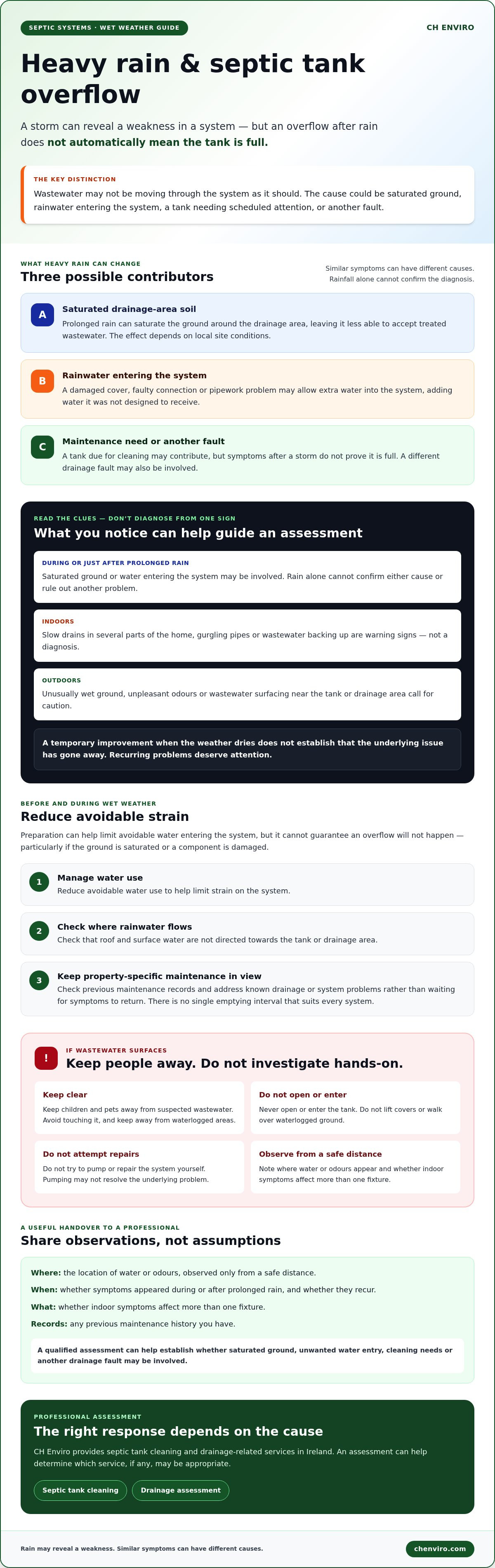
Heavy rain can expose a weakness that was already present in a septic system. It can also make a problem more noticeable by saturating the soil around the drainage area, limiting how readily that ground can accept treated wastewater. An overflow in wet weather doesn’t automatically prove the tank is full. A tank needing scheduled attention is one possibility, but saturated ground, rainwater entering the system or a fault may also be involved.
In plain terms, an overflow means wastewater isn’t staying and moving through the system as it should. It may back up through indoor fixtures, such as toilets or sinks, or appear on the ground near the tank or drainage area. For a basic explanation of what a septic system is and how its parts work together, see this overview.
What does septic tank overflow look like?
Slow drains in several parts of the home, gurgling pipes or wastewater backing up are warning signs, not a diagnosis. Outdoors, unusually wet ground, unpleasant odours or wastewater surfacing near the system call for caution, especially after rain. Keep children and pets away from suspected wastewater, and don’t touch it. One symptom alone can’t tell you whether the tank is full or another part of the system is affected.
Why does rain make an existing problem more noticeable?
When the soil is saturated, the surrounding drainage area may have less capacity to take in wastewater. A damaged cover, faulty connection or problem with the pipework may also let rainwater enter the system, adding water it wasn’t designed to receive. These issues can produce similar signs, and conditions vary between properties. Don’t assume that a storm is the only cause or that pumping the tank will resolve the problem.
To prevent septic tank overflow in heavy rain, understand what may be happening before choosing a response. From a safe distance, note where water or odours appear and whether indoor symptoms affect more than one fixture. Avoid opening the tank or attempting repairs. A qualified assessment can help establish whether saturated ground, unwanted water entry, a tank requiring attention or another drainage fault is involved.
How to identify whether rainwater, a full tank or a fault is involved
Similar warning signs can have different causes, so don’t diagnose the problem from one slow drain or a patch of wet ground. The timing and pattern can offer useful clues. Symptoms during or just after prolonged rain may be associated with saturated ground or water entering the system. However, rainfall alone can’t confirm either cause, and it doesn’t rule out a tank that needs scheduled cleaning or another fault.
Could the septic tank simply need emptying?
A tank due for cleaning may contribute to problems, but an overflow after rain doesn’t prove it’s full. Check any records you have of previous maintenance and share them with a professional. There isn’t one emptying interval that can be assumed to suit every system. For more on routine care, see this septic tank cleaning and maintenance guide.
Could saturated ground or a damaged connection be the cause?
Prolonged rainfall can leave the ground around a drainage area saturated, reducing its ability to accept wastewater. The effect depends on local site conditions. Separately, a damaged cover, connection or section of pipework may allow rainwater into the system. These causes can overlap, and the visible symptoms may look similar. Don’t lift covers, enter a tank or handle wastewater to investigate. Leave checks of system components to a professional.
Recurring problems deserve attention, even if they ease when the weather dries. A temporary improvement doesn’t establish that the underlying issue has gone away. Note where water or odours appear and whether indoor symptoms affect more than one fixture, observing only from a safe distance. Share these details and your maintenance history with a professional. They can assess whether saturated ground, water ingress, cleaning needs or another drainage fault may be involved.
How to prevent septic tank overflow in heavy rain before it starts
Preparation means limiting avoidable water entering the system and keeping up with maintenance suited to your property. These steps can reduce strain, but they can’t guarantee that an overflow won’t happen, particularly if the ground is saturated or a component is damaged. Before the next spell of heavy rain, check where rainwater flows and address known drainage or system problems rather than waiting for symptoms to return.
Keep rainwater away from the septic system
From a safe position, check whether downpipes and surface water routes send runoff towards the tank or drainage area. Look for repeated pooling nearby and consider whether ground levels direct water towards the system. Don’t connect roof or yard drainage to wastewater pipes, or alter pipework, without professional guidance. If water consistently collects around the tank or drainage area, ask a qualified provider for advice. Penn State Extension offers further guidance on protecting a septic system from flooding; use it as general information, not as Irish regulatory advice.
Maintain the system before problems recur
Keep records of previous servicing and note any recurring wet-weather symptoms. Ask a qualified provider what maintenance is appropriate for your system and property, rather than relying on a single interval for every tank. If you’ve already noticed a damaged cover, visible pipework issue or persistent drainage problem, arrange advice before the next period of heavy rain. Don’t open the tank or attempt repairs yourself.
Septic tank cleaning can address a tank-maintenance need, but it may not resolve a problem caused by saturated ground or water entering through a damaged connection. The right response depends on the cause, so an assessment is useful before assuming cleaning alone will fix the issue. Focus on the steps you can safely take: keep avoidable runoff away, reduce unnecessary water use during wet spells and follow advice suited to your system.
CH Enviro provides septic tank cleaning and drainage-related services in Ireland. If you need help deciding whether cleaning or another drainage issue may need attention, you can learn about CH Enviro’s septic tank and drainage services.
What should you do if your septic tank overflows during heavy rain?
Act calmly, but take possible wastewater seriously. Keep people and pets away from surfaced wastewater or visibly affected ground. Don’t touch sewage, open the tank, lift covers or attempt repairs to the tank or pipework. If wastewater is backing up indoors, reduce water use where practical and seek prompt advice from a suitable septic or drainage professional.
Which immediate precautions are sensible?
Stay clear of affected areas and prevent children or pets from approaching them. If indoor backing up is occurring, avoid using appliances or fixtures that send more water into the system. Don’t try to clear a suspected fault by opening access points or handling wastewater. If the situation creates an immediate health or safety concern, keep others away and seek appropriate professional advice.
From a safe distance, make a brief record of what you observe. Note when symptoms began, the rainfall conditions, which fixtures are affected and where water or odours are visible. This information can help a professional understand the pattern without you needing to inspect the tank yourself.
When might cleaning or a drainage investigation be needed?
A professional can assess whether the system may need septic tank cleaning, drainage work or another response. Cleaning may be appropriate if the tank needs maintenance, but it won’t necessarily resolve saturated ground, water entering through damaged components or another drainage fault. If symptoms persist, return after the rain eases or remain unexplained, ask about further investigation rather than assuming routine cleaning is enough.
Use what you’ve observed to guide the next step. Share your maintenance records and symptom notes with the provider, and ask what they recommend for your particular system. Don’t wait for recurring indoor backups or wastewater surfacing to become routine before seeking advice.
CH Enviro provides septic tank cleaning and drainage-related services in Ireland. If you’d like to discuss whether cleaning may be appropriate, see the septic tank cleaning service information.
How CH Enviro can help with septic tank problems after heavy rain
After heavy rain, it can be difficult to tell whether a problem relates to tank maintenance, a drainage issue or conditions around the system. CH Enviro provides septic tank cleaning and drainage-related services in Ireland. The appropriate next step depends on the symptoms and the system’s condition. Cleaning may be relevant if the tank needs attention, but it shouldn’t be assumed to fix every overflow.
CH Enviro’s stated service areas include Dublin, Meath, Louth, Kildare, Wicklow and Wexford. If you’re in one of these counties, clear details about what happened can help start a more useful conversation about the service that may be appropriate.
What details should you share when asking for help?
Describe what you’ve noticed without trying to diagnose the cause. Include your property location and whether symptoms are indoors, outdoors or both. Explain when they began and whether they appeared during or after rainfall. If the issue has happened before, mention that too. Share any maintenance records or details of previous drainage work that you have to hand.
For example, explain whether several indoor fixtures are affected or whether you’ve noticed unusual wetness outside. Don’t approach surfaced wastewater or open the tank to gather more information. Observations made from a safe distance are enough to describe your concern.
How to choose the next service step
Ask the provider to explain whether septic tank cleaning or further drainage assessment appears relevant, and what the proposed work involves before you arrange a service. If the cause isn’t clear, say so. Symptoms that recur after rain may need investigation beyond routine cleaning. Ask the provider to explain the reasoning behind the suggested next step.
Preventing septic tank overflow in heavy rain also means responding to warning signs with useful information, rather than guessing at a fix. CH Enviro provides septic tank cleaning alongside drainage and wastewater treatment services. To discuss a concern and ask what service may fit your situation, contact CH Enviro about a septic tank concern.
Take a clear next step after heavy rain
Rain-related septic problems don’t automatically mean the tank is full. Saturated ground, unwanted water entering the system, a maintenance need or another drainage fault can lead to similar warning signs. Keep people away from surfaced wastewater, note when symptoms occur and which areas are affected, and avoid trying to inspect or repair the tank yourself. To help prevent septic tank overflow in heavy rain, keep avoidable runoff away from the system and follow maintenance advice suited to your property.
CH Enviro provides septic tank cleaning, drainage and wastewater services across Ireland, including Dublin, Meath, Louth, Kildare, Wicklow and Wexford. The appropriate service depends on the cause. Cleaning may suit a tank that needs attention, but it won’t necessarily resolve a drainage issue or saturated ground.
When you get in touch, share your location, the timing of the problem, how it relates to rainfall and any relevant maintenance history. Contact CH Enviro to discuss a septic tank concern and ask which next step may be appropriate. Clear information can help you move towards a safer, more informed solution.
Frequently Asked Questions
Can heavy rain cause a septic tank to overflow?
Yes, heavy rain can contribute to an overflow, but it doesn’t automatically mean the tank is full. Saturated ground may limit how readily the drainage area accepts wastewater, while damaged covers or connections can let rainwater into the system. Similar signs can also point to a tank needing maintenance or another fault. If wastewater backs up indoors or appears outside, keep clear of it and arrange professional advice rather than guessing at the cause.
How do I prevent my septic tank from overflowing in heavy rain?
To prevent septic tank overflow in heavy rain, reduce avoidable water loading and keep roof and surface runoff away from the tank and drainage area. Check where downpipes discharge and whether water regularly pools near the system. Don’t connect yard or roof drainage to wastewater pipes without professional guidance. Keep maintenance records, address known defects and ask a qualified provider what care suits your property. These steps can reduce strain, but can’t guarantee an overflow won’t occur.
Should I empty my septic tank before heavy rain?
Not automatically. Arrange cleaning based on the system’s maintenance needs and professional advice, rather than assuming a storm means the tank should be emptied. Cleaning may address a tank that needs attention, but it won’t necessarily fix saturated ground, water entering through a damaged connection or another drainage problem. Check your service history and explain any recurring wet-weather symptoms to a septic professional. They can help determine whether cleaning or a different response is appropriate.
What should I do if wastewater backs up during a storm?
Reduce water use where practical, particularly activities that send more water into the system, and seek prompt advice from a suitable septic or drainage professional. Keep people and pets away from wastewater indoors or outside, and don’t touch or attempt to clean it yourself. Note when the backup began, which fixtures are affected and how the timing relates to rainfall. This information can help the provider assess what may be happening.
Can I inspect or open my septic tank myself after heavy rain?
No. Don’t open or enter a septic tank, lift covers or try to inspect internal components after a storm. Avoid handling wastewater or attempting repairs around the tank and pipework. You can observe visible changes from a safe distance, such as where water has pooled, and record when symptoms occur. Leave checks of covers, connections and other system components to a suitable professional.
How can I tell whether the tank is full or the drainage area is saturated?
You can’t confirm the cause from symptoms alone. Slow drains or indoor backups may occur alongside different system problems, while unusually wet ground after rain may suggest saturated conditions without proving that’s the only issue. Note when symptoms began, which fixtures are affected, where you see changes outdoors and whether the problem recurs after rainfall. Share this with a professional, along with maintenance records, so they can assess whether cleaning or further drainage investigation is relevant.
Who should I contact about septic tank overflow in Ireland?
Contact a suitable septic or drainage professional if symptoms persist, recur or create a health concern. CH Enviro provides septic tank cleaning, drainage and wastewater services in Ireland, with stated coverage in Dublin, Meath, Louth, Kildare, Wicklow and Wexford. Explain your location, what you’ve observed, when it started and whether it followed heavy rain. The appropriate next step depends on assessment, as cleaning may not resolve every drainage or wet-ground problem.


Comments