
Pest Proofing and Drain Repair in Kildare
A drain treatment alone won’t stop rodents if a damaged or unsealed pipe still gives them a way in. Effective pest proofing drainage systems in Kildare starts with finding the access point, then addressing the pipe defect and the infestation. Rats can travel through drains and emerge in kitchens, bathrooms or utility areas.
If rodent activity keeps returning, or you notice drain smells, noises under floors or slow drainage, it can be difficult to tell whether the problem starts underground. A diagnostic inspection can establish whether rodents are entering through the drains and identify where repairs may be needed. This article explains how damaged pipes create entry points, how drain inspections and repairs can form part of the response, and which signs to look out for. Tackling both the route and the rodents can help reduce the chance of access returning.
Table of Contents
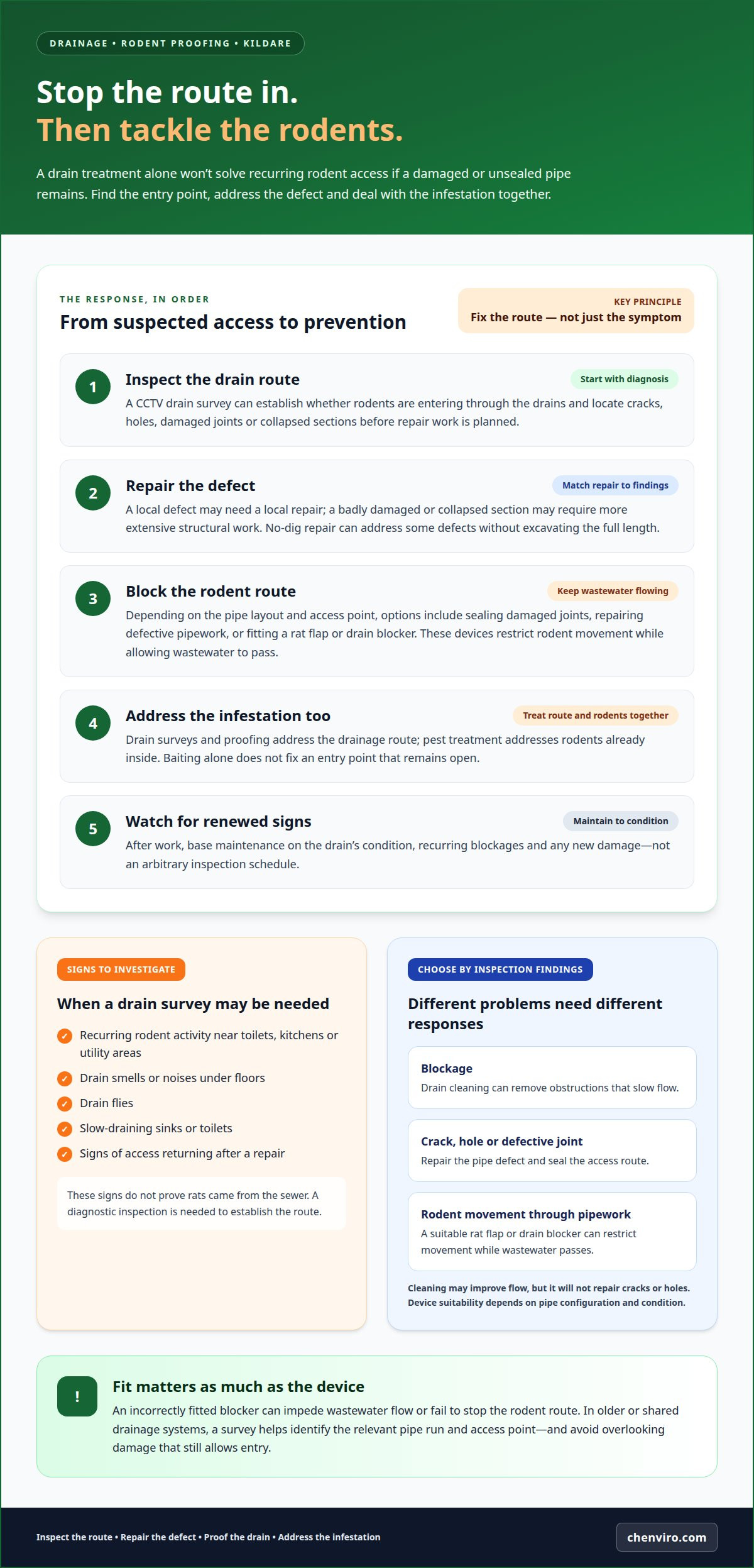
Pest-proofing and drain repair recommendations
Start with a drain survey to locate defects before deciding on a repair. The right response depends on whether the issue is a blockage, a damaged pipe or a rodent access point.
For an Irish installation, choose a proofing device that allows wastewater to pass through the drain. Rat flaps are designed to let wastewater flow while preventing rats from returning through the pipe. The pipe’s layout and condition affect how a device can be fitted.
Sealing and structural repairs
Repair the route rodents use, rather than sealing only the visible opening. A CCTV drain survey can identify cracks, holes or collapsed sections underground. Minor damage may need a local repair, while a badly damaged section may require more extensive structural work. Depending on the survey findings, no-dig repair can address some pipe defects without excavating the full length.
Available proofing solutions
In Kildare, options include sealing damaged joints, repairing defective pipework and fitting a rat flap or drain blocker. These devices restrict rodent movement from the main sewer while allowing wastewater to flow. The right option depends on the pipe configuration and the location of the access point. Drain cleaning can remove obstructions that slow flow, but it won’t repair cracks or holes.
Drain surveys and proofing are drainage work, while pest treatment addresses rodents already inside. A CCTV survey can establish whether the drain is the entry route and what repair may be needed. Those findings guide the next step, rather than relying on baiting alone.
There’s no single inspection interval that suits every Kildare property. Arrange an inspection if rodent activity returns, drainage slows, or signs of access reappear after a repair. After work, base maintenance on the drain’s condition, recurring blockages and any new damage, rather than an arbitrary schedule.
Recurring rodent infestations, drain smells, noises under floors, drain flies and slow-draining sinks or toilets are all signs that a drain survey may be needed.
A rodent drain guard can avoid poisoning rats that might die inside a building structure and cause bad smells for weeks.
Rodent entry points through damaged or unsealed drains
Cracked pipes, open joints and collapsed sections can create routes between sewers and buildings. An inspection can establish whether rodents are using the drainage system.
Investigating rodent access through drains
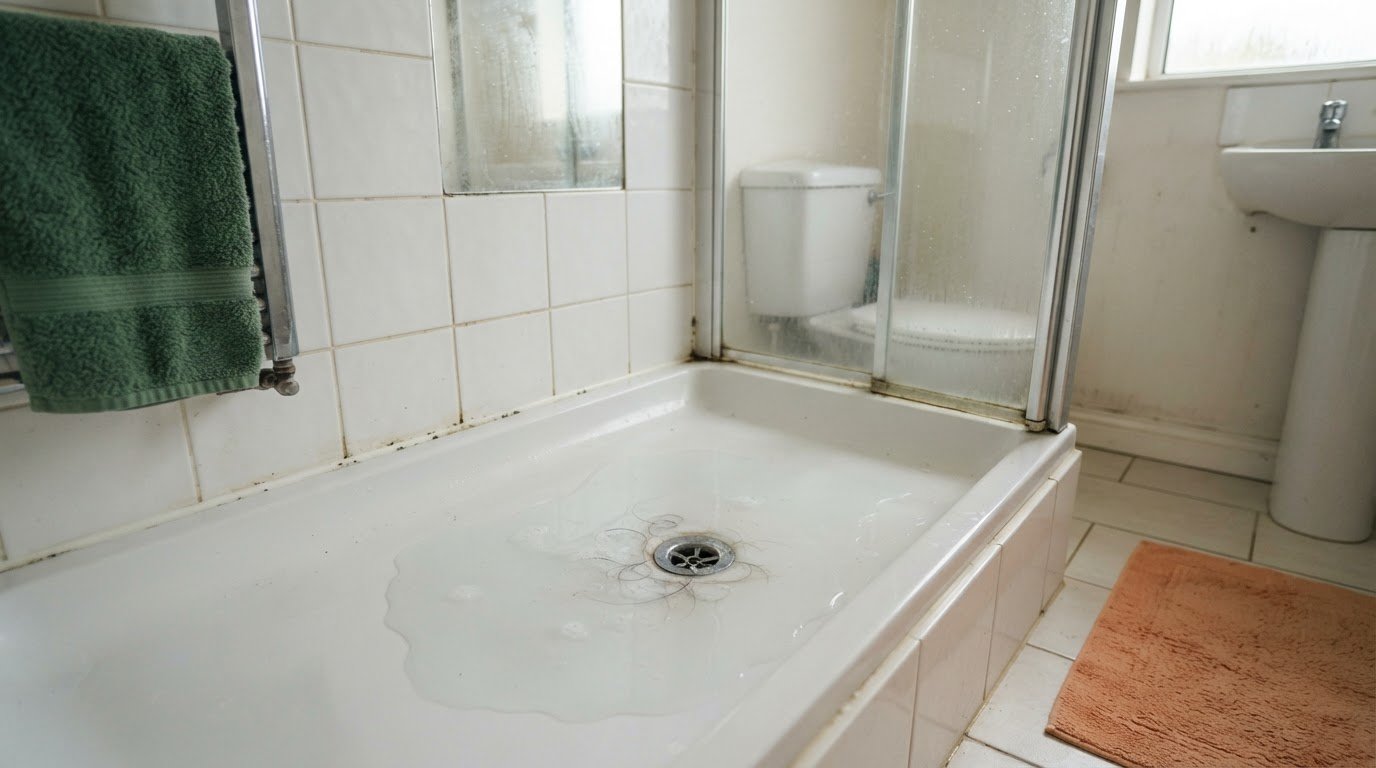
Recurring rat activity near toilets, kitchens or utility areas can point to a drain route. Drain smells, noises under floors, drain flies and slow-draining sinks or toilets are other reasons to investigate. These signs don’t prove that rodents have come from the sewer. A diagnostic inspection is needed to establish whether rats are entering through the property’s drains.
A CCTV drain survey can reveal holes, damaged joints or collapsed sections underground. If those signs appear, a CCTV drain survey can help locate the defect before repair work is planned.
Building work can disturb rodents and bring activity to the surface. Kildare’s Environmental Health Service has produced rodent-control information leaflets for householders and the construction industry. If activity keeps returning, investigate possible drain access rather than treating visible signs alone. In Kildare, responsibility for controlling and eradicating rats and mice rests with the land occupier.
Sealing drain access points
Sealing should close the route rodents use, not just cover an indoor opening. Inspection findings help distinguish a small hole or defective joint from a collapsed section that needs structural repair. Repairing damaged pipework matters alongside sealing gaps, as rats can chew through drains. In older or shared systems, the pipe layout and condition help determine where access points are and how they connect.
Rat blockers and non-return valves
A rat blocker or non-return valve sits within the drainage system to restrict rats travelling from the main sewer into pipes serving a property. It allows wastewater to flow through while preventing rodents from returning. Its suitability depends on the drain’s configuration and condition, including whether existing damage needs repair first.
An incorrectly fitted device can impede wastewater flow or fail to block the rodent route. In shared or older drainage systems, a survey helps identify the relevant pipe run and access point before installation. This reduces the risk of placing a device in the wrong location or overlooking a damaged section that still allows entry.
Sealing and preventative recommendations
Effective prevention targets both the route into a property and the conditions that support pests. In Kildare, inspection findings can help determine whether drain repairs, proofing or improved cleaning should come first.
Preventing reinfestation
Start by inspecting the drain route and repairing any damage that could leave access open. Then fit suitable proofing at the identified point, ensuring wastewater can still pass. This sequence matters because treating rodents without addressing the entry route leaves the same weakness in place. Rats may return to the sewer for food every day, so a barrier should block their path back.
After sealing or repair, keep the drainage clear and act on recurring problems. Slow flow, for example, may indicate a blockage, while renewed rodent activity can signal that an access point remains. Homes and businesses need a response suited to their pipe layout. Shared drainage also requires attention to connected sections, not just the visible opening on one property.
Pests prevented by proofing
Drain proofing is intended to restrict rodents, particularly rats, from moving through pipework and entering a building. Sealing a hole or damaged joint can close a specific access point, while a barrier can restrict movement through the drain. An inspection helps determine which measure suits the defect. Proofing is not a solution for every pest or drainage issue.
Drain flies need a different response: they can breed in stagnant water and organic waste. Clearing the build-up and restoring drainage flow addresses those conditions, while a rodent barrier does not remove breeding material. If a home or business has both issues, assess them separately. Check the pipework for rodent access, then identify any standing water or waste that could support drain flies. This keeps prevention focused on the cause of each problem.
A rodent drain blocker can prevent rats from emerging through damaged underground pipework without digging up the pipe to locate the problem. An inspection can still help determine whether the damaged route needs sealing or other proofing, and whether drainage flow remains clear.
Possible approaches include rodent proofing, drain sealing and baiting. Consider these alongside the access point and the conditions found in the drain, so the response addresses the observed issue rather than relying on a barrier alone.
Combining pest treatment with proofing
Pest treatment can reduce rodent activity, but it doesn’t close a damaged drain. A plan for Kildare premises should address both the infestation and the route rodents use. That means identifying access, choosing treatment, then sealing or guarding the relevant drain point.
Arrange a drainage inspection when rats keep appearing or activity returns after treatment. It can establish whether rodents are entering through pipework rather than another opening, and whether a crack, open joint or collapsed section needs repair. Without that diagnosis, baiting may address visible rodent activity while leaving the drain route open.
Next, match the response to the findings. Rodent proofing and drain sealing can restrict access through defective pipework. Baiting may form part of pest treatment, but poison can leave rats dead inside a building structure, causing bad smells for weeks. A rodent drain guard can avoid that outcome by allowing rats already in the pipes to exit while preventing them from returning.
Keep treatment and repair coordinated. For example, if a survey identifies damaged underground pipework, repair the defect and fit suitable proofing at the access route. Then address the infestation inside the premises. Treating only indoors leaves the drain pathway unresolved; fitting a barrier without dealing with rodents already inside leaves the existing problem in place.
This approach applies to a domestic home or business in Kildare. It isn’t a reason to assume every infestation comes from drains: a diagnostic inspection determines that connection. Wicklow has different local conditions, so advice for a Kildare property should focus on its own drain layout, damage and signs of rodent activity.
If wastewater problems are also affecting the premises, CH Enviro’s Wastewater Treatment Service can address that part of the issue. The key takeaway is straightforward: investigate the route, treat the infestation, and seal or guard the access point as a coordinated response.
CH Enviro
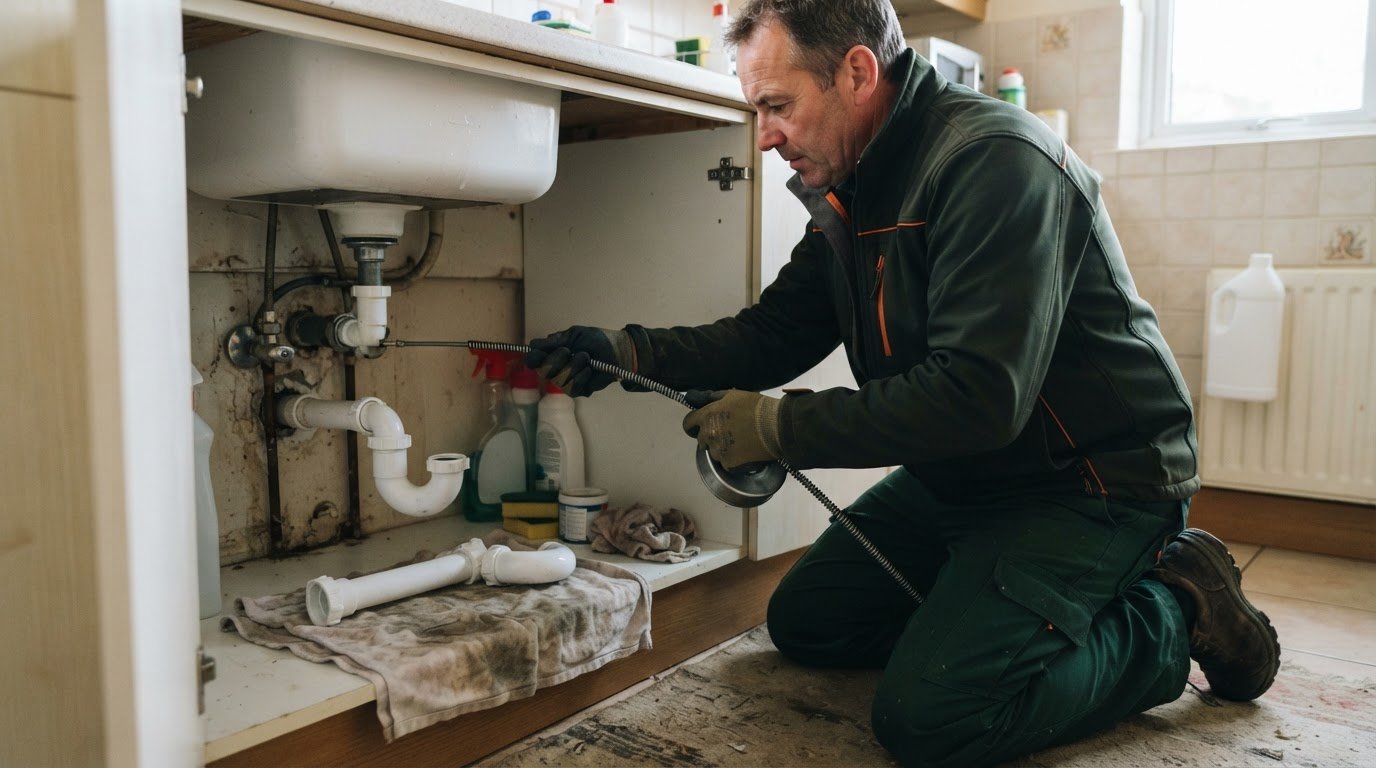
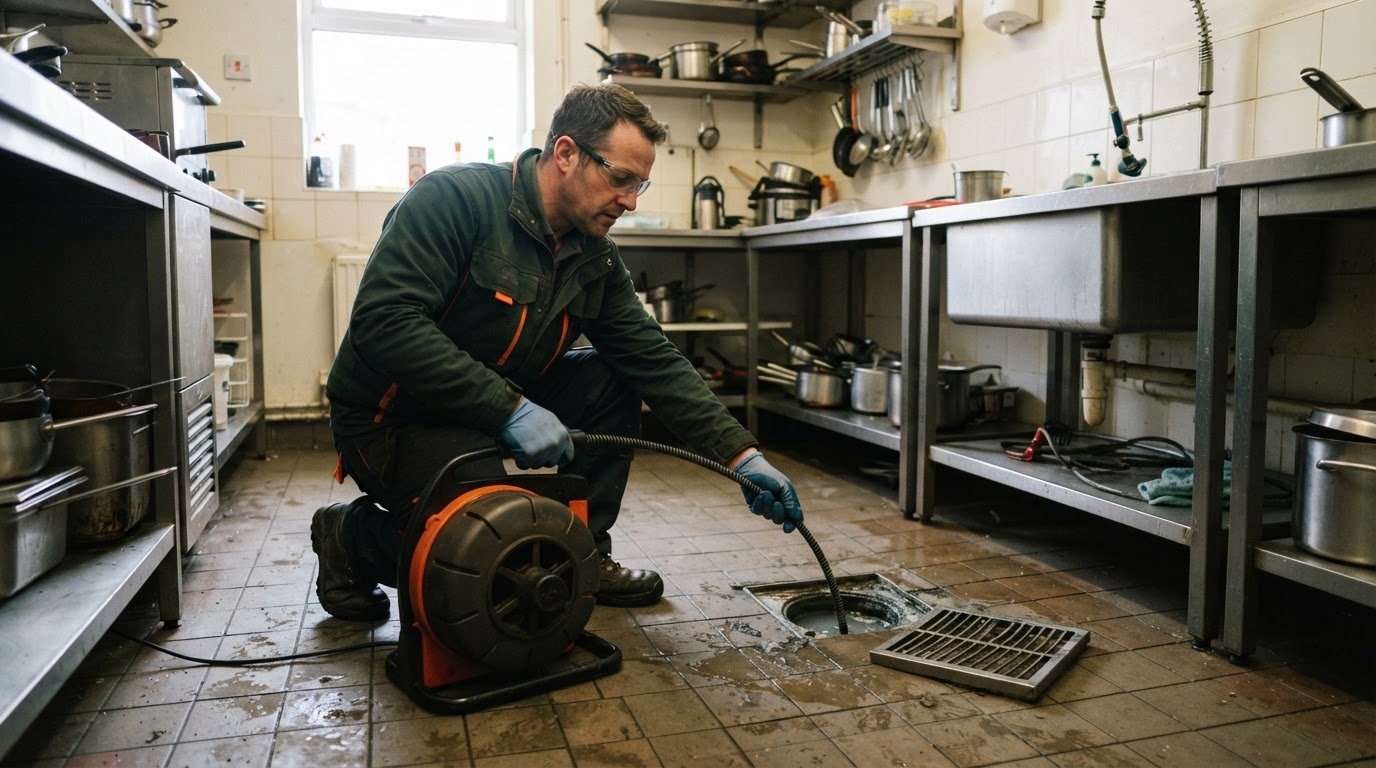
CH Enviro can investigate drainage faults that may give rodents access to a property. A CCTV Drain Survey can locate damaged sections, while the Drain Cleaning and Unblocking service addresses obstructions affecting flow. If inspection identifies a suitable pipe defect, No-Dig Technology Repairs can provide a repair option without excavating the full pipe run.
These drainage services help establish the system’s condition and address faults that may contribute to recurring problems. Septic Tank Cleaning is also available for properties with septic tanks. Contact CH Enviro to discuss the drainage symptoms or repair concerns affecting your property.
Move from diagnosis to a lasting plan
Recurring rodent activity is a reason to seek a clear assessment, not rely on more guesswork. A practical plan for pest proofing drainage systems in Kildare should reflect the property’s drain layout and the evidence found during inspection. This gives you a sound basis for deciding what needs attention and what can wait.
CH Enviro can investigate drainage problems with a CCTV Drain Survey, clear an obstruction through its Drain Cleaning and Unblocking service, or address suitable pipe defects with No-Dig Technology Repairs. These services support different stages of resolving drainage issues, from identifying a problem to carrying out relevant work.
If you’re ready to discuss the drainage concerns at your property, contact CH Enviro about drain proofing. A clear starting point can help you plan the next step with confidence.
Frequently Asked Questions
What steps are involved in a CCTV drain survey and pest-proofing repair?
Start by recording symptoms such as repeat blockages or rodent activity, then inspect the drain with a CCTV survey. The findings can show whether a blockage or structural defect needs attention. CH Enviro can carry out drain unblocking or suitable no-dig repairs, while pest treatment can address rodent activity. The repair plan should follow the survey findings, rather than assume every infestation starts in the drains.
Comments