
Sealing Drain Pipes Against Vermin and Rat Entry
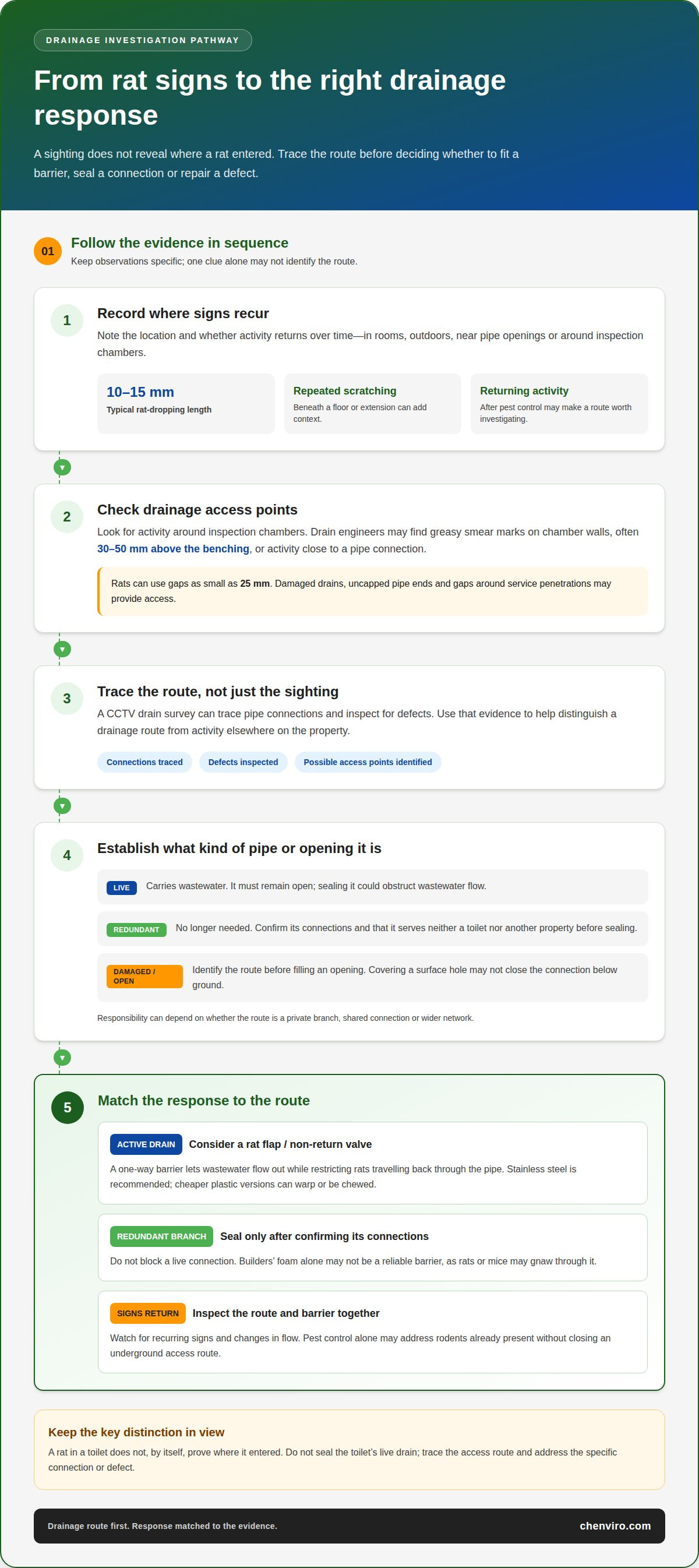
A rat in the toilet may point to a drainage problem, not just a bathroom one. Rats can sometimes reach toilets through connected drainage. Sealing drain pipes against vermin means identifying and closing a suitable unused or defective route, not blocking a live drain that carries wastewater.
It’s understandable to worry about what’s happening out of sight. But seeing a rat does not, by itself, show where it entered. Droppings, scratching and activity around inspection chambers can help indicate whether the drainage system needs attention.
This article explains how rats may reach a toilet, what signs to look for and how rat blockers or non-return valves can help. It also covers how a CCTV drain survey can trace pipe connections and identify possible entry points, so the response addresses the route rather than just the latest sighting.
Table of Contents
Can Rats Really Come Up Through the Toilet?
Rats can travel through connected drainage and may enter a property through a toilet. The route matters: an open, redundant connection is different from a live drain carrying wastewater.
Unused pipework as access routes
Redundant pipework is drainage the property no longer needs. If an unused connection remains open to live drainage and leads towards the building, it can provide rats with a hidden route indoors.
Before sealing a pipe, establish that it is genuinely redundant and does not serve a toilet or another property. Filling a live connection could obstruct wastewater flow, while sealing the correct redundant branch can remove that particular access route.
Entry through damaged or open drains
Rats can use openings in damaged drains, uncapped pipe ends and gaps around service penetrations to move from underground drainage towards a building. They can squeeze through gaps as small as 25 mm, so a small defect may still provide access.
Responsibility depends on the drain involved: a private branch, shared connection or wider network may need assessment by different parties. Identify the route before filling an opening. Covering a surface hole does not necessarily close the connection below ground.
Rats entering through toilets
A rat may reach a toilet by travelling through connected drainage and emerging through the pan. This is possible, but a sighting alone does not identify the entry point; an open branch or drain defect elsewhere may be involved.
If a rat appears in the toilet, keep people away from the area and do not try to seal the toilet’s drain. That pipe is part of the live wastewater system. Trace the route so the response addresses the access point instead of blocking a working connection.
Drain barriers and local requirements
For Irish properties, don’t treat a rat barrier as a reason to seal every drain: a live foul drain must continue carrying wastewater. The right response depends on whether the pipe is active, redundant or damaged.
No blanket Irish building-regulation or local-authority requirement for rat barriers is established here. Blocking a live pipe can obstruct wastewater flow, and rats or mice may gnaw through builders’ foam alone. Confirm that a pipe is redundant before sealing it, and don’t rely on foam as the only barrier.
Signs of rat activity above ground and inside drains
Look for repeated signs in rooms, outdoor areas and around drainage access points. A single clue may not reveal where rats are travelling.
Rat droppings are typically 10mm to 15mm long. Check for them near food storage, along walls, beside pipe openings and around outbuildings. Fresh droppings in the same area over time suggest continued activity. Gnawing, disturbed materials and scratching beneath a floor or extension can add useful context, especially when the sounds recur in one location.
Outside, note whether rats appear around inspection chambers or repeatedly follow the same route. Rats returning after pest-control treatment may indicate that an access route remains open. This does not prove the drain is responsible, but it can make drainage worth investigating, particularly if you also hear scratching beneath an extension or floor.
Inside an inspection chamber, drain engineers look for smear marks on chamber walls, often 30mm to 50mm above the benching. These greasy marks can show where rats regularly travel. A chamber inspection can also reveal activity close to a pipe connection. Keep observations specific: record the location and whether signs recur, rather than treating every mark as evidence of rats.
A rat flap, also called a non-return valve, may suit an active drain that needs to carry wastewater. It allows waste to flow out while restricting rats from travelling back through the pipe. Unlike sealing a live drain, a valve can allow the drain to remain functional. It is most relevant when drain activity or a known route points to recurring access.
When signs cluster around a chamber or recur after treatment, tracing the pipework can help clarify the likely route. A CCTV drain survey can inspect drainage connections and defects, adding evidence to the visible signs. This helps distinguish a drainage issue from activity elsewhere on the property.
Do Rat Blockers and Non-Return Valves Actually Work?
Rat flaps, also called non-return valves, can restrict rats travelling back through a drain. They are suited to active pipes that must continue carrying wastewater.
To maintain a drain seal or blocker, keep the drainage route clear and watch for returning signs. If activity reappears or waste stops flowing normally, arrange an inspection of the drain and barrier.
Why pest control may not stop rats returning
Pest control addresses rodents already present, but may leave an underground access route open. A rat could use that route later, so removing the animals does not resolve the cause of repeated entry.
For example, if rats return after treatment, the drain route may need investigating alongside pest control. The key distinction is between dealing with rats inside the property and restricting access through drainage.
Rat flaps as drain barriers
A rat flap is a one-way barrier fitted inside a drain: wastewater flows out while the flap restricts rats from coming back. It can help where an active drain offers a known route, but the pipe must still carry waste.
Stainless steel is recommended for rat flaps because cheaper plastic versions can warp or be chewed. A barrier must also suit the pipe and its flow; blocking an active foul drain is not a workable alternative.
Maintaining drain seals and rat blockers
Keep the drain clear and watch for changes in flow, recurring rat signs or activity around inspection chambers. These may indicate that a barrier or the surrounding drainage needs attention.
Don’t push debris into a pipe or cover a surface opening instead of maintaining the relevant connection. If signs return, inspect the route and barrier together. A blocker can restrict one access point, while another branch or defect may still provide a route.
CCTV drain surveys to find entry points
A CCTV drain survey can inspect hidden pipework and help trace possible rat routes. It can clarify whether a suspected opening connects to live drainage or a redundant branch.
That distinction matters before sealing a pipe. A redundant drain is no longer required by the property, but its connection may still lead into live drainage. Sealing the wrong connection could obstruct wastewater flow. A camera inspection and tracing can help establish where a pipe starts and ends, whether it remains connected, and whether other branches or defects are present. This makes sealing drain pipes against vermin a targeted decision based on the route, not guesswork.
Older drainage layouts can be difficult to infer from a property’s current appearance. A house altered several times over 40 or 50 years may retain underground connections that later extensions or renovations have hidden. For example, a branch beneath an extension could remain open even though the visible plumbing has changed. CCTV helps examine that hidden layout rather than relying on surface clues alone.
A survey can also help distinguish a damaged drain from an unused connection. A crack or displaced joint may provide access through a drain that remains in use, while an open redundant branch may need a different response. Identifying the defect or connection first helps prevent repairs from blocking a live pipe or leaving the actual route untouched. This gives sealing drain pipes against vermin a clearer purpose: address an identified access point while keeping active drainage functional.
Use the findings to decide what needs attention: a confirmed redundant connection, a defect in active pipework, or another branch requiring investigation. A CCTV drain survey can provide the inspection and tracing needed to identify these features. It helps establish whether the drainage offers a route worth addressing.
For recurring activity near an inspection chamber or beneath an extension, arrange a survey before sealing underground pipework. Arrange a CCTV drain survey to investigate concealed connections and defects before deciding on the appropriate repair.
CH Enviro: Vermin Control Service
CH Enviro’s Vermin Control Service is a practical next step when rat activity persists or returns. If signs point towards drainage, a CCTV Drain Survey can help trace pipe connections and defects before deciding what needs attention.
Where a blockage affects the drain, CH Enviro also offers a Drain Unblocking Service. If an inspection identifies damage, No-Dig Drain Repair may be relevant. The right response depends on what the inspection finds: pest activity, an obstruction, a damaged pipe or a hidden route each calls for a different approach.
Contact CH Enviro to discuss vermin activity or a suspected drain entry point.
Choose the next step with confidence
A sound plan for sealing drain pipes against vermin starts with understanding the route and the repair needed. Before work begins, use the findings to distinguish the immediate problem from a change that could help prevent it recurring. This keeps the response focused on the property’s actual drainage rather than assumptions.
CH Enviro offers a Drain Unblocking Service, CCTV Drain Survey and No-Dig Drain Repair. These services address different drainage needs, from clearing a blockage to inspecting or repairing pipework. Survey findings can help determine the appropriate next step for the drainage issue.
If you’re dealing with rat activity or suspect a drain entry point, contact CH Enviro about rat entry to discuss the situation. A clear starting point can make the next decision easier.
Frequently Asked Questions
How Do Rats Get Into Your Drains?
Rats can enter drainage through open connections or defects that link underground pipes with accessible routes. An uncapped branch beneath a renovated area, for example, may be hidden from view yet still connect to the drainage system. Activity near an inspection chamber can help narrow down where to investigate. Before sealing drain pipes against vermin, establish the pipe’s purpose and where it leads.
Should I Call a Pest Controller or a Drainage Company First?
Choose a response based on the signs: a rat inside a room needs attention to the immediate pest issue, while recurring activity around a chamber or drain suggests investigating the pipework too. If treatment has taken place but rats return, consider both the animals present and a possible continuing route. CH Enviro’s Vermin Control Service and drainage services can address these related concerns.
When to Call the Pros?
Seek professional help if a rat appears indoors, activity keeps returning, or you suspect a damaged pipe or hidden branch. A drainage professional can inspect the pipework, while pest control can address animals already present. For example, recurring scratching beneath a floor alongside activity near an inspection chamber can help determine whether the drainage needs investigation.
🐀 What About Ratgates?
A ratgate, also called a rat flap or non-return valve, is a one-way barrier intended to let wastewater leave while restricting rats travelling back through the drain. It may suit an active drain where blocking the pipe is not an option. Stainless steel is recommended over cheaper plastic versions, which can warp or be chewed. The barrier must allow the drain to keep functioning.
How do rats and other vermin enter homes through drain pipes?
Rats and mice may use an open pipe connection or drain defect to reach a property. Gaps around pipework can also provide access, so the visible opening indoors may not reveal the underground route. An old branch concealed beneath an extension, for instance, could link the building to live drainage and point to a route worth investigating.
How can you seal gaps around drain pipes to stop rats in Ireland?
Sealing drain pipes against vermin starts with identifying whether the pipe is redundant or still carries wastewater. For a confirmed redundant outlet or suitable gap, materials such as cement, mesh or specialist rat-resistant sealant may be used. Rats may gnaw through builders’ foam alone. Shroud copper pipes before applying mortar, and don’t block a live drain carrying wastewater.
Comments