
Septic Tank Alarm Going Off? What to Do in 2026
If you’re asking “septic tank alarm going off what to do”, treat it as a warning and act calmly. An alarm can indicate a high liquid level, but it won’t identify the cause by itself. Reducing water use can help limit further strain while you decide what to do next.
You may be wondering whether the alarm is temporary, the pump has lost power or wastewater could back up into your home. Don’t open the tank or attempt repairs. Pause non-essential water use, check the power supply only if you can do so safely, and watch for slow drains, sewage smells or pooling water. This guide covers safe first steps, possible reasons for an alarm and when to seek professional help in Ireland.
Table of Contents
Septic tank alarm going off? Take these first steps
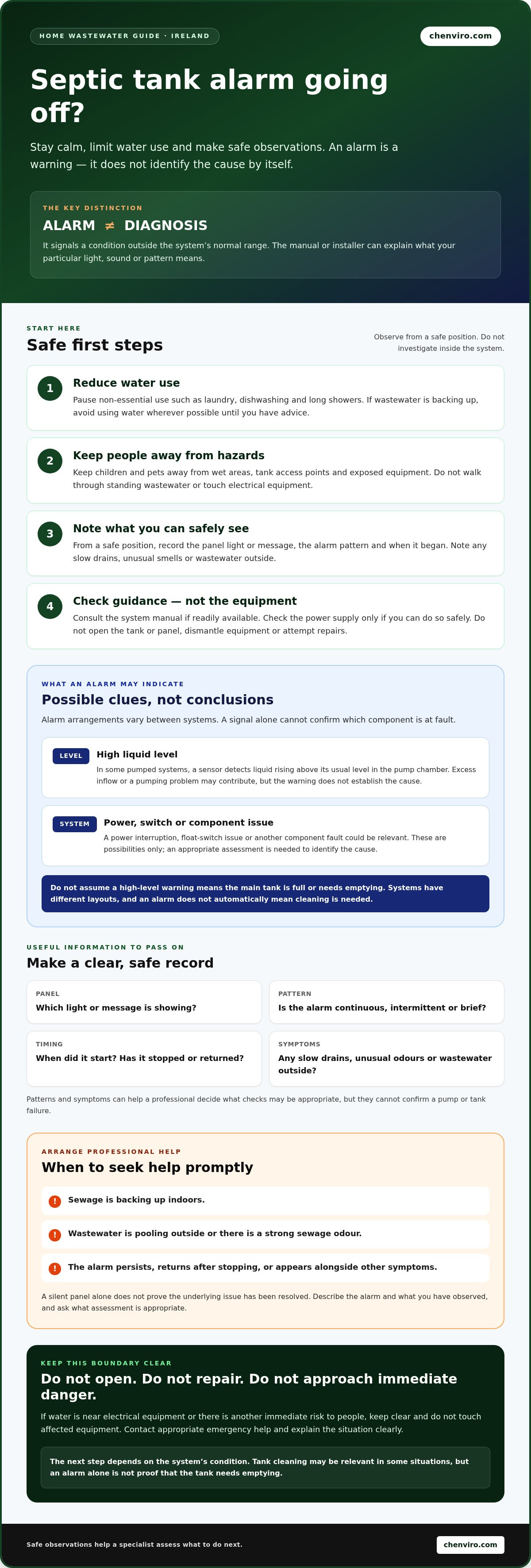
Treat an active septic tank alarm as a warning, not a diagnosis. It tells you that something needs attention, but not what has caused it. If you’re wondering about a septic tank alarm going off what to do, reduce water use, note what the alarm is showing and look for visible signs of trouble from a safe distance. Contact a suitable professional if the warning persists or other symptoms appear.
If you’re unfamiliar with how a septic system works, this overview of what a septic tank is explains its basic purpose and components. For the meaning of a particular light or sound, your own system’s manual or installer is the better guide.
What to do first
Pause non-essential water use, including laundry, dishwashing and long showers. If wastewater is backing up, avoid using water wherever possible until you’ve received advice. Keep children and pets away from wet areas, tank access points and exposed equipment. Don’t touch electrical equipment or walk through standing wastewater.
From a safe position, note the control panel indicator, any displayed message and when the alarm began. Check the manual if it’s readily available, but don’t open the panel, tank or other equipment. Record any signs you’ve noticed, such as slow drains or unusual smells. These details can help the person you call assess what to do next without you having to investigate the system yourself.
When to call promptly
Seek help promptly if sewage is backing up indoors, wastewater is pooling outside or there’s a strong sewage odour. A persistent alarm, one that returns after stopping, or a warning accompanied by other symptoms also warrants professional attention. A silent panel alone doesn’t prove the underlying issue has been resolved.
Keep clear if water is near electrical equipment or there’s another immediate risk to people. Don’t approach or touch affected equipment. For immediate danger, contact appropriate emergency help and explain the situation clearly.
When speaking with a septic system professional, describe the alarm and any changes you’ve observed. Ask what assessment is appropriate. Septic tank cleaning may be relevant in some situations, but an alarm doesn’t automatically mean the tank needs emptying. The cause needs to be assessed safely.
What a septic tank alarm can indicate
A septic tank alarm is a warning from a component or control system. It signals that the system has detected a condition outside its normal range, but it doesn’t confirm which part is at fault. An alarm is a signal to investigate, not a diagnosis of a specific failure.
Alarm arrangements vary between systems. The indicator, tone or pattern may mean different things depending on the equipment installed, so check the system manual or ask the installer to explain its signals. General septic system care and maintenance advice can help with routine upkeep, but it won’t identify what a particular alarm means on an Irish property.
High-water warnings and pump chamber levels
In some pumped systems, a sensor detects when liquid in the pump chamber rises above its usual level and triggers an alarm. Excess inflow or a problem with pumping may contribute, but the signal alone can’t establish the cause. Other faults may also be involved.
Not every septic system has a separate pump chamber or the same layout. Don’t assume that a high-level warning means the main tank is full or needs emptying. The system design and a professional assessment matter.
Power, float switch and control-panel warnings
A float switch rises or falls with the liquid level. If it detects a set level, it can send a signal to the control panel, which then sounds or displays a warning. A power interruption, a switch issue or another component fault could also be relevant, but these are possibilities, not a diagnosis.
Without opening the panel or handling electrical equipment, note what you can safely observe:
Which light or message is showing?
Is the alarm continuous, intermittent or brief?
When did it start, and has it stopped or returned?
Have you noticed slow drains, unusual odours or wastewater outside?
These details can help a professional understand the situation and decide what checks may be appropriate. Don’t dismantle equipment or reach into a tank to test a sensor.
If your observations point to a tank or wastewater issue, ask whether septic tank cleaning may be relevant. Cleaning is one possible service, but it won’t address every possible alarm cause. The system’s condition should guide the next step.
How to narrow down the cause without risky DIY repairs
When considering a septic tank alarm going off what to do, focus on safe observations rather than trying to identify or fix a fault yourself. Alarm patterns and symptoms can offer clues, but different issues may look alike. An alarm pattern can’t confirm that a pump or tank has failed. An appropriate inspection is needed to establish the cause.
Use this comparison to organise what you’ve noticed. It isn’t a diagnosis, and your system’s manual may explain its particular indicators.
Match the warning to what you can safely observe
Write down whether the alarm is continuous or intermittent, which indicator is showing and when the warning began. If known, note heavy water use, a power interruption or unusual household activity around that time. Look for indoor backup or outdoor pooling only from a safe distance. Don’t lift a tank cover or approach exposed equipment for a closer look.
Avoid repeated resets and guesswork
Don’t repeatedly silence or reset the alarm unless the system instructions explain what to do. A reset may stop the sound without resolving the condition that triggered it. Never enter a tank, handle sewage or dismantle electrical components. Don’t pour chemicals into the system as an improvised fix. Ask a professional what steps are suitable for your system. For general background on routine upkeep, the US Environmental Protection Agency’s septic system care guide offers maintenance advice, but it can’t diagnose an alarm or replace guidance specific to your system.
What to do while waiting for a septic specialist
Once you’ve arranged professional advice, focus on limiting additional water entering the system and keeping people safe. If you’re still deciding about a septic tank alarm going off what to do, follow instructions for your specific system rather than trying generic reset steps. The aim is to avoid adding strain and give the specialist useful information, not to diagnose the fault yourself.
Reduce strain on the system and protect the property
Use water only where needed. Postpone laundry, dishwashing and other non-essential washing until the issue has been assessed. If wastewater is backing up indoors, stop using the affected fixtures and ask the professional what to do next.
Keep clear of affected ground. Keep children, pets, vehicles and foot traffic away from visibly wet or pooled areas. Don’t touch wastewater or exposed equipment, and don’t open the tank.
Follow system-specific instructions. Check the manual for safe guidance and follow any instructions from the professional. Don’t repeatedly silence or reset the alarm unless the manual or specialist advises you to.
These steps can limit further inflow and reduce contact with affected areas while you wait. If electricity and contaminated water present immediate danger, keep clear and contact appropriate emergency help.
Prepare useful information before making the call
A short, clear record can help the specialist understand what has happened. Note when the alarm started, whether it is continuous or intermittent, any panel message and whether it stopped or returned. Record symptoms such as slow drains, indoor backups, odours or surface pooling, and mention what actions you’ve already taken.
If you know the system type, have that information ready, along with the property location. Share any recent maintenance, unusually heavy water use or known power interruption. Don’t delay seeking help to find paperwork or inspect the tank. Share only what you can safely confirm.
For background on routine upkeep, CH Enviro’s Septic Tank Cleaning in Ireland guide provides related maintenance context. An alarm doesn’t prove that cleaning is needed, so ask the professional whether cleaning or another next step is appropriate after considering the symptoms and system.
If the assessment indicates that cleaning is suitable, you can learn about CH Enviro’s septic tank cleaning service. Cleaning is a service offering, not a diagnosis or a guarantee that it will resolve every alarm.
When to arrange professional septic tank help in Ireland
Arrange a professional assessment if the alarm stays on, sounds again after stopping, or appears alongside slow drains, sewage backing up, a strong odour or wastewater pooling outdoors. These signs don’t identify the fault, but they are reasons to get advice rather than keep resetting the alarm or wait for symptoms to worsen.
If you’re still asking “septic tank alarm going off what to do”, describe what you’ve observed and ask what the visit would involve. Find out whether the issue may call for tank cleaning, an assessment of the wider wastewater system or another service. The alarm alone can’t confirm that cleaning will resolve it.
Choose the right kind of professional assessment
Septic tank cleaning and emptying are not the same as diagnosing an alarm, pump or electrical fault. Explain the alarm pattern, any power interruption and symptoms such as backups or pooling before deciding what work may be suitable. If there are also drain backups, ask whether drainage services are relevant. CH Enviro provides drainage services in Dublin, including a service titled Professional Drainage Services in Dublin. Confirm which service suits your circumstances.
CH Enviro offers septic tank cleaning and wastewater treatment services, but does not claim to provide alarm repairs. Ask the professional to clarify what they can assess and whether another service or specialist is needed.
What Irish homeowners should verify
For information about domestic wastewater systems and applicable guidance, consult current material from the Environmental Protection Agency (EPA) in Ireland. Requirements can depend on the circumstances, so check current official guidance before relying on information about registration, inspections or compliance dates.
Before arranging a visit, confirm whether the provider covers your address and ask what the assessment includes. CH Enviro’s service coverage includes Dublin, Meath, Louth, Kildare, Wicklow and Wexford. Confirm coverage and availability for your specific location.
If the alarm persists or wastewater symptoms are present, contact CH Enviro to discuss what you’ve observed and whether its septic tank cleaning or wastewater treatment services may be relevant. Contact CH Enviro about your septic system symptoms. A discussion can help identify an appropriate next step, but it isn’t a promise of alarm repair.
Take the next safe step for your septic system
If you’re still weighing up “septic tank alarm going off what to do”, remember that the alarm is a warning, not a confirmed diagnosis. Keep clear of wastewater and equipment, note what the system is showing, and arrange professional advice if the alarm persists or returns, or if other symptoms appear.
The right next step depends on the cause. Ask what an assessment includes before assuming tank cleaning will resolve the warning. CH Enviro provides septic tank cleaning and wastewater treatment services, but does not claim to repair alarms. Its coverage includes Ireland, with specific address coverage to be confirmed.
Contact CH Enviro about septic tank cleaning and wastewater support to discuss the symptoms and check whether its services may be appropriate for your location. Clear information and professional guidance can help you make a safer, more informed decision.
Frequently Asked Questions
Is a septic tank alarm an emergency?
Not always, but treat an active alarm as a warning and respond promptly. Reduce water use, keep people and pets away from wet ground, wastewater and exposed equipment, and check the system’s indicator without opening anything. Sewage backing up indoors, surface pooling or a strong sewage odour calls for prompt professional advice. If electricity and contaminated water present immediate danger, keep clear and contact appropriate emergency help.
What should I do first when my septic tank alarm goes off?
Pause non-essential water use, such as laundry, dishwashing and long showers. From a safe place, note the alarm light, message or sound pattern and check the manual for what it means on your system. Don’t open the tank or electrical equipment. Record when the warning began and any symptoms, then contact a professional if it persists, returns or occurs with wastewater problems.
Can I keep using water if my septic alarm is sounding?
Limit water use as much as possible until you know more, as extra inflow may add strain to a system already warning of a problem. Postpone washing, laundry and dishwashing. If sewage is backing up, stop using the affected fixtures and ask a professional for guidance. An alarm doesn’t show the cause by itself, so don’t assume normal water use is safe just because the sound stops.
What does a high-water alarm on a septic system mean?
A high-water alarm generally indicates that a sensor has detected a liquid level above its set point, often in a pump chamber on systems that use one. It doesn’t prove that the main tank is full or identify a failed pump. Layouts and alarm settings vary, so check your system manual or ask the installer what the indicator means. Persistent warnings or wastewater symptoms need professional assessment.
Should I reset or silence a septic tank alarm?
Only silence or reset the alarm in line with your system manual or advice from a professional. A silence button may stop the sound, but it doesn’t establish that the cause has cleared. Avoid repeated resets, as the warning may return and useful information about its pattern could be lost. Note the indicator and timing, and seek advice if the alarm persists or comes back.
Can heavy rain set off a septic tank alarm?
Heavy rain may coincide with an alarm, particularly if the surrounding ground is saturated, but timing alone can’t confirm the cause. Systems differ, and a high-level warning may also relate to inflow, pumping or another fault. Note when the rain and alarm occurred, and look for pooling only from a safe distance. If the warning continues or wastewater symptoms appear, contact a professional rather than guessing.
Who should I call if my septic tank alarm keeps going off in Ireland?
Contact a septic system professional and describe the alarm pattern, any recent power interruption, and symptoms such as slow drains, odours or pooling. Ask what assessment is appropriate. Tank cleaning isn’t the same as diagnosing an alarm or electrical fault. CH Enviro provides septic tank cleaning and wastewater treatment services, with coverage including Dublin, Meath, Louth, Kildare, Wicklow and Wexford. Confirm coverage for your address and whether its services suit your needs.


Comments